Make Texture a preferred source on Google to support us
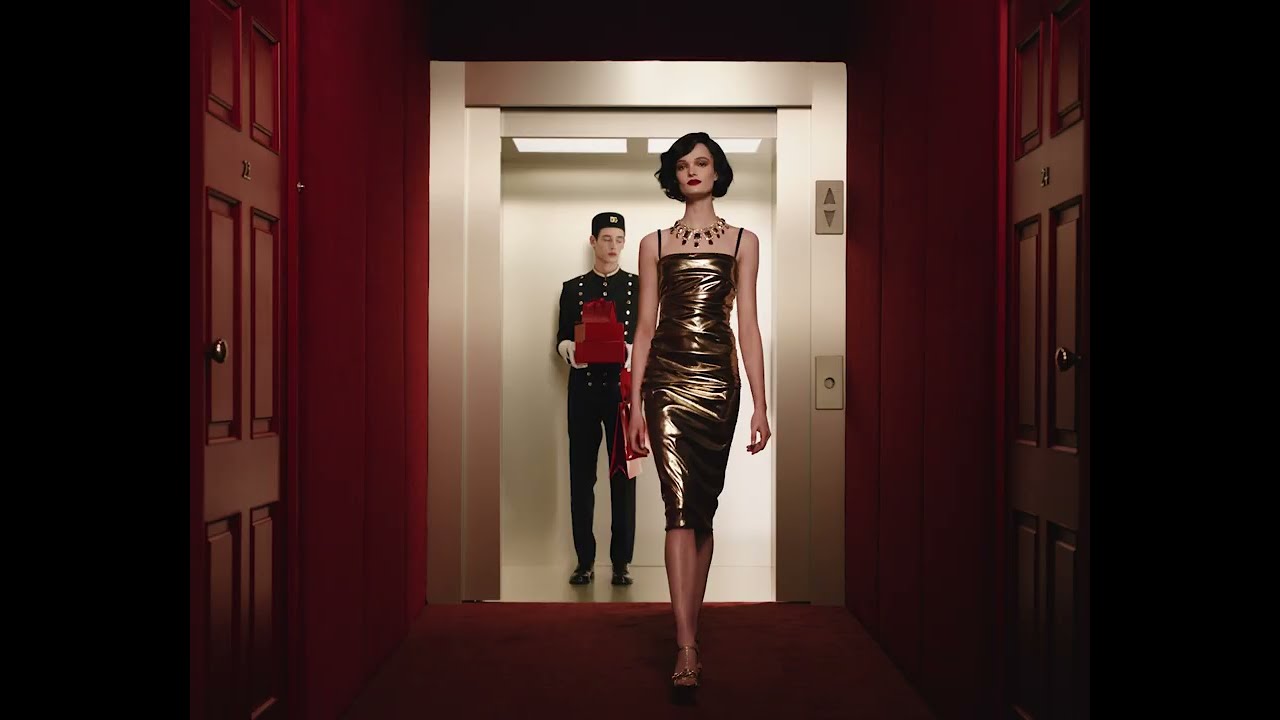
Add Texture to GoogleThere is a suspended, almost intangible moment that precedes major celebrations—that precise moment when preparations are complete, when the garment of light has been donned, but the action has not yet begun. It is into this psychological and temporal gap that Dolce & Gabbana’s Holiday 2026 campaign plunges. Rather than presenting the overused image of a party reaching its peak, the Italian fashion house captures its protagonists in the antechamber of the event. Here, opulence is expressed not through frenetic movement, but through the slow, deliberate pace of anticipation. In the heart of a hotel saturated with red, figures wander, pick up a phone, raise a cup of tea to their lips, or stare at the closed doors of an elevator. These trivial gestures, performed in outfits of absolute brilliance, instantly take on the dimension of a social ritual.
The Unveiling of Illusion
The chromatic atmosphere of this closed setting evokes the golden age of Hollywood cinema, an aesthetic that V Magazine likens to the flamboyant elegance of New York’s Plaza Hotel in the 1950s. The warm light sculpts the scarlet fabrics on the walls, creating a velvety setting where every glance seems laden with an unspoken narrative. The characters move through this setting with the gravity of those who know they are being watched. And for good reason—they are being watched from two angles.
The power of this visual concept lies in an unexpected shift. Suddenly, the architecture gives way. The hallway walls come to an abrupt end, revealing what lies off-screen: a forest of spotlights, cameras on tripods, and technicians bustling about. The narrative deliberately collapses to make way for the reality of the film set. The hotel is no longer a romantic vacation spot; it asserts its status as a studio set. Through this breaking of the fourth wall, the brand deconstructs its own imagery. Luxury is no longer presented as a spontaneous reality, but as a meticulous construction—a theatrical performance in which clothing serves as a costume. The protagonists’ frozen poses are no longer snapshots of candid moments, but choreographed performances. This approach questions the very nature of fashion: dressing up for the holidays ultimately means agreeing to play a role.
Behind this orchestration, the authorship of the image is subject to varying interpretations depending on the source. While the fashion press attributes the creation of this hotel segment to Gordon von Steiner, the brand maintains a certain discretion on this point in its official communications. Critical discourse surrounding the project also highlights Zoe Joubert’s photographic vision, which reinforces this exploration of the construction of glamour.
From a Scarlet Private Room to a Vast White Space
The season’s narrative diptych continues with a second forty-second film, formally attributed to director Karim Sadli. The suffocating luxury of the hotel corridors suddenly gives way to the icy air of a snow-covered road. The absence of an explicit narrative link between the upholstered interior and this winter landscape forces the viewer to seek coherence in pure visual symbolism. Red, the campaign’s obsessive recurring theme, shines through once again from the body of a car standing alone on the frozen asphalt.
Far from diminishing outdoors, the theatricality is heightened by the incongruous appearance of a stage set framed by heavy purple curtains, planted in the middle of nature. The physical reality of the world fades in the face of the scenography. The connection between these disparate worlds is also woven through the meticulous placement of accessories used as clues: a blue sequined bag hanging from the rearview mirror, catching the cold light, while a leopard-print piece rests on the car’s seats. Here again, fashion rejects the status of a mere object to be admired; it becomes an active component of the set design, a disruptive element in the silence of the snow.
The Anatomy of a Ceremonial Wardrobe
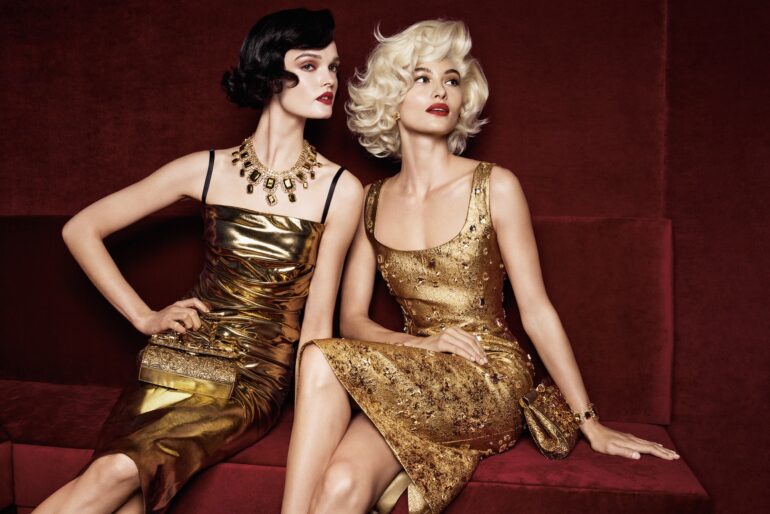
To dress up this anticipation and these trompe-l’œil settings, the collection returns to the flamboyant aesthetic that forged Dolce & Gabbana’s reputation. Under the guidance of stylist Emmanuelle Alt, the designs reject any notion of moderation. Femininity is expressed through sculptural silhouettes, metallic dresses, and golden drapery that catch the spotlight. Surfaces are saturated with sequins and embroidery, transforming the designs into veritable sources of light amid the red panels.
Against this riot of sparkle, the men’s wardrobe serves as a necessary counterpoint. The black tuxedos, with their uncompromising rigor, paired with the traditional white shirt and bow tie, provide a dark visual anchor. This dichotomy between cascading gold and deep black structures the image, avoiding the pitfall of blinding overload.
The leopard print—the house’s visceral signature—seeps in with disconcerting fluidity, permeating both the wardrobe and the furnishings. It adorns a cushion left on an armchair, slips onto leather goods, and even makes its way onto the tea service. This omnipresence of the leopard print disrupts the strict geometry of the men’s suits and contrasts with the metallic rigidity of the evening gowns. The faces, framed by artfully crafted undulations and accentuated by carmine lips, fit into this codified cinematic aesthetic, skirting the line of cliché without ever crossing it.
Fabric as an Anchor
The still-life series, shot by photographer Matthieu Lavanchy, highlights the pivotal role of accessories in this visual composition. Leather goods with top handles, clutches heavily set with jewels, and shoes studded with nails assert an aggressive presence. Necks are adorned with chunky necklaces that defy discretion. To temper this material exuberance, a selection of black pieces—structured travel bags, smooth leather, or items adorned with feathers—rounds out the silhouette with unexpected restraint.
The commercial collection launched alongside these official films further explores this tactile vocabulary. The focus is on the clash of textures: deep velvet contrasts with gossamer lace, while leopard-print leather sits alongside materials with an almost liquid sheen. While this selection of travel items and accessories breaks free from the hotel setting to stand on its own, it preserves the material tension developed on screen.
The Aesthetic of Passivity
The artistic direction of the collection, led by the MAYBE agency under the guidance of Kevin Tekinel and Charles Levai, gives this Holiday 2026 campaign a unique dimension. The opulence of the silhouettes, embodied with captivating coolness by models Grace Elizabeth, Lulu Tenney, and Sacha Quenby, stands in stark contrast to the inaction that dictates the pace of the films. As the Fashion Gone Rogue platform aptly notes, the most striking element is not the brilliance of the gold, but the protagonists’ regal calm.
No one is rushing toward the celebration. Urgency is absent. This artistic choice redefines the very notion of an event: the true celebration lies not in the bustle of a ballroom, but in the solitary or shared ritual of preparation. Getting dressed, waiting, knowing you’re being watched, then revealing the technical tricks that make this perfection possible. By laying bare its own tricks—the gold, the red, and the leopard print—Dolce & Gabbana doesn’t destroy its magic; it adds a layer of complexity to its significance. The setting promised a night of high-society revelry; what lies behind the scenes reminds us, with elegant lucidity, that the height of refinement lies in knowing how to play the part of elegance.