Make Texture a preferred source on Google to support us
Add Texture to GoogleAt the reception desk, the ritual never changes. A courteous guard places a small colored sticker over your smartphone’s camera lens. The rules of the game are established the moment you cross the threshold, even before you’ve set foot on the solid hardwood floors. What happens inside must not exist digitally. No surreptitious photographs, no ostentatious suits or ties, no phone conversations shouted from a Chesterfield sofa. For nearly three decades, Soho House has cultivated this precision mechanism that involves imposing strict restrictions at the entrance to ensure, once inside, an atmosphere of absolute freedom. The institution has redefined the geography of exclusivity. Gone are the austere wood paneling and the aristocratic segregation of London’s Pall Mall gentlemen’s clubs. Modern selectivity is no longer measured solely by pedigree or bank balance, but by a far more elusive currency: creative capital.
The Anomaly of Greek Street
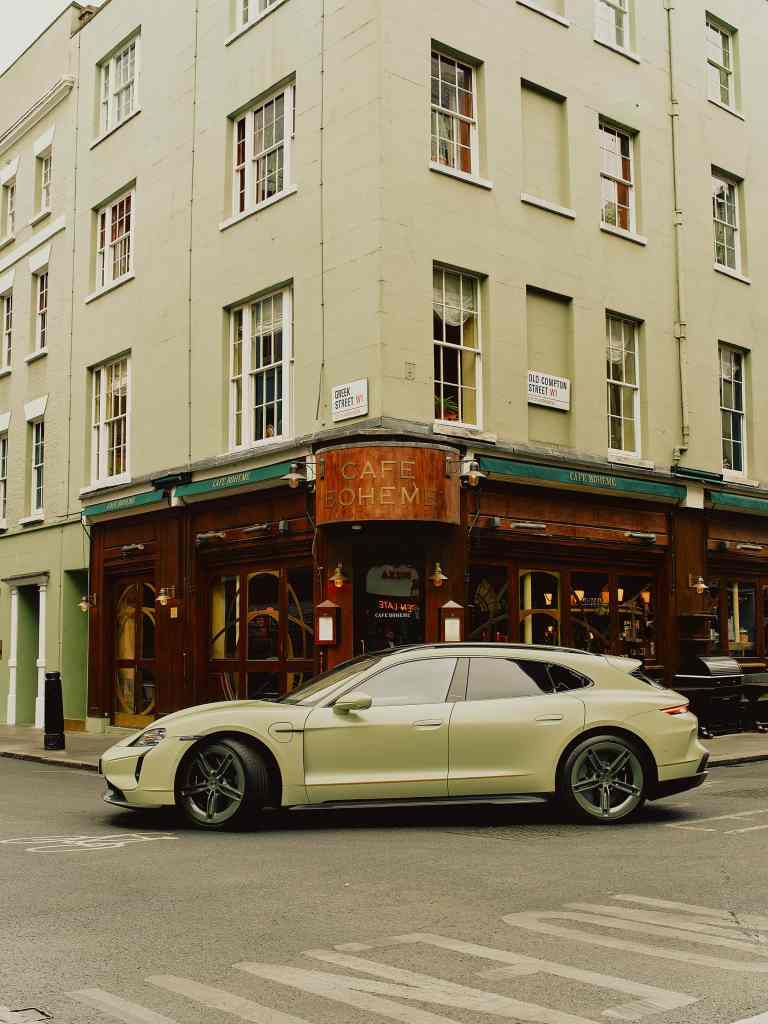
In 1995, London’s Soho neighborhood was teeming with independent producers, aspiring actors, and magazine editors. Nick Jones, a local restaurateur, watched this motley crew gather daily around his Café Boheme. When a space became available upstairs at 40 Greek Street, he immediately sensed an opportunity. The birth of this very first venue was rooted in a complete rejection of the established model. That of the traditional clubs in St. James’s (such as White’s or Boodle’s)—almost exclusively male bastions, set in their ways, where entry is granted only through hereditary co-optation. Jones opened its doors to those whom the establishment dismissed with disdain. White-collar workers and City bankers were told to move along.
This origin story fits perfectly with the spirit of the times. The mid-1990s in Britain were marked by the effervescence of Cool Britannia, the explosion of Britpop, and the emergence of the Young British Artists. The club became the natural haven for this new cultural elite, offering a hybrid space, halfway between the private lounge of a wealthy eccentric and a neighborhood speakeasy. People came there to read screenplays in the middle of the afternoon, drink cocktails until dawn, and forge professional alliances without ever seeming to do so.
Conquering Neighborhoods in Flux
The London model, buoyed by its immediate success, is spreading rapidly. The expansion strategy follows a remarkably effective real estate logic. It involves targeting industrial or working-class neighborhoods on the cusp of urban transformation, often by renovating buildings steeped in unique history. In 2003, the brand crossed the Atlantic to set up shop in New York’s Meatpacking District, transforming an old meat-packing warehouse into a social hotspot complete with a rooftop pool. The image of the local intelligentsia splashing about above Manhattan’s cobblestone streets cemented the brand’s global reputation.
New locations opened with metronomic regularity. Berlin followed, in an imposing Bauhaus building that had belonged to the East German regime. Istanbul took over the former U.S. consulate at the Palazzo Corpi. In Paris, it is the former red-light district of Pigalle, on Rue de la Bruyère, that has been home to the French members since the fall of 2021. The choice of locations is no accident. The Paris location occupies a 19th-century mansion that once belonged to Jean Cocteau’s family. The space centers around a landscaped courtyard, flanked by a glass-enclosed winter garden and a mosaic swimming pool. Each new location embodies the local character while maintaining a distinct identity, instantly recognizable to regulars of the chain.
The aesthetic of calculated nonchalance
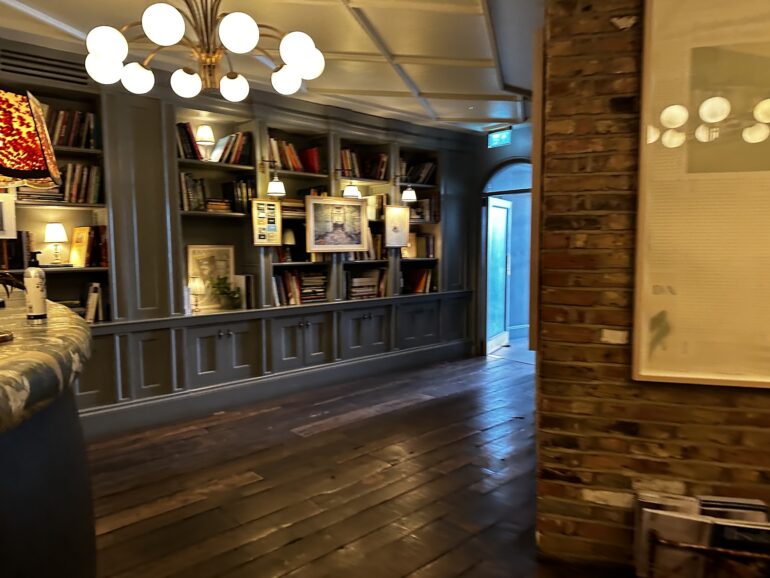
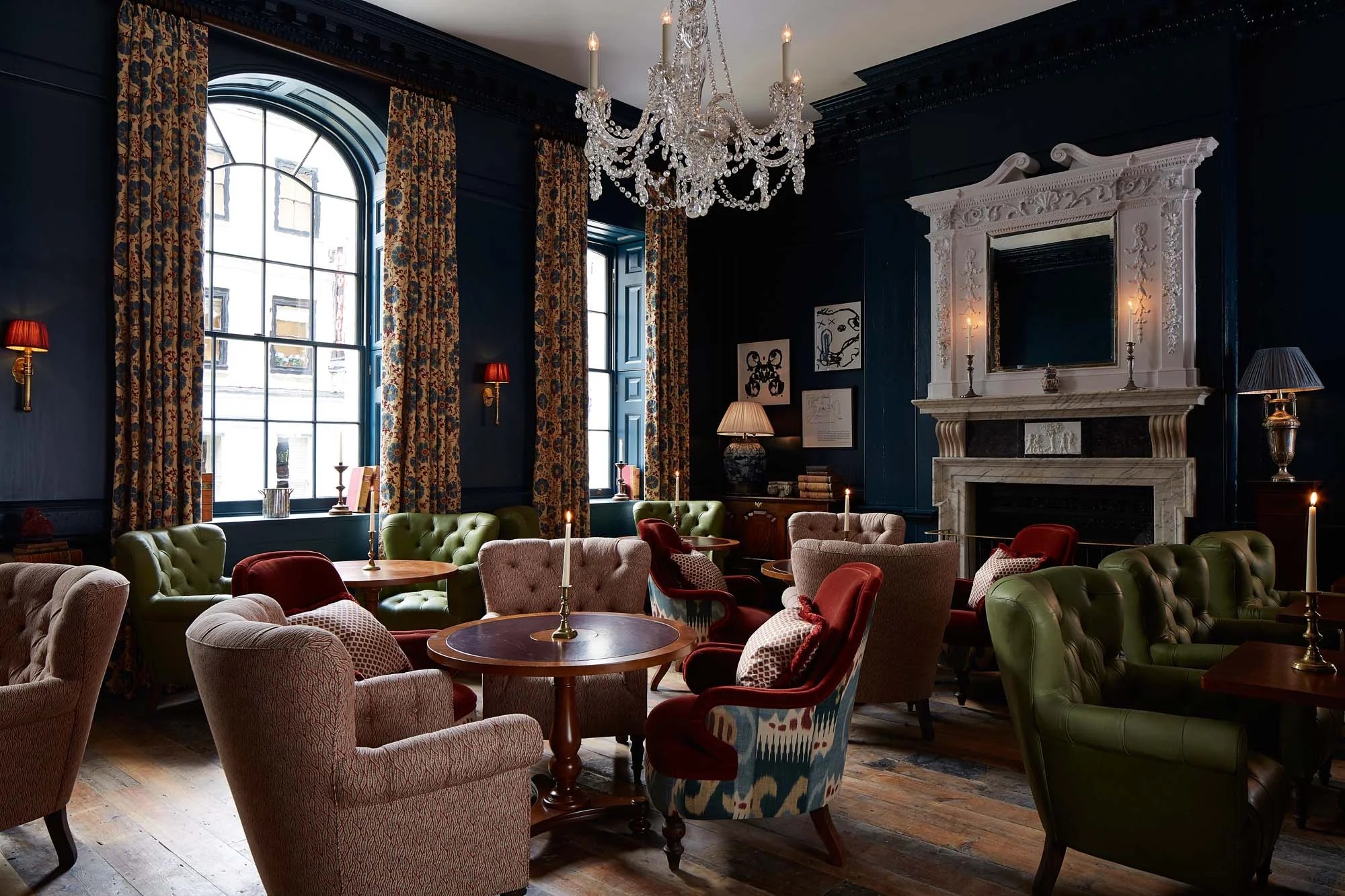
Sitting in one of these lounges is to physically experience a meticulously crafted artistic vision. The visual environment plays on the ambiguity of domestic comfort taken to its extreme. Corduroy sofas worn with precision, Persian rugs weathered by time, subdued lighting bordering on dimness at any hour of the day, dark wood paneling, and an abundance of contemporary artworks.
The institution, in fact, owns one of the world’s largest private art collections, built on a clever barter system. In its early days, the company offered lifetime memberships to emerging artists in exchange for their paintings. Today, the walls of the various locations display works by Damien Hirst, Tracey Emin, and carefully selected young local talents. The environment has become so desirable that management has logically chosen to blur the lines between hospitality, clubbing, and retail. The launch of the furniture line now allows members to purchase the armchairs in which they’re accustomed to sipping their Picante de la Casa (the club’s iconic signature cocktail made with tequila, agave, lime, and chili pepper). The private club has transformed into a global style influencer, selling not only access to an exclusive network but also the physical decor that accompanies it.

The glass wall of selection
The crux of the matter—and the driving force behind the business model—lies in the screening process. Contrary to the atmosphere of absolute relaxation that reigns inside, the admission process is a social obstacle course. A selection committee—regularly renewed and composed of influential figures from the local scene—scrutinizes applications with unapologetic rigor. Applicants must prove they belong to the fields of visual arts, writing, or design. A real estate magnate or an investment fund manager—even one willing to pay the membership fee in full—risks outright rejection or having their application relegated to the limbo of a waiting list that includes tens of thousands of names.
This policy of reverse exclusion fuels the legend and protects the venue’s unique atmosphere. Internal rules reinforce this separation from the outside world’s hustle and bustle. The policy regarding laptops is particularly strict. While permitted in certain areas during the day to allow freelancers and screenwriters to work, screens must be put away by 6:00 p.m. without fail. This digital curfew drastically alters the social dynamics of the spaces. The vast shared office transforms into a space for celebration and pure socializing, forcing people to disconnect and interact directly. Once access is granted, the global membership offers a passport without borders, allowing the Milanese photographer on the go to find refuge and enjoy exactly the same standards of hospitality within the walls of properties in West Hollywood, Mumbai, or Barcelona.
The Dilemma of Hyper-Growth
Thirty years after the discreet door on Greek Street first opened, the craftsmanship of the early days has naturally given way to hospitality engineering on an industrial scale. Today, the company faces the dizzying pace of continuous expansion. Opening new properties across multiple continents, designing product lines for in-house spas, and expanding dedicated workspaces—this entire global operation demands massive capital and a corporate structure that stands in stark contrast to the rebellious spirit the company originally championed.
The current challenge is clearly evident in the crowded lounges of its most historic locations. Maintaining the illusion of an intimate, exclusive circle while managing more than forty properties and hundreds of thousands of members is a complex balancing act. The very definition of the creative class has shifted. Tech startup founders, digital content creators, and communications directors have gradually replaced the penniless painters and independent filmmakers of the early days. The tension lies in this inevitable demographic and financial evolution. The group’s leaders must now navigate with great care to ensure that the large-scale monetization of their aesthetic does not stifle that initial spark—the very spark that gave that modest first-floor London space its unique charm.