Make Texture a preferred source on Google to support us
Add Texture to GoogleWhat is a soccer club looking for in the world of luxury? With Como 1907, the question moves beyond mere curiosity and into the realm of strategy. Its president, Mirwan Suwarso, will present a project in Milan that uses sports as the starting point for a global fashion and lifestyle brand. This trajectory offers an illuminating perspective on the discussions at the upcoming Fashion Summit: to understand what gives a brand its value today, looking at its products is no longer enough. We must also examine the areas it enters and the relationships it builds with its customers.
The Stadium: Fashion’s New Laboratory
The Milan event, whose 31st edition will take place on November 11 at the Palazzo Mezzanotte, will dedicate a specific section to sports this year. This choice deserves attention. Fashion’s growing interest in this world goes hand in hand with a sector that continues to expand and offers perspectives beyond those of traditional luxury categories.
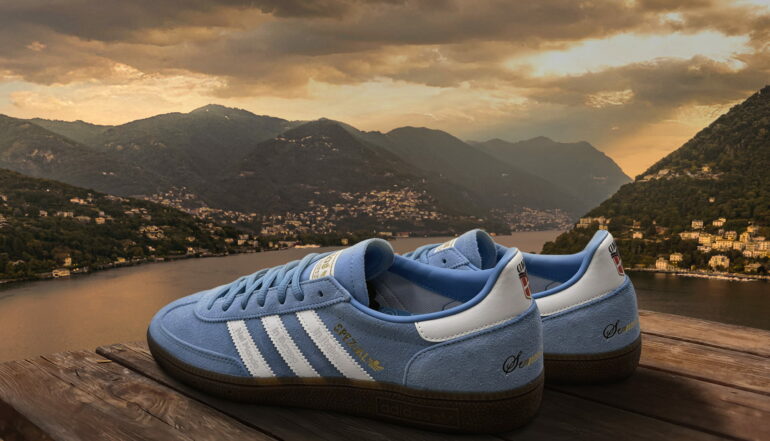
Como 1907 will explore this through the lens of brand extension. The club seeks to transform its sporting presence into opportunities for off-field growth, ultimately establishing itself in the lifestyle and high-end markets. Suwarso will detail this transition from soccer to fashion. The challenge lies in maintaining legitimacy: how can a brand expand its reach without losing what makes it recognizable?
Gianluca Pavanello, CEO of Macron, will offer a different perspective. The Italian company develops and manufactures sports apparel and equipment, while also being active in sponsorship. On one hand, a club extends its identity beyond the game; on the other, an equipment manufacturer grounds its business in the practice of sports. Their joint presence will allow us to explore the relationship between sports and fashion beyond their mere visual proximity.
Price alone can no longer serve as a statement
This detour into soccer brings us back to a very concrete question: what are we willing to pay for, and why? Pricing policy will be one of the summit’s main topics. It will be weighed against the customer experience, whose influence on purchasing decisions now tends to rival—or even surpass—that of the product itself.
For fashion houses, this shifts the debate. A price belongs to a pricing structure; perceived value depends on a set of factors that is harder to control. The product remains, but what surrounds it also plays a role in the choice. The Milan program thus urges us not to separate the discussion on pricing from that on the reasons for buying.
It would be premature, however, to see this as the object’s decline. Leather goods, footwear, jewelry, and eyewear will be well represented. Their executives will instead need to shed light on a tension: how can they give greater weight to the experience without making the physical product itself secondary? Through these sectors, the summit will be able to compare brand narratives with specific commercial results.
Investors Are Redrawing the Boundaries
Another way to interpret these transformations is to track equity investments. Marquee Brands recently signed an agreement to acquire a majority stake in Roberto Cavalli as part of a strategic partnership with Damac Group. Heath Golden, CEO of the American group, will discuss the rationale behind this transaction and the opportunities he sees in the high-end market.
The Cavalli case raises a different question than that posed by Como 1907: not how to enter the fashion industry from a different sector, but how to grow a brand already established in the luxury sector. The announced agreement serves as the starting point for the discussion here, not yet a demonstration of its results.
Style Capital will provide an opportunity to examine another scenario. After adding Autry to its portfolio in 2024, the investment firm acquired a majority stake in N°21 from Gilmar, its long-standing industrial partner. These two deals bring together, under a single financial umbrella, a footwear brand and a fashion label.
Roberta Benaglia, managing director and founding partner of Style Capital, will speak with Alessandro Binello, managing director of Quadrivio Group. The roundtable will be moderated by Emanuela Pettenò, head of consumer markets and transaction services at PwC Italia. The operational aspect will be further explored in a presentation by Danilo Piarulli, who has led Autry since September, as he outlines the brand’s strategy. This serves to bridge the gap between the decision to invest and the work required to translate that decision into growth.
Mulberry: The Numbers Test
Mulberry’s turnaround will provide a counterpoint to the discussions on acquisitions. Andrea Baldo, its CEO, will present the relaunch of the British leather goods house, whose creative direction is led by Christopher Kane. Here, the focus will be on a business trajectory already backed by hard numbers.
For the first half of its fiscal year, ending September 26, 2026, Mulberry reported an 18.1% increase in sales at current exchange rates and an 18.2% increase at constant exchange rates. All geographic regions contributed to the growth. The minimal difference between the two metrics helps distinguish this growth from a simple currency effect.

These figures lend credence to the recovery narrative, though they do not, on their own, explain the mechanisms behind it. Baldo’s presentation will therefore provide an opportunity to examine the strategic choices behind this growth. At a summit focused in part on pricing and customer experience, this case study will offer a concrete starting point: a rise in sales whose drivers must be understood, rather than attributing a preconceived formula to it.
Jewelry and Eyewear: Other Perspectives on Growth
The jewelry sector will further broaden the perspective. Massimo Basei, commercial director of Pandora, will present the journey of the Danish group, which has an extensive global distribution network and has just completed a third quarter marked by a significant increase in revenue. His presentation will place the issue of commercial presence alongside that of brand desire.
Maria Cristina Squarcialupi, president of Unoaerre Industries, will also speak on this expanding sector. Bringing these perspectives together prevents the evolution of the luxury sector from being reduced solely to that of fashion houses: the jewelry industry has its own dynamics, which a overly general analysis might risk obscuring.
The eyewear sector, meanwhile, will be examined through the lens of industrial restructuring. Nicola Zotta, president of the eyewear division at Marcolin and Marchon, will speak following Marcolin’s acquisition by the American group VSP Vision. Through this feature, the program brings corporate structures back into the spotlight, beyond the collections and visible brand identities.
Back to the customer, right to the screen
These strategies must now be linked to purchasing behaviors. Chiara Eleonora Gatti, vice president of luxury at BestSecret Group, will present the strengths of this e-commerce player. Her presentation will introduce another dimension of the customer relationship, essential to any discussion of the customer experience.
Erika Andreetta, a partner at PwC Italy and head of fashion and luxury for the EMEA region, along with Alessandra Mengoli, head of the fashion consumer panel and strategic development at Sita Ricerca, will round out the presentations. Their analyses will help compare corporate decisions with evolving consumer trends.
On November 11, these discussions will take place at the Milan Stock Exchange building, Palazzo Mezzanotte. The event will be hybrid: some attendees will participate in person, while remote participants can stream the entire summit upon registration.