
Revenue down but profitability up in 2025
The Armani Group ended 2025 with a further decline in revenue but an improvement in profitability metrics. Net revenue decreased by 4.6% at current exchange rates and by 2.8% at constant exchange rates, falling to €2.19 billion from €2.3 billion the previous year (at that time, revenue had contracted by 6% at current exchange rates and 5% at constant rates), results that the group describes as “in line with the general trend in the sector.” The brand’s direct revenue, including revenue generated by licensees, totaled over €4 billion. EBITDA increased by 3.2%, rising from 148 to 152.7 million euros, while EBIT reached 52.6 million euros, also an improvement over 2024.
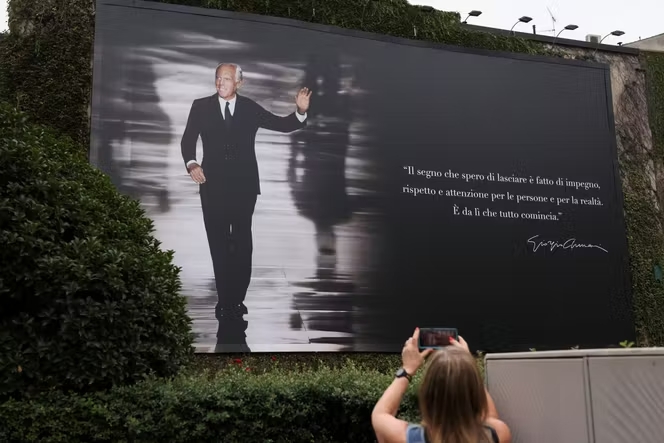
These results, as Giuseppe Marsocci highlights in the official statement, underscore the commitment to “operate as effectively as possible within the strategic framework outlined by Mr. Armani, with sound management and without undue pressure, as confirmed by the qualitative components of our sales, with a long-term perspective for the Group, not focused on maximizing immediate profit.” He goes on to say he is optimistic about the future because “today more than ever, the identity of the company and the brand is reflected in the founding principles that Mr. Armani established in his corporate will.” A comment aimed at reassuring the market at a critical moment for the company, given the timeframe for the sale of a 15% stake to one of the three giants (LVMH, EssilorLuxottica, or L’Oréal). Moreover, as the manager emphasized in an interview with WWD shortly before the data was released, there have not yet been “any meetings with the three potential buyers, and there is no tension among family members.”
A steady start to 2026 amid market challenges
In the first quarter of this year, the trend confirms the challenging period the fashion industry is going through; based on data already released by major players, the industry has experienced a widespread slowdown in sales, with a few exceptions. Thus, for the Armani Group as well, the first three months of 2026 showed a trend in line with the same period in 2025, with currency fluctuations that, the group notes, are expected to stabilize over the course of the year. Sales in the direct retail channel at constant exchange rates increased by +3%, “while orders in the wholesale channel remain in a phase of cautious reduction and consolidation,” in line with the ongoing strategy of selective distribution.
Financial strength and mixed performance by sector
Returning to the 2025 figures, management highlighted the group’s financial strength: as of December 31, net cash stood at €596 million and consolidated equity at €1.9 billion, down slightly by approximately 3% compared to the previous closing date due to currency fluctuations recorded in 2025. This figure represents 51% of total assets, “an equity ratio that confirms the Group’s exceptional financial strength,” the press release states.
It is worth highlighting the excellent double-digit growth performance of Armani Privé’s haute couture, as well as full-price sales in the fashion segment, particularly for the Giorgio Armani line. The home, hotels, food, and beverage division also showed a positive trend, “confirming both the dynamism of experience-driven market segments and the brand’s lifestyle credibility.” However, this result was not sufficient to offset the slowdown in the Group’s other flagship categories. In terms of distribution channels, directly managed stores recorded a 2% increase, while indirect channels, led by wholesale, recorded a 7% decline.
The Strategic Momentum of the Asian Market
Geographically, the 2025 trends by major geographic region (Europe, Asia, and the Americas) at constant exchange rates are balanced, with no substantial differences. As WWD notes, “excluding Italy, which accounts for between 15 and 20% of sales, Europe, Asia, and the Americas each account for one-third of revenue.” In this context, Asia, the American magazine adds, showed “greater dynamism” at the start of 2026 compared to the previous year, particularly in China and Japan. Currently, several initiatives are underway to expand the brand’s presence in Asia, notably in China—which accounts for 10% of revenue—with plans to open an Armani/Casa restaurant and boutique, as well as a flagship store in collaboration with SKP in Wuhan in October.
A necessary adaptation to changes in the luxury sector
“Our attention, research, and assessment of the market are at their peak right now: we are facing a potential structural shift in how current and potential consumers approach luxury and fashion, which we must take into account,” comments Marsocci. “We cannot ignore the need to adapt to a changing landscape,” he continues. “We remain optimistic, however, because today more than ever, the company’s and brand’s identity is reflected in the founding principles that Mr. Armani established in his corporate will. These values, rooted in his model of beauty and discreet, timeless elegance, as well as the idea of a solid and prudent company, prove to be extremely relevant—perhaps even more so than ever—in light of the times we are living in.”