
Make Texture a preferred source on Google to support us
Add Texture to GooglePedro Almodóvar: The Labyrinth of Madrid’s Passions
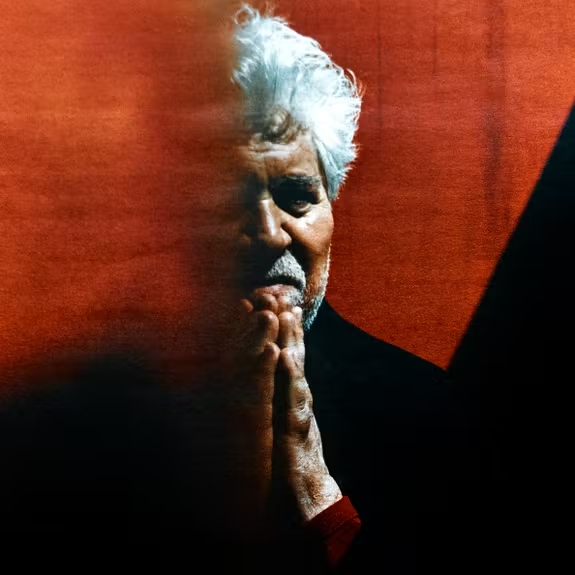
If Madrid has a beating heart, it undoubtedly lies in the Las Ventas neighborhood, behind the unassuming facade of the El Deseo offices. It is here, in this terracotta sanctuary, that Spain’s most famous filmmaker has been shaping his dreams for more than three decades. Far from the hustle and bustle of the red carpets, this workspace reflects the soul of its creator: a blend of bureaucratic rigor—inherited from his early years as a telephone company employee—and pop exuberance, punctuated by the iconic posters of his past masterpieces.
From the Movida to the Maturity of *Julieta*
With his twentieth feature film, *Julieta*, the former enfant terrible of the Movida seems to have traded his biting provocations for a newfound restraint. This poignant family drama, inspired by the short stories of Canadian author Alice Munro, nearly marked Almodóvar’s big leap into English-language cinema. However, after location scouting in Canada and New York, the master had second thoughts: it was impossible for him to film without that distinctive Spanish light, nor to convey the nuances of everyday life in a foreign language. This return to his roots proves that his genius remains inextricably linked to his homeland, from the wild coasts of Galicia to the majestic peaks of the Pyrenees.
The Universal Through a Feminine Lens
For Almodóvar, the journey is above all an inner one and deeply feminine. His films are odes to women—courageous mothers, iconoclastic nuns, or actresses with fiery tempers. This talent for deciphering the female soul stems from his childhood in La Mancha, where he watched his mother, Francisca, embellish reality to make it more beautiful as she read the letters of her illiterate neighbors. Today, this influence lives on through his muses, from Rossy de Palma to Penélope Cruz—faces that embody a Spain that is both local and universal, capable of transforming perversion into poetry.

Madrid, the backdrop of a life
The man who once roamed the capital’s underground clubs in high heels now leads a more low-key existence in his Art Deco apartment. Between bouts of compulsive reading (he devours up to three books a week) and his ritual trips to the movies, he continues to cast a tender—if at times nostalgic—glance at the city that shaped his identity. At 66, the filmmaker has lost none of his iron discipline or curiosity. While he admits to sometimes missing the physical vigor of his twenties, he embraces every stage of his journey with the same intensity, proving that, for him, reality always needs fiction to be complete.