
Make Texture a preferred source on Google to support us
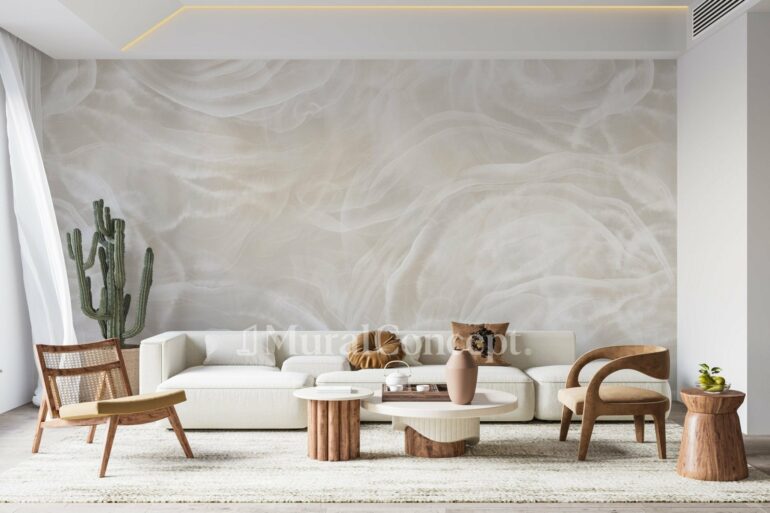
Add Texture to GoogleIn 2026, marbled wallpaper has established itself as a majestic alternative to real marble, infusing contemporary interiors with depth, texture, and harmony. Far from being merely decorative, it enhances a space by giving it a sculptural quality that raw stone—often expensive and restrictive—does not always allow for such creative flexibility.
The Essence of Movement
The trend is definitively moving away from the glossy, repetitive marbling patterns that overwhelm the eye. The most sophisticated designs now favor free-flowing veining, softened contrasts, and matte finishes of rare elegance. The approach is no longer about imitating stone to perfection, but about capturing its essence, texture, and charismatic presence.
A high-quality marbled wallpaper does not seek to create an illusion: it sets the mood. In contemporary interiors, it allows different materials to coexist seamlessly. A mineral-inspired mural will thus harmonize with the raw elegance of a linen sofa, the warmth of a light-wood table, or the brilliance of a brass lamp, without ever monopolizing the attention.
A New Organic Palette
While pure whites remain essential for filling a bathroom, kitchen, or bedroom with light, the variations are becoming more subtle. Carrara-inspired finishes offer an almost architectural clarity, while the enveloping, evocative shades of Calacatta warm spaces dominated by oak or copper. More dramatic, black marble exudes its mystery in measured touches, enhancing an entryway or a bar area.
Intermediate shades are also taking center stage. Smoky gray, travertine beige, mineral green, abyssal blue, or powdery pink: each shade offers a unique interpretation of the pattern. Designers’ enthusiasm for panoramic designs confirms that the wall surface has regained its status as a preferred canvas for expression.
The Balance of Proportions
The excellence of a marbled pattern is appreciated both in the infinitely small and in the overall view. It must respond subtly to variations in light and harmonize with the surrounding furniture. Veins that are too dense can cause visual fatigue, and excessive sheen risks diminishing the aesthetic impact. Conversely, fluid lines, an airy composition, and a subtle texture lend the wall a true sense of nobility.
Mastering scale is essential. An oversized pattern will overwhelm the proportions of a small room, while a design that’s too subtle will get lost in large spaces. Wall decor reveals its full potential when it complements architectural lines rather than clashing with them.
Dialogues of Materials
White marble calls for the clean lines of understated furniture and the brilliance of cool metals. Beige travertine blends naturally with warm woods, raw textiles, and plant-based fibers. As for green marble, it pairs best with brushed brass, weathered leathers, and soft lighting. Deep blue, finally, makes a bold statement in a north-facing office or bedroom, softened by touches of cream or light wood tones.
The real pitfall lies in overdoing it. An excess of mineral surfaces and reflections detracts from the clarity of the space. Marble finishes truly shine when they serve as a structuring backdrop, rather than competing with the room’s other materials.
A Lightened Heritage
If marble’s influence has endured through the ages, it is thanks to its skillful blend of sophistication, understated elegance, and architectural heritage. Historically associated with classical interiors and timeless designs, it finds a contemporary reinterpretation in wallpaper, imbued with a sense of lightness. It allows us to bring this ancestral nobility into our modern living spaces without the constraints of a monumental installation.
In 2026, this trend reflects our deep desire for expressive materials and designs that frame a space without overwhelming it. Used in just the right measure, marble remains a rare stylistic element, capable of blending boldness with restraint. This perfect balance ensures its resolutely timeless elegance.