
Make Texture a preferred source on Google to support us
Add Texture to GoogleFaced with soaring gold prices, Amrapali Jewels has chosen to focus on storytelling and ancestral craftsmanship. This unique approach highlights the soul of the jewelry, thereby challenging the traditional market logic centered on weight and the strictly material value of the piece.
In a market where gold prices continue to rise and price tags keep getting higher, Tarang Arora champions a vision that might seem countercultural, even stubborn: a piece of jewelry must, above all else, tell a story. Founded in 1978 in Jaipur, Amrapali Jewels demonstrates that the value of a creation is not limited to its metal or its weight. It is built on the eloquence of the craftsmanship, the memories embedded within it, and the way it is worn. This philosophy certainly challenges the conventions of the Indian jewelry industry, which is still often fixated on the weight of the material rather than the hand that shapes it.
The Eloquence of Artisanal Craftsmanship
The company’s CEO and creative director champions a fundamental principle: karigari. This manual craftsmanship, passed down from generation to generation, endures beyond price fluctuations and the fickleness of trends. The argument goes beyond mere aesthetics to touch on the very economics of creation. When a piece requires weeks of meticulous work, its complexity cannot be reduced to the price of gold alone or to a cold cost equation. Amrapali refuses to view jewelry as a mere sum of raw materials and manufacturing costs. It is a form of unapologetic defiance, coupled with a vital reminder: behind every piece of jewelry lies a workshop, not just a foundry.
To grasp the essence of this approach, one must delve into the brand’s roots. Born of a deep passion for India’s history, its tribal traditions, and its centuries-old techniques, Amrapali quickly established itself as the spearhead of Jaipur’s craftsmanship. With a presence extending all the way to London and the creation of a museum dedicated to Indian jewelry in the “Pink City,” the house proves that heritage is not merely a marketing gimmick, but rather its very foundation.
The Object as a Vehicle for Storytelling
This creative language finds its fullest expression in the house’s latest collection, centered on the Ramayana. In it, Tarang Arora crafts pieces dedicated to both Ram and Ravana, rejecting any simplistic moral interpretation—he also points out that Lanka was “Soni ki Lanka” (the Golden Lanka), and that Ravana was a fervent devotee of Shiva. The project unfolds in three acts: spectacular creations designed for the screen, commercial variations inspired by these masterpieces, and a more intimate line—evoking the exile from Ayodhya—intended for everyday wear. This clever approach bridges the gap between costume jewelry and everyday fine jewelry, without ever diluting the narrative power of the piece.
Here, jewelry breaks free from its status as a mere marker of wealth to become a true medium of expression. It is through this ability to transform an epic reference into a contemporary talisman that the house affirms its relevance. While the temptation to create something spectacular is certainly present, it is judiciously tempered by the need for commercial appeal. Otherwise, the myth would risk fading away behind the glass of a display case.

Creating Tomorrow’s Heritage
Tarang Arora also observes an exciting shift among his clientele. While millennials continue to view jewelry as an investment in their legacy, Generation Z is more in tune with the spirit of the times, guided by the influence of public figures and a sense of belonging to cultural movements. Yet, at its core, the quest remains the same: the desire to own a creation imbued with a special soul, rather than a mere collection of precious materials.
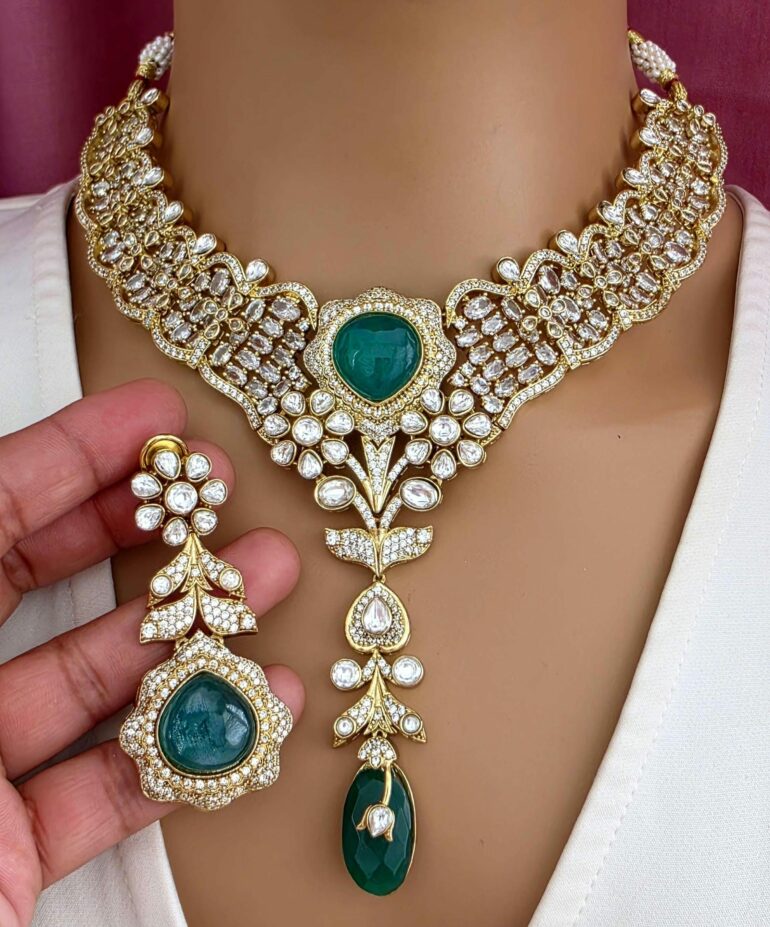
This shift fuels what the designer describes as the “family heritage” market. Young entrepreneurs are now commissioning versatile pieces, designed to be worn at various celebrations or to be passed down among different branches of the same family. Arora specifically mentions a client who had an emerald necklace transformed into a bridal sarpech, intended to crown the six future brides and grooms in his lineage. This approach resonates with the designer’s vision: the universal desire to forge a legacy and to craft the heirlooms of the future.
Today, Amrapali no longer relies solely on the Western fantasy of a mysterious India. The international connoisseur is now well-informed: he seeks excellence in craftsmanship, transparency of provenance, and powerful symbolism—as exemplified by the navratna, which is increasingly captivating audiences beyond India’s borders. In an industry where jewelry is still too often relegated to the status of a safe-haven asset, this dialogue between past and present stands out. With an elegance tinged with radicalism, Amrapali reminds us that a jewel’s timelessness lies not only in its brilliance, but in its ability to transcend time, generations, and trends, even triumphing over the fluctuations of gold prices.