Make Texture a preferred source on Google to support us
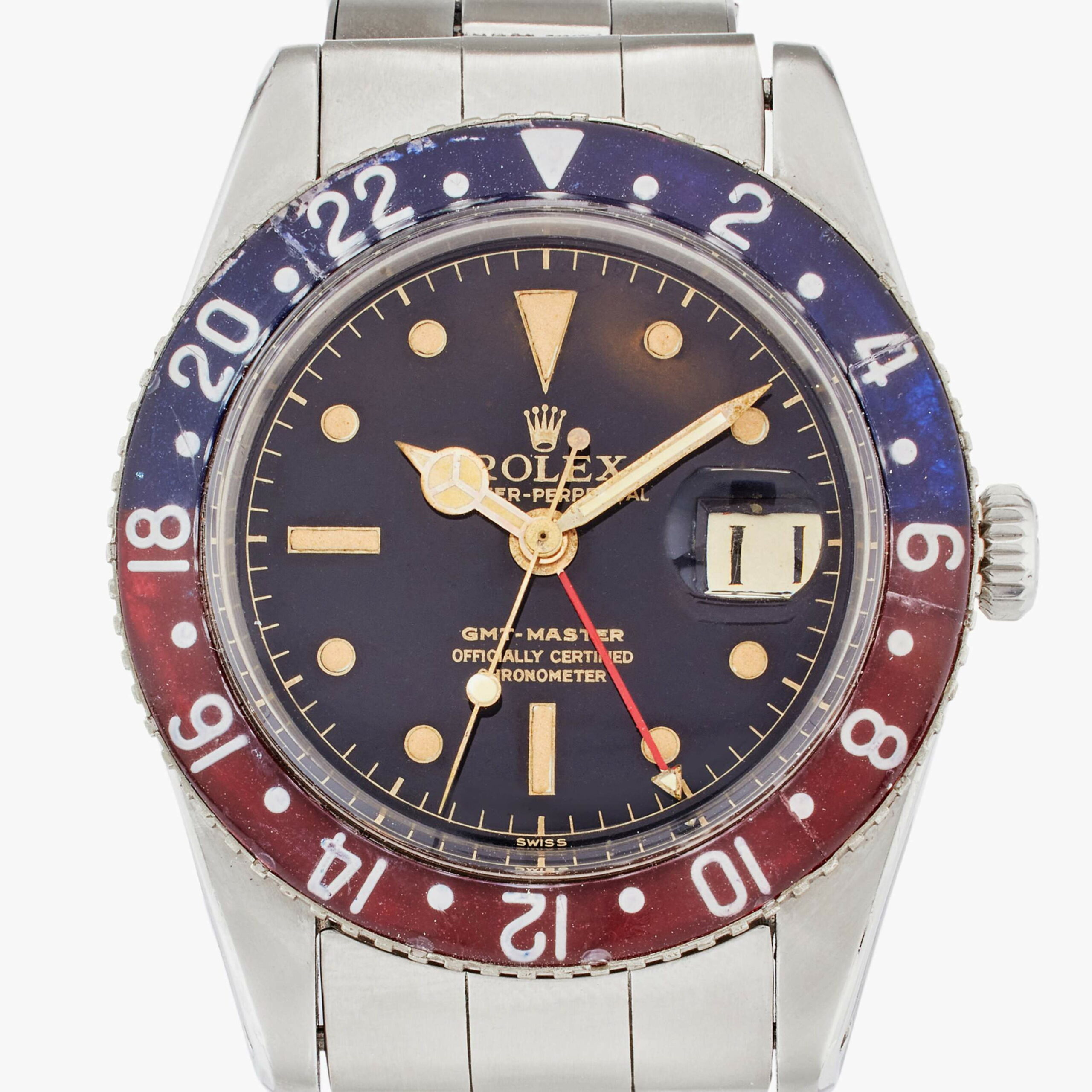
Add Texture to GoogleRed for daytime, blue for nighttime. This color scheme is contained within a few millimeters of thickness, set on the rotating bezel of a 40-millimeter case. In watchmaking terminology, this visual dividing line needs no explanation. It bears a nickname coined by collectors and validated by common usage: “Pepsi.” Behind this direct reference to American pop culture lies the Rolex GMT-Master, a flight instrument originally designed to combat time zone confusion, which has become, through market forces, a fiercely contested financial asset.
In the mid-1950s, civil aviation entered the jet age. Four-engine propeller planes gave way to the first commercial jets, capable of crossing time zones at unprecedented speeds. This compression of geographical time gave rise to a new physiological ailment among flight crews: jet lag. It was against this clinical backdrop that Pan American World Airways (Pan Am), then at the height of its hegemonic power, submitted a detailed set of specifications to the Geneva-based manufacturer. The airline’s pilots needed to be able to read two time zones simultaneously to maintain a mental reference point with Greenwich Mean Time (GMT), the global standard for civil aviation.
The Fragility of a Myth: Reference 6542
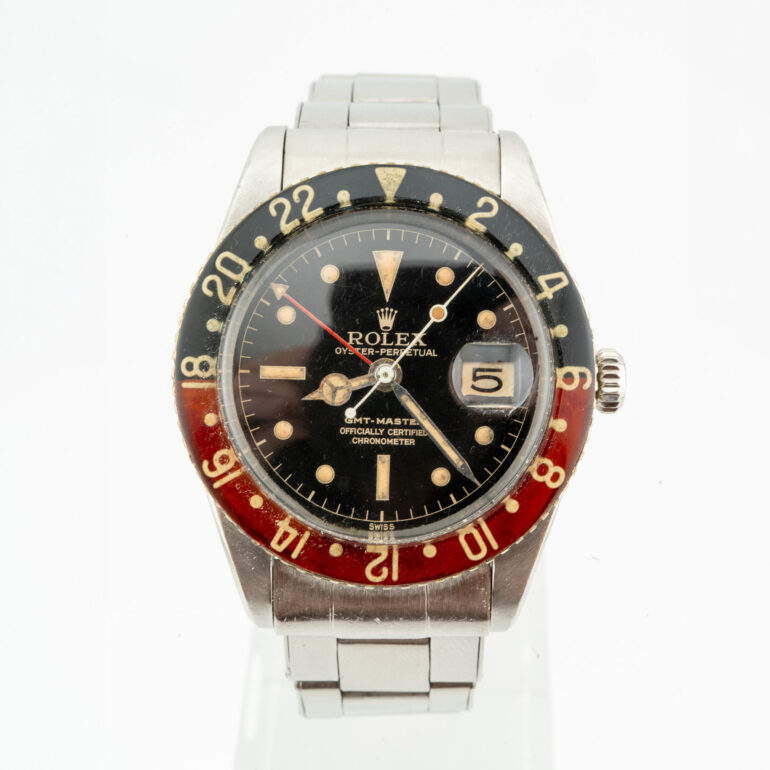
The technical solution emerged in 1954 in the form of the reference 6542. The mechanical design was remarkably simple: a fourth hand, completing one revolution every 24 hours, pointed toward a graduated rotating bezel. The ingenuity lies in the operation of this two-tone bezel, which allows the second time zone to be adjusted without stopping the watch. However, this first iteration carries a mechanical vulnerability that, decades later, would become the source of its speculative value.
The bezel insert was cast from Bakelite, an early polymer chosen for its transparency. The numerals engraved on the back were filled with radium to ensure luminescence in the darkness of aircraft cockpits. However, the chemistry of the time proved to be unpredictable. Bakelite cracked due to thermal shock, and the high radioactivity of radium forced the brand to orchestrate a massive recall to replace these bezels with aluminum alternatives. Today, a Model 6542 that has retained its Bakelite insert intact changes hands at auction houses for sums that easily exceed six figures.
Aluminum and Standardization
As early as 1959, the design was revised. The 1675 model succeeded the original and established the aesthetic standards for the line for the next half-century. The case widened slightly; metal shoulders were added to protect the crown from side impacts; and anodized aluminum permanently replaced the brittle plastics. The red and blue colors lost some of their translucency but gained in color durability.
It was during this very long production run, which would stretch into the early 1980s, that the watch made its way from the wrists of airline captains into mainstream society. Frequent travelers, international executives, and pop culture figures embraced this navigation tool. The two-tone design was no longer merely an aid for tracking the nycthemeral cycle; it became a social signal, tacit proof of a life spent shuttling between transcontinental airports.
The Ceramic Puzzle
The turn of the millennium revolutionized the material landscape. The high-end watchmaking industry turned to technical ceramic, which is scratch-resistant and impervious to ultraviolet rays. The manufacturer introduced its own formulation, Cerachrom. While black and green were quickly mastered, reproducing the sharp boundary between red and blue on a single piece of ceramic fired at extremely high temperatures proved to be a major industrial challenge. Red pigments have an unfortunate tendency to degrade when exposed to heat.

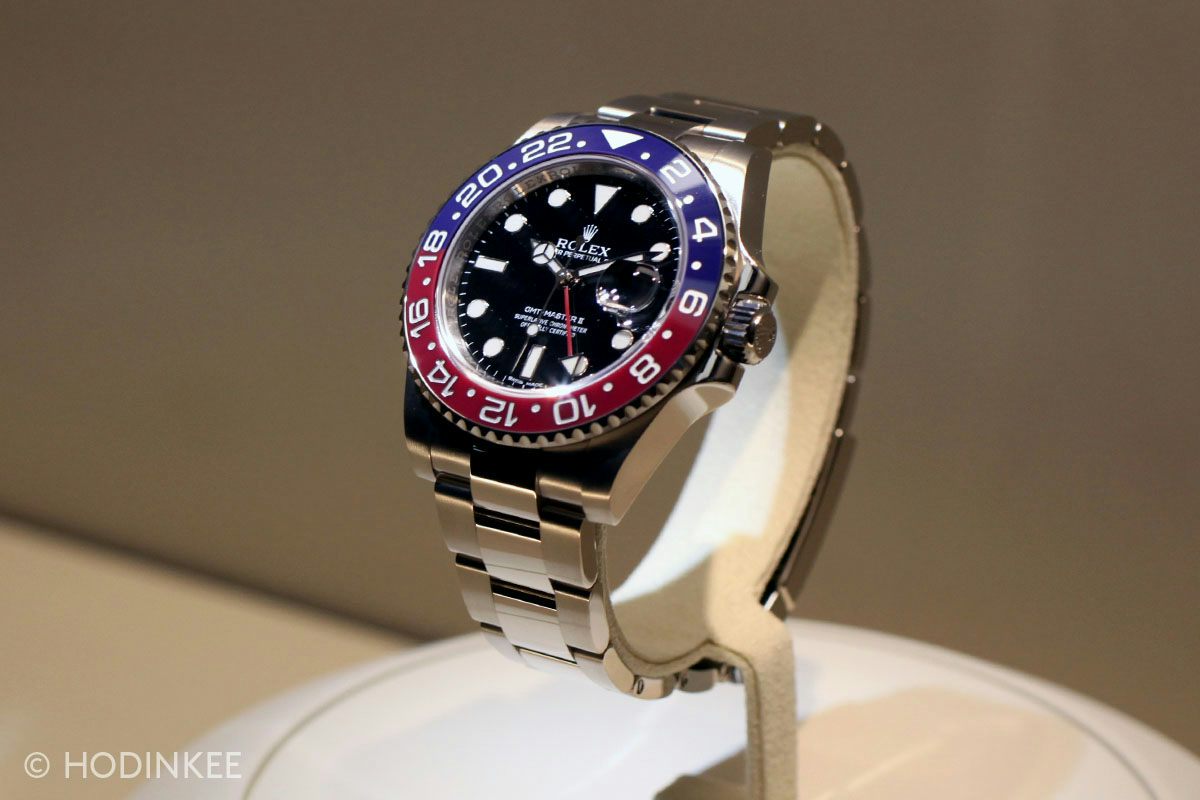
The solution did not emerge until 2014. After years of in-house development, the brand succeeded in stabilizing a two-tone insert. The process involves complex chemistry in which half of a porous red ceramic ring is impregnated with specific metal salts before being fired in a kiln, turning a deep blue during vitrification. But the manufacturer had a major surprise in store: this innovation was initially featured exclusively on the 116719BLRO model, whose case and bracelet are crafted from solid 18-karat white gold. The “Pepsi” GMT-Master takes a radical departure from its origins as a steel tool watch to venture into the realm of high jewelry. The retail price sharply limits demand.
Steel, the Jubilee, and the waiting list
Excitement peaked in the spring of 2018 with the unveiling of reference 126710BLRO. Oystersteel made its return on the model with the red and blue bezel. To visually distinguish this mass-market version from its white gold counterpart, the watch is mounted on a five-link Jubilee bracelet—more supple and more lustrous—marking a return to the aesthetic combinations of the 1970s. Inside, the new Caliber 3285 extends the power reserve to 70 hours thanks to the Chronergy escapement.
The release of this model sparked unprecedented commercial frenzy. Retailers’ display cases emptied instantly. Waiting lists stretched for years—if they weren’t simply closed to new customers altogether. On the gray market, the watch immediately sells for double, then triple, its suggested retail price. The object loses its primary function as a timekeeping instrument to become a medium of exchange—a liquid asset whose value curve is tracked more closely than the smoothness of its second hand.
Today, turning the notched bezel of a 126710BLRO still offers the same mechanical resistance, the same metallic click every half-hour mark. The red arrow-tipped hand continues to sweep across the dial in twenty-four hours. But the majority of these pieces will never pass through the security gates of an airport terminal. They rest in the padded darkness of safes, where the distinction between the red of day and the blue of night ultimately holds no relevance.