Make Texture a preferred source on Google to support us
Add Texture to GoogleThe clock stopped before it even reached the 48-hour mark. In Verbier, a strategically located chalet—nestled at the edge of the slopes and boasting the rare privilege of being accessible to an international clientele—recently changed hands in a lightning-fast transaction. The price of this express sale, orchestrated by the teams at real estate firm Knight Frank and broker Alex Koch of Gooreynd? Over 15 million francs. Far from being an anomaly, this lightning-fast sale illustrates the dizzying vitality of the Swiss luxury market, governed by its own laws, its own rhythms, and, above all, its own geography.
Within Switzerland, the pool of potential buyers is enormous. Knight Frank estimates that there are approximately 17,700 residents in Switzerland who belong to the very exclusive category of “Ultra-High-Net-Worth Individuals” (UHNWIs)—those with a net worth exceeding $30 million. When it comes to purchasing a primary residence or a pied-à-terre, these buyers enjoy virtually unlimited freedom of choice. However, investing 10, 20, or 50 million francs in a property is not simply a matter of falling in love with the architecture. It is a delicate balance that blends tax optimization, the quest for absolute seclusion, and a paradoxical need for social life.
The Obsession with Water and the Clash of Aesthetics
The latest report from UBS on the luxury real estate market examined the dynamics of 31 Swiss locations. The results paint a very clear picture: capital is flowing toward four major hubs—the Lake Geneva region, the Zurich area combined with Zug, Ticino, and the Alpine arc. Within these regions, one requirement takes precedence over all others, driving property values to new heights: direct access to a lake.
For a foreign buyer as well as a long-time resident, the prospect of stepping out of one’s garden to dive into freshwater is the holy grail of residential living. This level of exclusivity, made rare by the scarcity of lakeside property, commands a considerable premium, as Ingrid Göckenjan of the Leu & Partner agency points out. On the shores of Lake Geneva, a 10 million franc entry price does not guarantee a move-in-ready property; at that price, the buyer often acquires a building that will require extensive renovation work.
Prices per square meter reflect this geographic scarcity. Cologny, on Geneva’s left bank, reaches a staggering average of 43,000 francs per square meter. Lake Zurich is no exception, with prices reaching 37,000 francs in Küsnacht and 35,000 francs in Wollerau. These figures, already stratospheric, mask the absolute records set for the most exclusive properties.
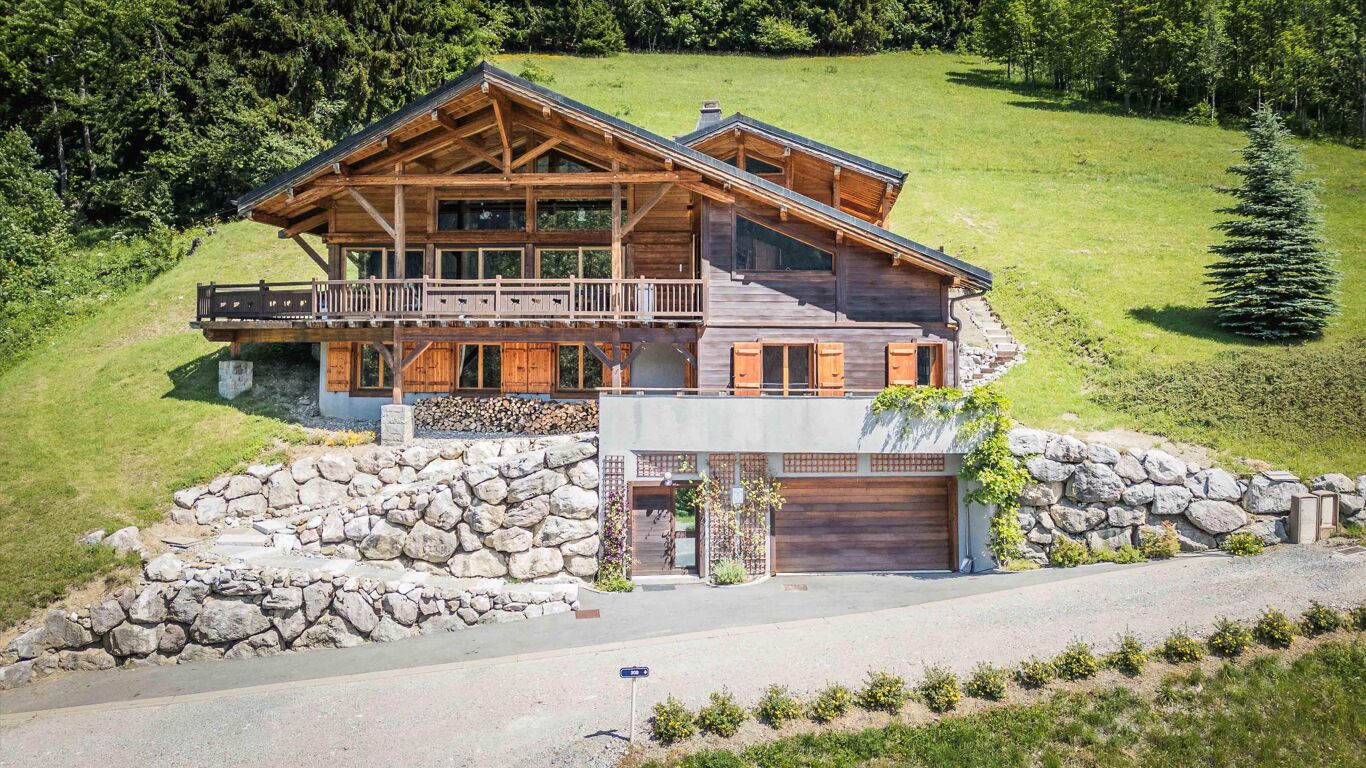
The interior space must live up to the sums invested. The psychological threshold for living space is generally set at 500 square meters. Surrounding this core are hotel-style amenities: vast grounds that ensure privacy, integrated wellness areas, swimming pools, and garages large enough to accommodate several vehicles. Stylistically, the market is seeing a generational divide. Real estate broker Claude Ginesta notes the appetite among some clients for historic villas built between 1890 and 1930. But younger buyers or those of recent wealth are setting a new standard: commissioning renowned architectural firms to design contemporary spaces. Flat roofs, sky-high ceilings, vast glass surfaces—and every bedroom must have its own walk-in closet and private bathroom.
Mapping the Heritage: Escaping the Metropolis
While stone and design are important, the compass of the ultra-wealthy is often guided by a far more pragmatic imperative: taxation. An analysis by the consulting firm Wüest Partner reveals a veritable exodus at the top. The twenty locations most sought after by this financial elite are not found in the city of Zurich, but are nestled in significantly more attractive outlying cantons, such as Zug, Schwyz, Lucerne, St. Gallen, and Nidwalden.
For these individuals, the real enemy is not income tax, but wealth tax. Attorney and tax expert Samuel Ramp quantifies this difference in striking terms. Consider the case of a single taxpayer with a taxable net worth of 100 million francs. If he chooses to live in the heart of Zurich, the tax authorities will charge him approximately 633,000 francs each year. Moving just a few kilometers to Zug reduces the bill to 220,000 francs. In Wollerau or Freienbach (canton of Schwyz), the amount drops to 104,000 francs, leaving only the Nidwalden village of Hergiswil to offer an even lower tax rate. A difference of half a million francs a year alone justifies a change of address.
Some homeowners therefore no longer hesitate to sell their Zurich villas—valued at between 15 and 20 million francs—to cross the cantonal borders into Schwyz or Zug. Family logistics adapt willingly to this change: hiring a private driver to handle the daily commutes for children attending school in Zurich costs infinitely less than the taxes they would continue to pay in the city.
Moreover, tax attractiveness is not limited to gross tax rates. The ultra-wealthy seek predictability. The level of service provided by cantonal authorities—and their willingness to enter into binding advance rulings on the treatment of specific types of income—often proves decisive in the final choice of where to settle.
The Illusion of Low Tax Rates and the Social Fabric
However, accounting rationality reaches its limits when boredom sets in. The case of an expatriate family that recently arrived in Switzerland speaks volumes. Attracted by the minimum tax rate in the canton of Nidwalden, they had purchased a property there. The experiment was short-lived. Longing for cosmopolitan vibrancy and frustrated by a sparse social life and insufficient cultural offerings, the family sold their property and moved to the outskirts of Geneva, prioritizing lifestyle over extreme cost optimization.

Cologny, in fact, perfectly illustrates this paradox. The town bordering Geneva has established itself as one of the most expensive places in the country, even though the wealth tax for a resident subject to ordinary taxation there exceeds that of the city of Zurich. Buyers there pay a premium to be part of a prestigious community. The CEO of a major watch manufacturer, for example, did not hesitate to pay 38 million francs for a property there, even though it had no direct access to Lake Geneva. It should be noted, however, that Geneva retains a key advantage for foreign clients: lump-sum taxation (based on expenditure), a highly advantageous status that has been completely abolished in the canton of Zurich.
The Discreet Dance of Transactions
In this exclusive market, the golden rule is to avoid making mistakes. That is why many international newcomers prefer to rent a luxury estate at first, until they can ensure that the local environment aligns with their daily routine. The search for the permanent property then mobilizes armies of advisors, lawyers, and representatives from family offices.
In fact, a large portion of these villas change hands under the radar, before they even reach public sales channels. This closed circle facilitates these lightning-fast transactions orchestrated by hyper-specialized brokers. Nevertheless, as Ingrid Göckenjan points out, public listing (or “on-market”) remains a powerful strategy employed by sellers to broaden the pool of prospective buyers and drive up bids in the face of scarce supply.
Altitude as the New Normal and the Rise of Kilchberg
Lifestyles are becoming globalized, and our relationship with geography is changing. Long confined to the status of mere winter retreats, Alpine resorts such as Verbier, Gstaad, and St. Moritz are now establishing themselves as primary residences. The distance from major business centers matters little to a population that owns pied-à-terres in London, New York, or Zurich. As a result of this paradigm shift, UBS estimates that prices in the luxury segment of major resorts have risen by 39% over the past five years. In St. Moritz, scarcity has pushed the average price above 50,000 francs per square meter.
But for those who refuse to split their lives between the mountains and the city, one town has emerged as the ultimate compromise: Kilchberg. Once looked down upon by the elites, who relegated it to the “Pfnüselküste” (the “cold coast,” a reference to the left bank of Lake Zurich), the town has made a stunning comeback. Located on the immediate outskirts of Zurich and offering easy access to the economic hub of Zug, it combines discretion, a lakeside setting, and prime real estate.
The secret ingredient behind its rise lies in an aggressively reduced tax rate. While not quite matching Zug, Kilchberg lowered its tax rate from 83% to 72% between 2008 and 2018, becoming one of the most tax-friendly enclaves in the canton of Zurich. This strategy has sent demand soaring: the average price of a 150-square-meter luxury apartment there now stands at 5.1 million francs. This valuation now allows it to surpass historically unshakable locations such as Küsnacht and Wollerau. A new center of real estate power has emerged.