Make Texture a preferred source on Google to support us
Add Texture to GoogleThe true luxury of independent watchmaking lies not only in a designer’s freedom, nor in the rarity of a series of just a few dozen pieces. It also rests on a far less photogenic reality: the ability to source a mainplate, a mainspring, a case, a crystal, or a movement when one does not possess the machinery capable of producing them oneself. Yet it is precisely this discreet realm—that of suppliers—that is becoming the new object of desire for major conglomerates. Behind the recent equity investments and acquisitions lies a crucial question: who will still be able to manufacture freely in the future?
Dependence: A Historical Prerequisite for Creation
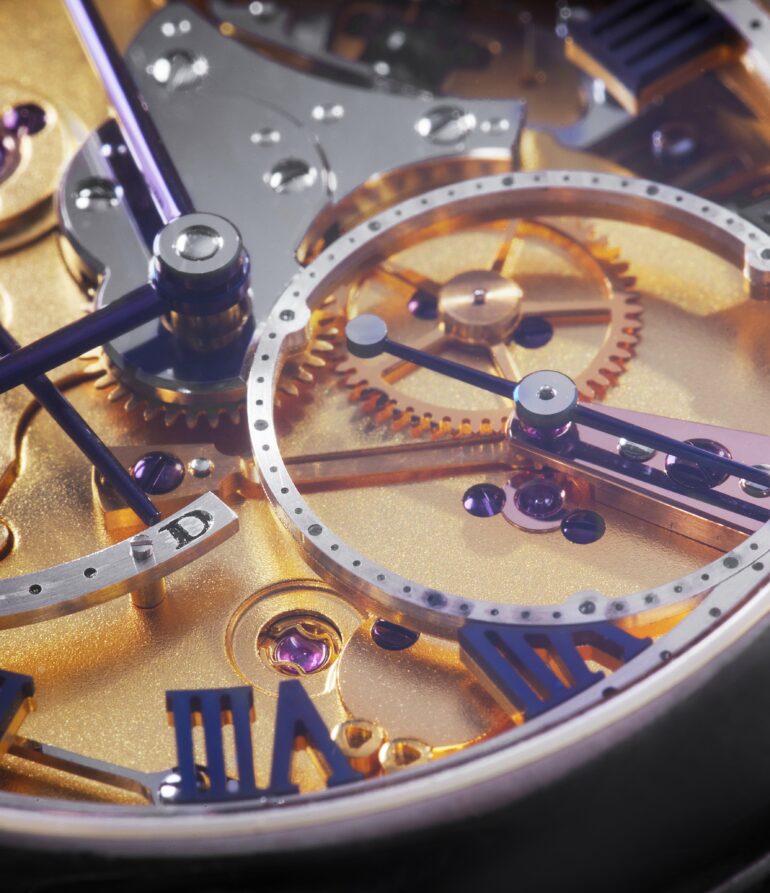
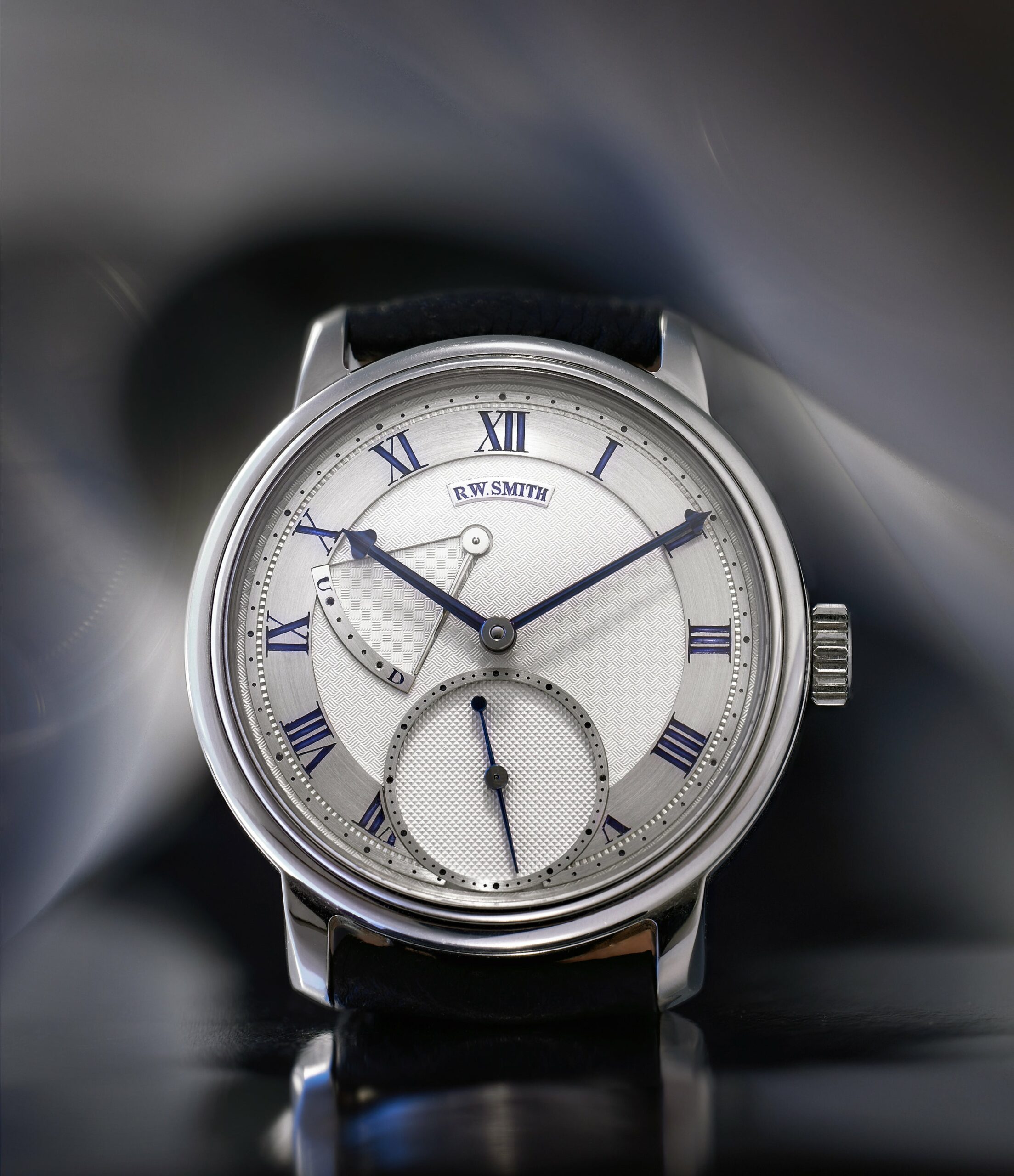
The image of the master watchmaker working alone at his workbench remains appealing. Yet it tells only part of the story. With a few exceptions—notably among practitioners who follow George Daniels’ method, such as Roger Smith—even the most inventive workshops rely on a network of external expertise. Designing a movement, developing a complication, and performing a significant portion of the finishing work does not mean that every component is machined in-house.
This organizational structure is by no means a contemporary anomaly. Swiss watchmaking has long thrived on specialization: one workshop for movement assemblies, another for dials, and yet another for cases or hands. Outsourcing allows small designers to devote their time to the ideas, movement architectures, and finishing details that make their watches unique. It also makes it possible for very low-volume brands to exist—brands that could not justify the industrial investments required for in-house production.
But this flexibility comes at a price. A watchmaker may be independent on paper—100% owned by its founder—while remaining heavily dependent on companies that manufacture its essential components. The term “independent” thus describes ownership structure rather than operational autonomy. It is this nuance that is taking on new significance today.
Major conglomerates are moving up the supply chain
Investments in independent brands are now clearly visible. In August 2024, Chanel acquired a 25% stake in MB&F, the watchmaker founded by Max Büsser and known for its collaborations and unconventional mechanical designs. Max Büsser retains a 60% stake, while Serge Kriknoff, head of research and development, holds 15%. This move is part of an already extensive strategy: Chanel also holds stakes in F.P. Journe, Romain Gauthier, Bell & Ross, and the movement manufacturer Kenissi.
Other transactions confirm the market’s appetite. De Bethune is now majority-owned by The 1916 Company, a specialist in watch distribution. In April 2026, Timothée Chalamet became a shareholder in Urban Jürgensen. At first glance, these capital movements seem to offer independent watchmakers a welcome resource: financial means, a network, and greater resilience to economic downturns.
The most profound change, however, lies upstream, where the tools of creation are made. In November of the previous year, LVMH acquired a minority stake in La Joux-Perret, a movement manufacturer already owned by the Citizen Group. La Joux-Perret occupies a special place in the ecosystem: for an independent mid-range brand seeking to take a leap forward in mechanical watchmaking, the company is often a natural partner.
LVMH has clearly positioned this transaction as a means of securing its supply chain and development capabilities, particularly for sustainable solar movements intended for TAG Heuer, Zenith, and Hublot. The rationale is industrial. A group that wants to control its lead times, volumes, and innovation cannot allow its strategic needs to depend entirely on external players. However, the same decision may restrict access to resources for brands that lack both the order volume and the financial clout of the major luxury houses.
The 1,000-piece threshold
In watchmaking, the constraint is not limited to the quality of a caliber or the excellence of a supplier. It is often measured in minimum quantities. AMT, Sellita’s high-end division, for example, imposes a minimum order threshold of 1,000 movements. Such a requirement is understandable for an industrial operation. However, it remains out of reach for many small workshops whose ambitions are sometimes limited to just a few dozen watches, or whose initial production runs are intended precisely to finance subsequent ones.
Furlan Marri’s Flyback Chronograph illustrates the value of these technical collaborations: the watch uses a custom-made Sellita AMT movement. This capability allows an agile brand to offer a more tailored solution than a standard movement alone. But when the most capable suppliers align themselves with large conglomerates, access to this type of customization risks becoming more complex, slower, or more expensive.
The situation is reminiscent of a major precedent. ETA’s integration into the Swatch Group has already led to supply tensions when the group chose to be more selective about its customers. ETA movements remain accessible, but the episode demonstrated that a widely distributed component can become a strategic lever. The independent watchmaking sector has learned never to take its supply chain for granted.
When Micromechanics Changes Sides
The case of Inhotec takes this line of thinking a step further. In August 2025, Audemars Piguet acquired a majority stake in this micromechanics company, with which the manufacture had been working for several years. Inhotec produces, among other things, movement plates, springs, and other precision components for numerous brands. Its founder, Alexandre Eme, remains CEO, and the company formally retains its independence.
In practice, this vertical integration inevitably alters market perception. When a supplier becomes predominantly tied to a single brand, its manufacturing decisions can no longer be viewed in the same light by other clients. Audemars Piguet secures expertise that is essential to its own developments; competitors, meanwhile, must wonder what place they will retain in the order book.
BA111OD’s acquisition of BCP Tourbillons stems from a similar trend, though with a different scope. This involves the merger of two young, independent players. While the deal certainly brings expertise in-house, it does not represent the takeover of a link in the chain by an established giant. This distinction matters: not all acquisitions carry the same weight in terms of the sector’s diversity.
Kross Manufacture: The Most Telling Sign
Chanel’s investment in Kross Manufacture is undoubtedly the most telling sign of this new phase. Founded in 2020 by Marco Tedeschi, Kross Manufacture operates in a different sphere than the major movement manufacturers. Its specialty lies in small batches of complete movements—precisely the kind that very small brands need and that industrial manufacturers cannot always produce.
This type of structure acts as the invisible backbone of independence. Without it, a designer with an idea, a sketch, and the know-how to bring it to life may find themselves stymied at the threshold of production. Chanel’s interest in Kross Manufacture does not mean the company will stop working for small clients. There is no reason to assume that. It does, however, show that capabilities tailored to micro-volumes have acquired strategic value.
Three deals involving suppliers in eighteen months are enough to signal a trend. The big names are no longer content to merely observe the independent scene or take a stake in it. They are forging closer ties with those who make this scene materially possible.
Money as Protection, or as a Filter
This development is not necessarily a bad thing. The independent watchmaking sector has already paid the price for its extreme fragility. The 2008 financial crisis hit it hard. Before creating his Deep Space Tourbillon, Vianney Halter went through a difficult period when his workshop, Janvier, had to lay off its employees. Like many small players, he lacked a financial safety net that would allow him to sustainably absorb an economic shock.
Investments from powerful groups can provide this stability. They give workshops the time, capital, and resilience that many creators once lacked. The rise of independent watchmakers is undeniable: of the 66 exhibitors at Watches & Wonders this year, 38 fell into this category. In London, the Days of the Independents, organized at the Lansdowne Club by The Limited Edition, brought together 35 independent brands. The public, collectors, and investors are now paying attention to this segment in a way that individual artisans did not always receive.
It remains to be seen which independent watchmakers will emerge stronger from this boom. While financing protects established houses, if components, movements, and expertise become harder for newcomers to access, the industry risks closing its doors to those who haven’t yet entered. The next big idea in watchmaking will not depend solely on a bold design or a virtuoso watchmaker. It will also depend on the very real possibility of ordering a few pieces, on time, from someone who is still willing to make them.