Make Texture a preferred source on Google to support us
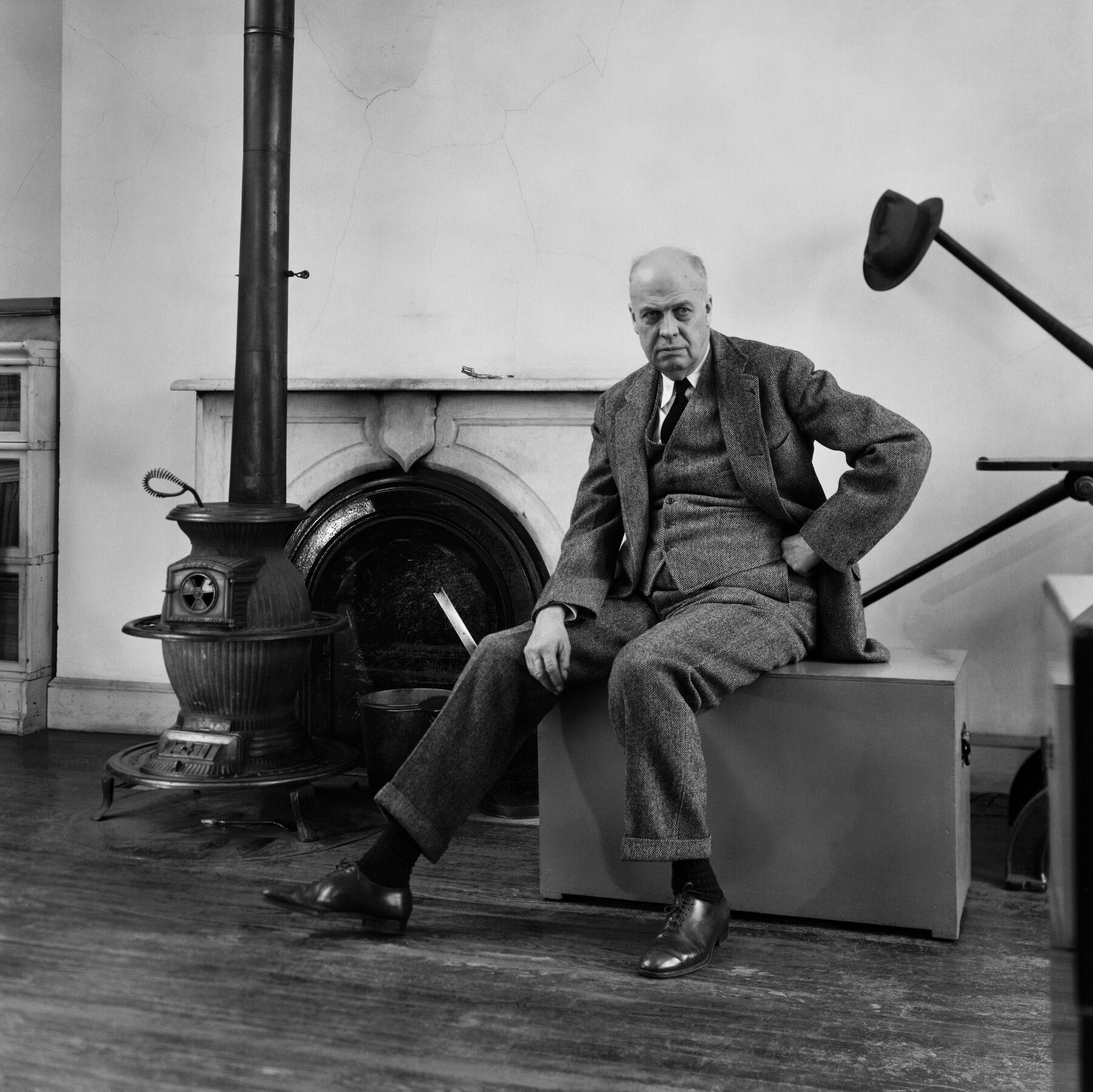
Add Texture to GoogleThe image of Edward Hopper—etched in the collective imagination as the painter of urban solitude and melancholic silences—is about to undergo a profound reevaluation. A new biography, titled *Edward Hopper: A Life*, written by art historian Louis Shadwick and published by Yale University Press, challenges the myth of the apolitical, solitary genius. The result of doctoral research conducted at the Courtauld Institute of Art in London, this book draws on previously unpublished archives, notably the writings and diaries of Josephine Nivison Hopper, the artist’s wife, who was herself a painter. In it, the author explores a Hopper far more deeply rooted in his era than previously imagined, examining his complex relationship with American identity, nationalism, and the political tensions of his time.
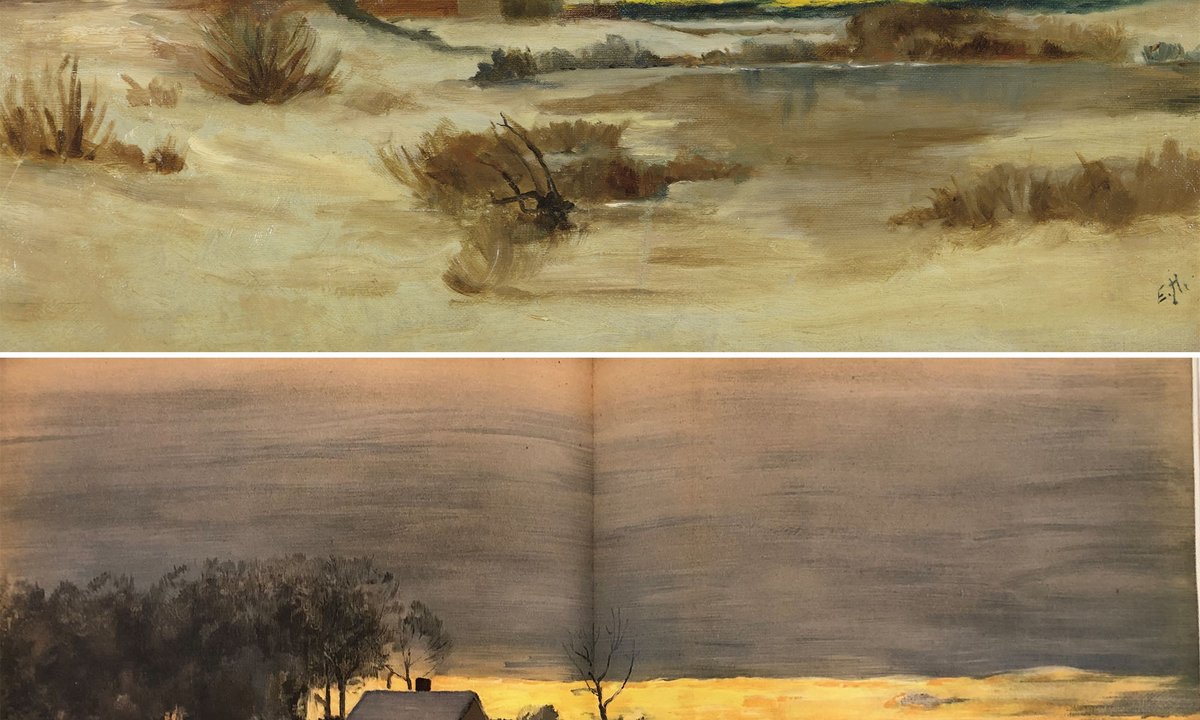
This deconstruction of the myth is not Louis Shadwick’s first foray into the gray areas of the American master’s legacy. In October 2020, the historian had already demonstrated that Hopper’s early oil-on-canvas works were not original observations of nature, but copies of works by other painters. This new volume, published in October 2026 in the United States for $40 and expected on November 24 in the United Kingdom for 30 pounds, offers a more nuanced reading of a body of work we thought we knew by heart. It reveals a man deeply affected by the societal issues of 20th-century America, far from the idealized image of a contemplative hermit completely disconnected from material and political realities.
A New Stronghold for Contemporary Art in Georgia
While the West is revisiting the classics, Eastern Europe is seeing the emergence of private institutions of rare ambition. In Kvareli, in the heart of the Kakheti wine region, the Kvareli Foundation for Contemporary Art is set to open its doors on November 2, 2026. This project is led by Georgian businessman Jemal Inaishvili, a collector who made his fortune in logistics and maritime freight. Set on a 46.5-hectare estate, the institution is more than just an exhibition space: it also includes a five-star hotel, The House Hotel Kvareli, as well as a winery named Vazovani.
The architecture, designed by the Georgian firm Midamo under the direction of Giorgi Chkonia and Dato Danelia, features a two-story building. Its façade, composed of bright red slats set within a gray metal frame, stands out against the surrounding landscape. The site also features an open-air auditorium on its rooftop and a sculpture garden. Under the artistic direction of Nino Sulkhanishvili, the foundation is launching its program with the exhibition “Georgian Contemporary Art: Origins and Continuities.” This retrospective traces the evolution of artistic creation in Georgia since the 1960s, seeking to bridge the gap between generations.
The opening of this foundation, which will offer free admission, comes amid a particularly tense political climate in Georgia, marked by popular protests against recent legislation on foreign influence. In this context, the leadership of the Kvareli Foundation has made it clear that it intends to become a haven for creativity, notably by welcoming artists who are currently excluded from state-run public institutions. Originally announced for October 31, the opening date was ultimately set for early November, marking a significant milestone for the cultural scene in the Caucasus.

Turin Celebrates Marisa Merz’s Centennial
In Italy, a major figure of Arte Povera is being celebrated. One hundred years after her birth in Turin on May 23, 1926, Marisa Merz is the subject of a major institutional exhibition. Through April 4, 2027, three of the city’s most important institutions are joining forces for the project “Marisa Merz – La danza delle ore.” This collaborative celebration is supported by the Fondazione CRT and offers a journey through the work of an artist whose practice has always blended the intimate with the monumental, the domestic with the cosmic.
The exhibition is on view at the Castello di Rivoli Museo d’Arte Contemporanea, curated by Francesco Manacorda and Marianna Vecellio; at the Fondazione Merz, directed for the occasion by Beatrice Merz and Sébastien Delot; and at the GAM (Galleria Civica d’Arte Moderna e Contemporanea), where Chiara Bertola and Chiara Parisi are orchestrating the presentation. One of the central pieces in this retrospective, highlighted for its poetic power, is titled *E il naufragar m’è dolce in questo mare*. This work perfectly illustrates the ability of Marisa Merz, who passed away in 2019, to transform simple materials into installations imbued with a singular spiritual and temporal intensity.
This convergence—between a reinterpretation of a giant of American painting, the emergence of a committed private institution in Georgia, and a tribute to a pioneer of Italian art—charts a cultural landscape in which memory and resistance to established systems occupy a central place. Whether through the study of new archives or the creation of spaces for artistic freedom, these developments reflect a persistent desire to redefine historical and contemporary narratives in art.