Make Texture a preferred source on Google to support us
Add Texture to GoogleThe Evolution of a Cultural Anchor
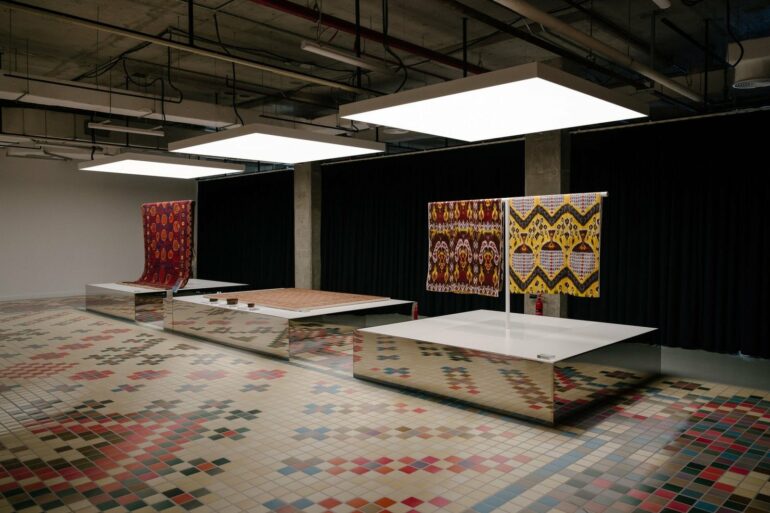
Changing the typography on an institution’s facade is never a purely aesthetic act, especially in the institutional landscape of the Gulf, where every architectural or semantic detail carries significant weight. In Doha, the Fire Station has just reached a decisive milestone in its young history. By adding the explicit designation “Center for Contemporary Artistic Practices” to its original name, the venue is moving beyond a strictly receptive function to claim a role as an active driving force. The distinction is significant: it is no longer merely a matter of hanging works conceived elsewhere on the gallery walls, but rather of bringing them to life right here. This strategic reorientation finds its most striking expression in the impressive exhibition that will occupy its walls from November 8, 2026, to February 6, 2027.
Conceived as the logical culmination of a nine-month intensive study cycle, the event was more than just a small, private opening. The opening night was held under the direct patronage of Sheikha Al Mayassa bint Hamad Al Thani. The presence of the chair of the board of directors of Qatar Museums underscores the importance attached to this development. The stated ambition goes beyond a simple exhibition: the center now positions itself as a crossroads where material production, fundamental research, continuous learning, and the essential critical reflection that validates any contemporary endeavor must inevitably converge.
Selection Based on High Standards and the Mystery of the Numbers
The scale of this inaugural edition is measured first and foremost by its international appeal. Following a global call for submissions, the Qatari institution received nearly a thousand applications. This colossal volume of proposals attests to emerging artists’ appetite for new territories of experimentation. After a particularly rigorous screening process, a small elite group was selected, creating a map that brings together Qatar and fourteen other nations.
Yet a curious discrepancy persists in the records of this inaugural cohort, introducing an element of the unexpected into an institutional process that is often imagined to be meticulously planned. While the exhibition labels and official documents from Qatar Museums list twenty-two visual artists on display, the initial program announcements released by the Fire Station mentioned twenty-three selected artists. The reason for this discrepancy remains unexplained. Did someone drop out along the way? Was there a difference of opinion? This minor discrepancy serves as a timely reminder that managing a group of people over the long term often defies administrative metrics.
A Pedagogy of Intellectual Clash
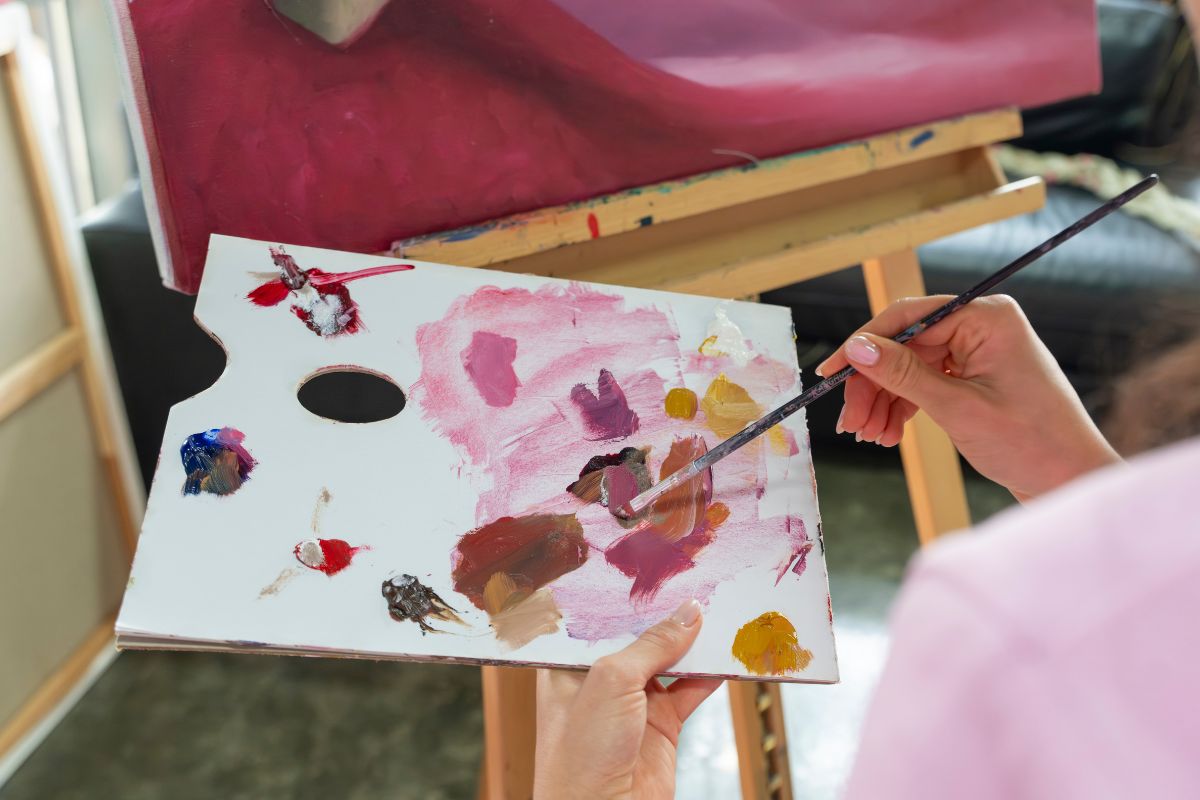
The studious seclusion imposed on these artists for three quarters stands in stark contrast to traditional academic curricula. From the outset, the intensive study program was designed in opposition to the idea of a mere workshop focused on formal refinement. The institution states it plainly: the challenge was to create a dialogue between raw practice and the depth of theoretical reflection, refusing to limit the guidance to the mechanical acquisition of new techniques. Virtuosity in line work or mastery of editing software matters less than the strength of the concept underlying them.
To orchestrate this intellectual friction, the residency was punctuated by a continuous stream of guest speakers. Academics, architects, other visual artists, and exhibition curators were invited to mentor the residents. The learning process was structured around a demanding schedule, alternating between solitary work in the studio and the public presentation of ideas during seminars and lectures. At the heart of the educational process lay the exercise of collective critique—a process of self-revelation in which each participant had to defend the relevance of their intuitions under the sharp gaze of their peers and mentors.
The Scenography of Freedom: The Mark of Wael Shawky
This demanding maieutic approach bears the signature of Wael Shawky. Serving as both artistic director of the Fire Station and curator of this final exhibition, he has established experimentation and intercultural exchange as cardinal principles. This philosophy is clearly evident in the very organization of the space. Given the diversity of the fifteen nationalities represented and the disparity of the works on display, the risk of succumbing to the temptation of a reductive unifying theme was immense. The curator rejected this easy path.
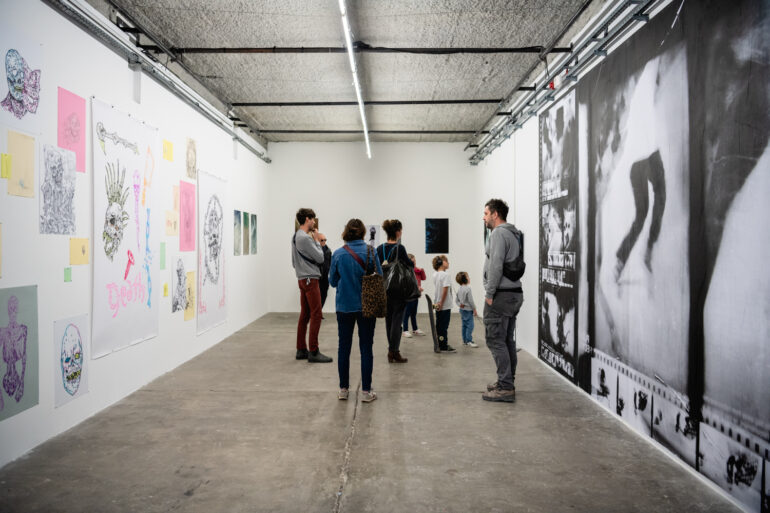
The exhibition route rejects any chronological dictates. The display unfolds across five distinct rooms, even spilling beyond this framework to extend into the complex’s outdoor courtyard. Each artist was given a dedicated space to realize their own artistic vision. Visitors thus navigate intuitively among sculptures, video projections, sound pieces, immersive installations, paintings, and various mixed-media works. No authoritarian overarching theme restricts interpretation. The connections between the works are not highlighted with a marker by directive texts; they emerge organically as visitors wander, revealing silent dialogues between aesthetics that are, at first glance, antagonistic.
Qatari topography as raw material
While the form resists homogenization, the themes explored by the visual artists reveal an intense connection to the land that has welcomed them. The influence of the local geography has acted as a powerful catalyst on these minds in transit. The unique rhythms imposed by a temporary stay far from home have naturally directed much of the artistic exploration toward questions of belonging, uprooting, and migratory flows.
Doha did not remain a mere inert backdrop. The starkness of its spatial contrasts has literally seeped into the creative process. The mineral barrenness of the desert landscapes, the shifting coastline, and the visual and auditory harshness of the vast peripheral industrial zone have provided tangible points of reference for the residents. Building on this capture of immediate reality, the strictly personal narratives shift toward much broader questions. The works on display explore the fragility of collective memory, the weight of inherited legacies, and the complexity of the bonds that disparate communities maintain with an environment undergoing violent transformations.
The physical foundation of a long-term vision
By bringing together under one roof hands-on production, critical guidance, and public presentation, the Fire Station validates the relevance of its nonprofit model. The site’s institutional presentation suddenly takes on its full meaning as one walks through its corridors: the creative studios, technical workshops, vast exhibition halls, and meeting spaces are no longer static concepts on a promotional brochure, but the operational foundation of a living ecosystem. The intensive study program thus emerges as the backbone of this reinvention.
This new positioning effectively formalizes dynamics that were already brewing within these walls: supporting early-stage research, fostering artistic risk-taking, and fostering engagement with an increasingly discerning audience. This first cohort, now coming to a close, demonstrates the venue’s capacity to generate an extraordinary diversity of formats and ideas. The challenge in the coming years will be to maintain this creative tension and to observe how this initial ambition will take root over time, once the excitement surrounding this first graduating class has definitively subsided.