
Make Texture a preferred source on Google to support us
Add Texture to GoogleMore than just a fashion designer, Ralph Lauren has established himself as the true cartographer of the North American imagination. In a monumental work of over 600 pages, *Ralph Lauren: Fashion Shows* (Éditions de La Martinière), journalist Bridget Foley explores half a century of design. This retrospective journey takes us from the manicured lawns of Ivy League campuses to the golden dust of Colorado ranches, proving that, for Lauren, clothing never exists without its setting.
The Invention of a Legacy
The irony of this global empire lies in its origins. Born Ralph Lifshitz in the Bronx in 1939, this son of Ashkenazi Jewish immigrants grew up far from the country clubs and New England estates he would eventually come to embody. It was precisely this outsider’s perspective—fueled by a meticulous observation of the elite’s codes—that allowed him to build an idealized vision of America. More than an heir, he is the architect who made the dream of high society accessible to the masses.
From Accessories to an Empire
His entrepreneurial journey began modestly in the late 1960s with a simple line of ties. Bucking the slim-fit trends of the era, Ralph Lauren introduced bold, wide cuts. Faced with buyers at Bloomingdale’s who tried to make him back down, he refused to compromise his style. This entrepreneurial spirit paid off: in 1972, the launch of the embroidered polo shirt became a global icon. From then on, the brand no longer sold just ready-to-wear clothing, but a slice of a world, later expanded into fragrances, interior design, and even the restaurant business.

The Renewal Strategy
After going public in 1997 and experiencing rapid expansion that drove revenue from $2 billion to $7 billion in the early 2010s, the brand entered a period of turbulence. Its premium image had become diluted due to over-saturation. In 2016, the “Way Forward” transformation plan signaled a return to focus: cost cuts, store closures, and a move upmarket to restore the brand’s desirability. Although Ralph Lauren stepped down as CEO in 2015, handing the reins to Patrice Louvet, he remains, as Executive Chairman and Chief Creative Officer, the guardian of this lifestyle.
A Universal Aesthetic Language
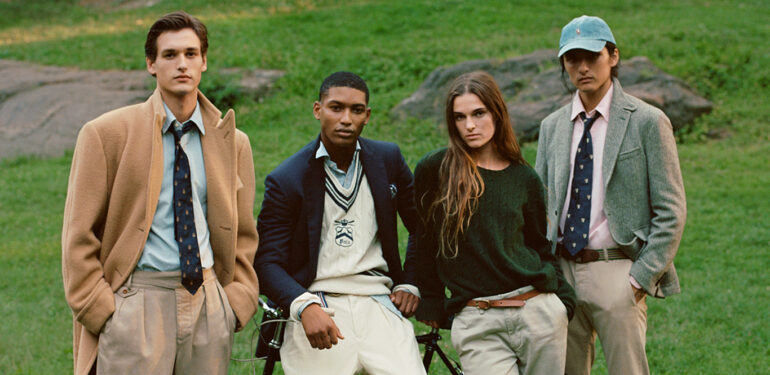
Today, the company has surpassed the $8 billion mark in annual revenue. While the United States remains the leading market, Europe and Asia now provide a solid foundation for the group’s balance. The “old money” aesthetic and understated luxury, embodied by timeless pieces like the navy blazer or the Oxford shirt, resonate anew in an era seeking stability. Ralph Lauren has succeeded in transforming once-exclusive social codes into an international language of status, where every store serves as a window into an eternal America.