
Make Texture a preferred source on Google to support us
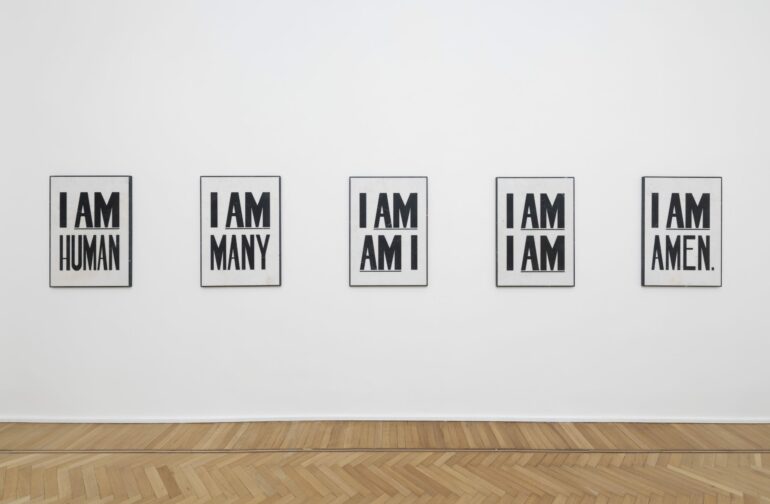
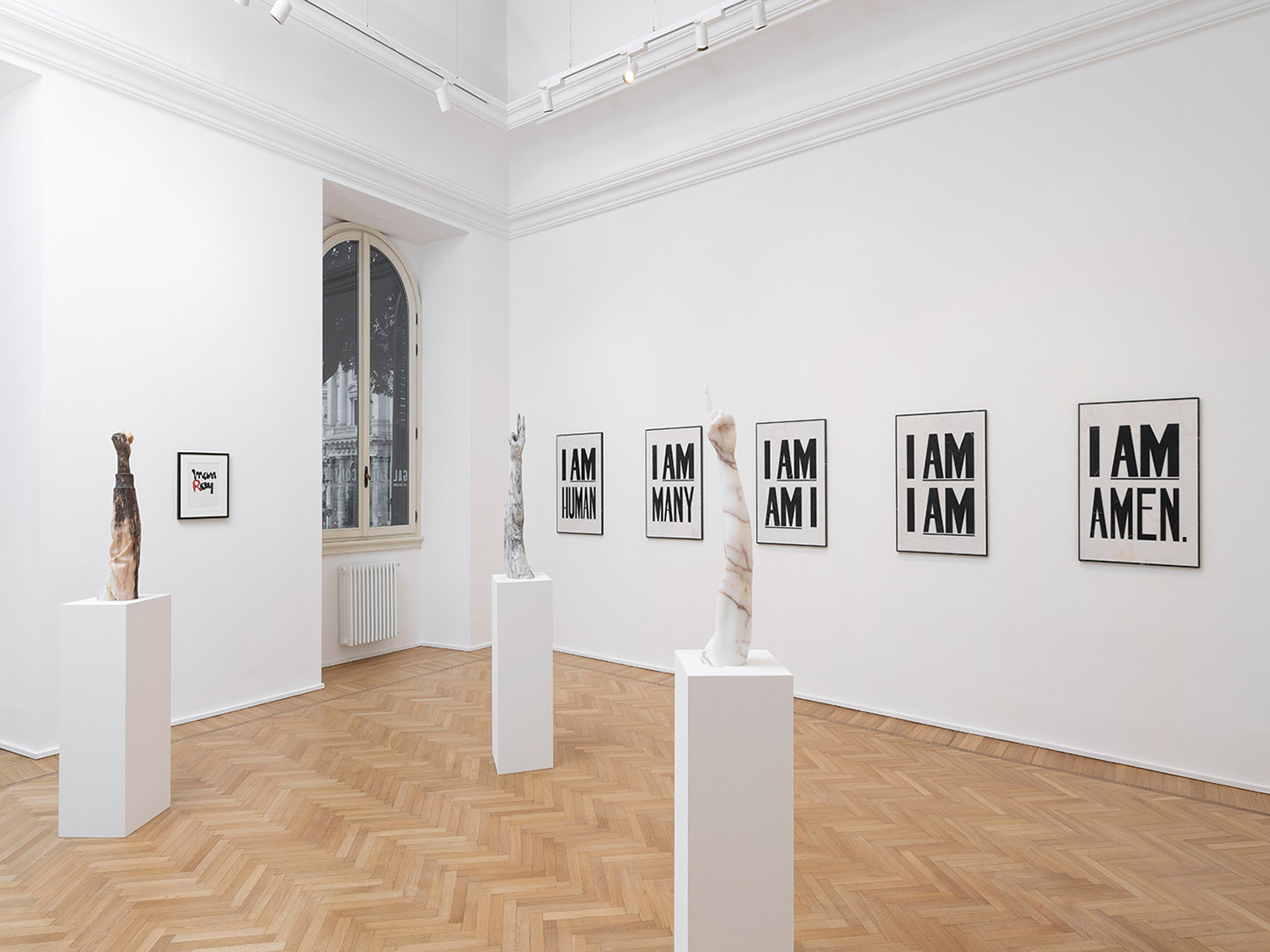
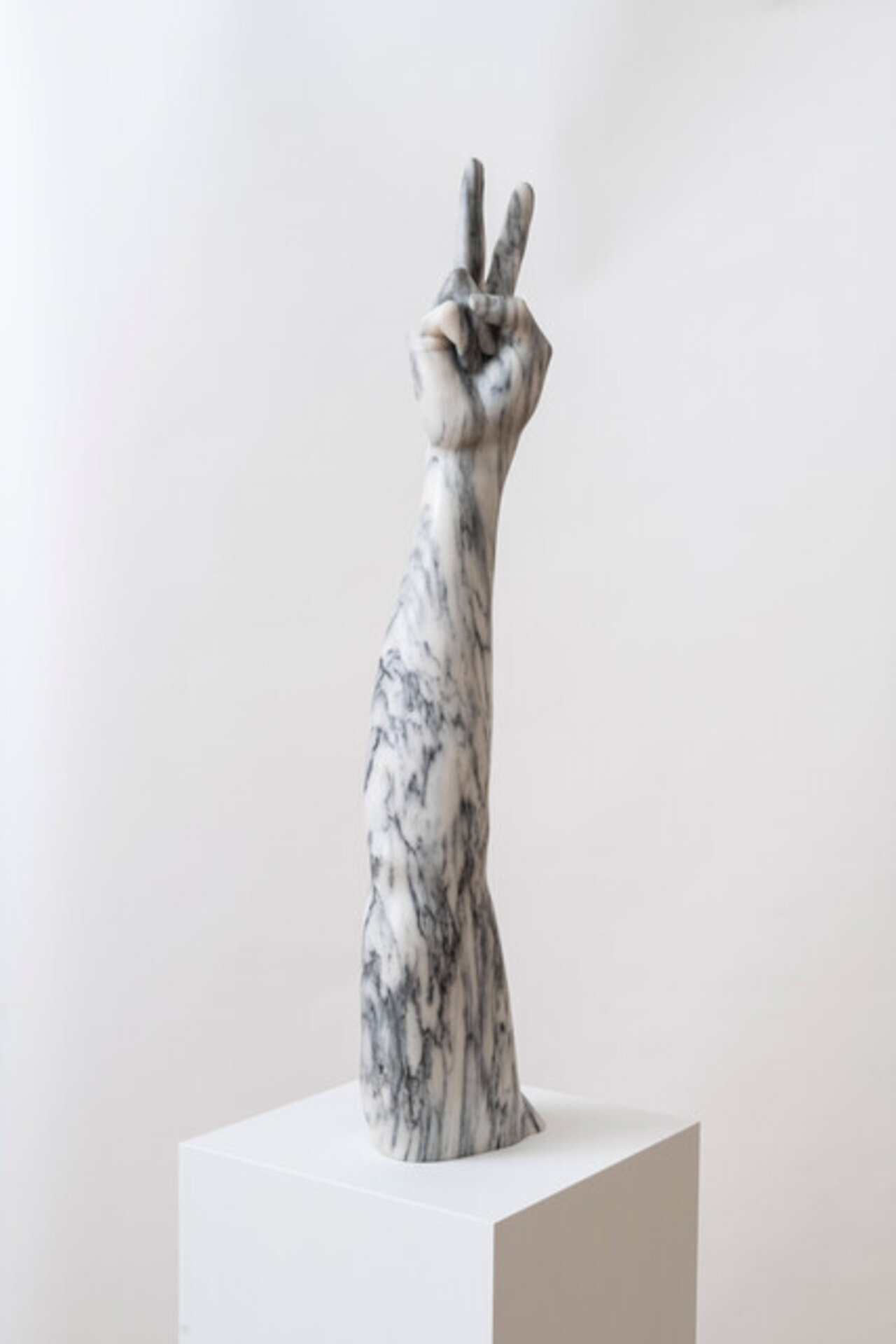
Add Texture to GoogleThe year 1976 marked a quiet transition in the history of photography: in Paris, Man Ray passed away, while in New York, Hank Willis Thomas was born. Fifty years later, this symbolic passing of the torch finds a tangible echo in the galleries of Galleria Continua. Through the two-artist exhibition “Tomorrow I shall contradict myself,” organized in partnership with Territorio, the American artist’s work meets that of the Surrealist master for the first time. This face-to-face encounter, unfolding between Rome and San Gimignano, does more than simply juxtapose two aesthetics; it traces a technical and conceptual lineage rooted in the intimacy of a kitchen transformed into a laboratory.
From the Harlem Kitchen to the Tisch School
For Hank Willis Thomas, his encounter with Man Ray did not take place in art history textbooks, but in the makeshift darkroom set up by his mother, the artist and historian Deborah Willis. It was in this domestic space that Thomas first learned to manipulate images. This early visual education was later formalized at New York University’s (NYU) Tisch School of the Arts. During his freshman year, he immersed himself in the historical techniques that made Man Ray famous: rayographs (or photograms) and solarization.
From this apprenticeship, Thomas learned a fundamental lesson about the plasticity of photography. Man Ray viewed technique as merely a tool in the service of creative freedom, refusing to limit himself to a single medium. Painting, sculpture, film, and assemblage coexisted in his studio. Hank Willis Thomas has embraced this versatility, prioritizing material experimentation and curiosity over narrow specialization. For both artists, the work often arises from a physical manipulation of light and the medium, aiming to reveal what the naked eye does not immediately perceive.
Breaking the Frame: The Genesis of *A Thousand Words*
One of the key lessons Thomas attributes to Man Ray concerns the very structure of the image. By observing how the Surrealist managed to break the boundaries of the frame, the contemporary artist began to question the precise boundary where a representation begins and ends. This exploration of what lies outside the frame and the media context formed the foundation of his first major series, A Thousand Words. In it, Thomas deconstructs advertising and journalistic imagery, applying a conceptual rigor inherited from the deconstruction of forms cherished by the avant-garde movements of the early 20th century.
The exhibition’s title, “Tomorrow I shall contradict myself,” is, in fact, a direct borrowing from a statement by Man Ray. For Thomas, this assertion of the right to inconsistency and constant change is the ultimate expression of artistic freedom. It justifies a creative path that rejects repetition in favor of the search for new forms capable of challenging visual assumptions.
Light as a Revealer of the Invisible
The connection between the two artists is strikingly evident in their use of light as a tool of subversion. Where Man Ray “bent” light through solarization to alter the contours of reality, Hank Willis Thomas uses contemporary technologies to achieve a similar revelatory effect. His recent works rely on the use of retroreflective vinyl mounted on Dibond.
In a piece like *To Be Continued, Unnoticed* (2021), the image is initially static, almost partially invisible to the viewer. It is only when a directional light source, such as a camera flash, strikes the surface of the work that a second level of interpretation emerges. This technical process is not merely a gimmick: it compels the viewer to actively participate in the creation of the image and to become aware of the multiplicity of viewpoints. This luminous “revelation” echoes Man Ray’s experiments, in which chance and darkroom manipulation brought spectral forms to the surface of the photographic paper.
A Decolonial Surrealism
The exhibition also highlights a more political dimension of this legacy. Thomas connects Man Ray’s formal freedom and irony to the reflections of Aimé and Suzanne Césaire. For the Césaires, surrealism was not merely an aesthetic exploration of the unconscious, but a radical revolution of the mind—a lever for dismantling colonial structures of thought.
By appropriating the codes of Surrealism, Thomas challenges the iconography of visual imperialism and collective memory. He uses détournement and juxtaposition to critique the way bodies and stories have been framed by official history. The dialogue established at Galleria Continua thus demonstrates how the tools of the historical avant-garde can be reappropriated to serve as a critique of contemporary society and its inherited representations.
Practical Information
The exhibition is spread across two separate venues. In Rome, it is on view at the St. Regis (Via Vittorio Emanuele Orlando, 3) through December 31, 2026. In San Gimignano, the works are on view in the gallery’s historic space (Via Arco dei Becci, 1), with the exhibition scheduled to close in January 2027. In accordance with the policy of opening private contemporary art galleries for these events, admission to both exhibitions is free and open to the public.