Make Texture a preferred source on Google to support us
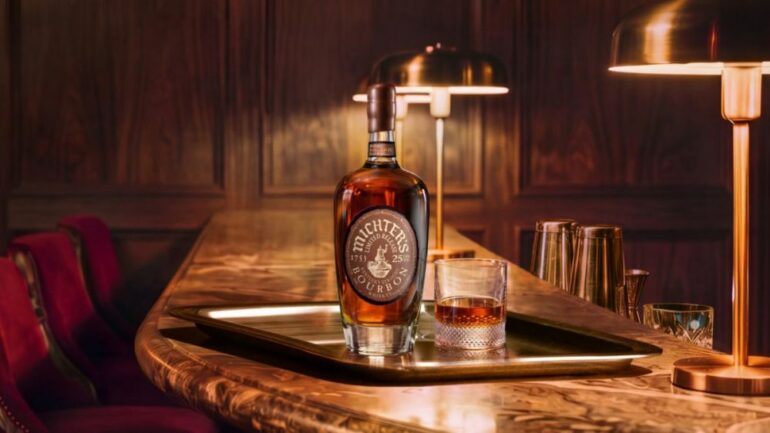
Add Texture to GoogleThere is one piece of information missing from the press release that Michter’s issued on November 17, 2026, from Louisville, and it may be the most interesting one. The company is announcing the return of its 25-year-old bourbon—which has been off the shelves since late 2023—without specifying how many bottles exist or who distilled the spirit they contain. This silence isn’t a communication oversight: it’s part of what you’re buying.
A comeback with no set timeline
Shipments to distributors, bars, restaurants, and liquor stores are set to begin on December 1, 2026. Three years have passed since the previous bottling. The timing of previous releases resembles anything but a planned collector’s strategy: 2008, followed by a long eight-year hiatus, then 2016, 2017 in quick succession, 2020, and 2023. Michter’s embraces this irregularity. The 25-year-old is released only when the barrels reach the desired profile—and not before.
In an industry where limited editions are often timed to coincide with the holiday season or trade shows, this refusal to follow a set schedule has a natural effect: no one can predict the next release, so each new release becomes an event. The delivery date for this edition, just a few weeks before Christmas, obviously works in the wine merchants’ favor. But the company makes no commitments about the future, and collectors who miss out on 2026 have no guarantee they’ll find this bourbon again in 2029.
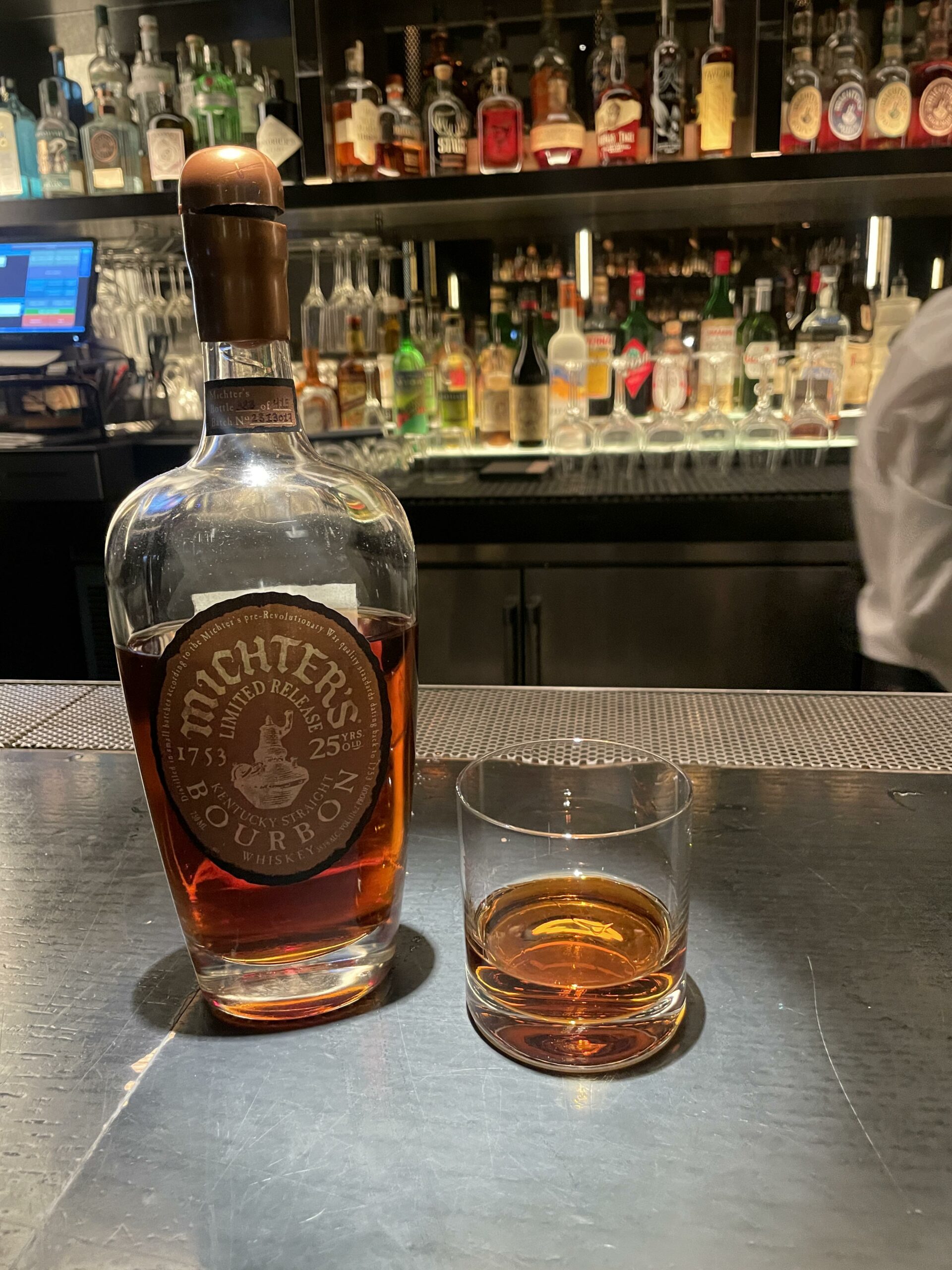
As for the volume, the only official mention consists of three words: “extremely limited production.” No figures are given. Enthusiasts are reduced to playing detective: for the 2023 edition, numbered bottles bore markings such as “109 of 385” or “of 415,” suggesting a run of a few hundred bottles. There is no way to say for certain that the 2026 release will be on the same scale.
Twenty-five years old, not a single drop distilled in Shively
The central paradox of this bourbon lies in a simple subtraction. The Michter’s distillery, located in Shively, in the Louisville metropolitan area, did not begin its own distillations until 2015. A whiskey that will have spent 25 years in the barrel by 2026 was distilled no later than 2001. It must therefore come from elsewhere: this is what the American industry calls a sourced whiskey—a distillate purchased from another producer and then aged, selected, and bottled by the brand.
There’s nothing shameful about this practice in Kentucky, where the barrel trade has long shaped the market. What’s striking is the consistency with which Michter’s keeps this a secret. The label simply states “Distilled and bottled in Kentucky.” The recipe itself is not made public: all that is known is that it is a bourbon made using the sour mash method, primarily from corn, with a portion of rye.
This gap has naturally been filled by others. Bourbon collectors and historians have been putting forward various hypotheses for years. Some point to the New Bernheim distillery, then part of United Distillers, which later became Diageo. Others point to stocks from Stitzel-Weller—a legendary name among enthusiasts—that were reportedly acquired in the late 1990s by Joe Magliocco and Even Kulsveen, the latter of whom was associated with Willett and KBD. None of these theories has been confirmed by the company. They should be taken for what they are: stories from enthusiasts that fuel the legend without proving anything.
This touches on the uniqueness of the 25-year-old. In the luxury sector, value often rests on claimed traceability: a terroir, a plot of land, a workshop. Here, it’s almost the opposite. The provenance remains a mystery, and the mystery fuels desire.
What the company is willing to disclose
Given these gray areas, the technical details provided by Michter’s are all the more precise. The bourbon is 116.2 proof, or 58.1% ABV, meaning it was bottled at a high proof, far above standard drinking strengths. It was aged in new, fire-charred American white oak barrels, in accordance with the requirements of the Kentucky Straight Bourbon designation.
The selection bears two signatures: that of Dan McKee, Master Distiller, and that of Andrea Wilson, Master of Maturation. This is, in a sense, the distillery’s answer to the question of origin. While Michter’s does not disclose who distilled the spirit, it fully claims responsibility for the selection of barrels—in other words, the final judgment. After a quarter-century in wood, the challenge lies in preventing new, heavily charred oak from overpowering the distillate. The distillery claims to have succeeded in this and describes a profile of stone fruits, raisins, toffee, cinnamon, and sweet tobacco, without excessive oakiness despite the length of aging. These are its own notes: you’ll have to taste them for yourself.
The final element of the distillery’s expertise is filtration. Michter’s uses a proprietary multi-stage filtration system, tailored to the profile of each batch. Here again, the process is described in broad terms rather than in detail. The distillery reveals its hand without showing all its cards.

A listed price that almost no one will pay
The suggested retail price in the United States is $1,500 per bottle, approximately 1,425 euros at the November 2026 exchange rate. It has remained unchanged since the 2023 release. This three-year price freeze is worth noting: the distillery could have raised its price in line with demand, but chose instead to keep it steady.
Yet this figure is somewhat theoretical. Bottles from previous vintages commonly change hands on the collector’s market for between $5,000 and over $10,000, depending on the platform and the rarity of the vintage. The range thus extends from three to more than six times the suggested retail price. The official price serves primarily as a starting point and as a gesture of goodwill toward wine merchants and establishments that will receive a few bottles. For the end buyer, the reality lies elsewhere.
This gap stems directly from the policy of discretion described above. An undisclosed production run, unpredictable releases, and a secret origin: each of these omissions heightens the tension between supply and demand. By maintaining a public price that is moderate relative to the market value, Michter’s lets the secondary market demonstrate the wine’s value on its behalf, without having to claim it itself.
Not Quite at the Top of the Pyramid
The 25-year-old ranks among the distillery’s oldest and rarest expressions, above the 20-year-old. Yet it does not hold the top spot in terms of suggested retail price: that position belongs to the Michter’s Celebration Sour Mash, priced at $6,000. The hierarchy of the lineup is therefore not based solely on age, and the 25-year-old fits into a structure where the blend and rarity carry as much weight as the years spent in the cask.
The context of this release is significant. In August 2026, a few months before the announcement, Michter’s was named the world’s most admired whiskey brand for the fourth time in the professional ranking *World’s Most Admired Whiskies*. A distillery that has been distilling on its own for only eleven years has thus achieved global recognition while selling, at the top of its lineup, a spirit distilled by others. There is nothing contradictory about this paradox: it aptly illustrates what the whiskey market now values—namely, the art of selecting and aging, as much as the art of distilling.
The first bottles will leave the warehouses on December 1. As in 2023, the only concrete indication of the production run will likely come from the numbered labels themselves, once they reach their buyers.