
Make Texture a preferred source on Google to support us
Add Texture to GoogleFrance is no longer explored as a simple catalog of destinations, but as a succession of atmospheres that one chooses according to one’s mood at the moment. There is this constant, almost delightful tension between the allure of Parisian cobblestones and the mineral silence of the Haute-Provence plateaus. Today, French hospitality has stopped playing both sides: it has broken free from outdated conventions to offer experiences where architecture, gastronomy, and landscape blend seamlessly. Whether you’re seeking urban thrills or a radical escape, today’s options map out a geography of pleasure that carefully avoids the well-trodden paths of nostalgia to anchor itself in a vibrant modernity.
The City as a Theater of Glass and Stone
In Paris, the transformation of historic neighborhoods offers unprecedented perspectives. The former communications hub, the Hôtel des Postes du Louvre, has given way to the Hôtel Madame Rêve. This venue presents a new vision of urban verticality. From its hanging garden, the view takes in the Church of Saint-Eustache and the capital’s rooftops with an almost uncanny sense of proximity. The use of precious wood, golden hues, and dizzying heights breaks with cold minimalism to favor an almost cinematic warmth. You are no longer simply in a hotel room, but in a lookout post perched atop the city’s pulse.
Closer to the Seine, the Cheval Blanc Paris has transformed part of the former Samaritaine department store into a showcase for contemporary French craftsmanship. Under the architectural direction of Peter Marino, the space celebrates the river. Here, luxury is expressed through open space and light, far from redundant gilding. Arnaud Donckele’s cuisine completes this immersion with an obsessive pursuit of sauces and broths, turning each meal into a technical and emotional exploration of the nation’s terroir. It’s a retreat where the city’s rhythm fades into the background behind the movement of the water, while remaining at the geographical heart of power and fashion.
The urban immersion takes on a more aristocratic yet equally unique turn just a few kilometers away. Staying overnight within the royal estate itself is now possible at Le Grand Contrôle. The experience goes beyond a simple stay: it unlocks the secrets of a hidden Versailles. When the gates close to the public, guests wander through the Orangery or the Hall of Mirrors in absolute silence. Alain Ducasse’s cuisine, inspired by the banquets of the era, and the absence of visible technology in the rooms reinforce this sense of time travel, where 21st-century comfort lies hidden behind silk drapes and original hardwood floors.
Contemporary Echoes in the Heart of the Countryside
Leaving the big cities no longer means giving up on bold architectural design. In the Loire Valley, in Blois, Christophe Hay envisioned Fleur de Loire as an extension of his commitment to the region. This former 17th-century hospice now houses a project where the vegetable garden dictates the menu. There, the chef prepares fish from the Loire and forgotten vegetables with the precision of a master craftsman. The building, restored with exemplary restraint, allows the ever-changing light on the river to take center stage, offering a retreat where luxury lies in the absolute traceability of every ingredient and the serenity of the spaces.
In Champagne, the hill of Champillon is home to the Royal Champagne Hotel & Spa, whose modern lines blend into the natural amphitheater of the vineyards. The architecture features large floor-to-ceiling windows, transforming each room into a private box overlooking the UNESCO-listed landscape. The contrast between the region’s ancestral cellars and the hotel’s decidedly contemporary structure illustrates this commitment to not freezing heritage in the past, but to bringing it to life through seamless comfort and an unpretentious approach to wine tasting.
Further south, Villa La Coste offers an experience that blurs the lines between a hotel and an art center. Nestled amid the vineyards of Provence, the estate is an open-air gallery where Tadao Ando, Louise Bourgeois, and Renzo Piano have left their mark. The suites, with their monastic whiteness, are designed so as not to distract the eye from the surrounding nature. It is a place of silence and contemplation, where guests come as much for the quality of the wine as for the clean lines of the concrete structures that cut against the blue sky of the Aix hinterland.
The Coast: A Blend of Heritage and Avant-Garde
The Mediterranean coast continues to reinvent itself, far from the hustle and bustle of seasonal crowds. In Roquebrune-Cap-Martin, the Maybourne Riviera seems suspended between sky and sea. Literally clinging to the cliff, this hotel defies the laws of gravity with its cantilevered structures. The view stretches from Italy to Monaco, offering a panoramic vista. The cuisines of Mauro Colagreco and Jean-Georges Vongerichten complement each other here—one rooted in local produce, the other more cosmopolitan—reflecting the duality of a place that gazes toward the distant horizon while overlooking the hilltop villages.
A change of pace in Saint-Raphaël with Les Roches Rouges. Here, the aesthetics of the 1950s and 1960s are reinterpreted without veering into pastiche. The modernist building, perched on the ochre rock of the Estérel, embraces radical simplicity: white, blue, and the sound of the waves. The seawater pool carved into the rock and the Mediterranean gardens invite a form of intellectual and physical idleness. It is an ode to the raw light of the Riviera, stripped of all excess, where one rediscovers the pleasure of simple rituals by the water’s edge.
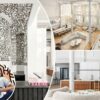
At the other end of the map, Biarritz retains its splendor with the Hôtel du Palais. Formerly the imperial residence of Eugénie de Montijo, the building has undergone a major renovation to restore its splendor without turning it into a museum. The Atlantic remains the main protagonist, its power surging into the majestic salons. People come here for the force of the elements, the splendor of dinners as the sun sets, and that unique atmosphere where etiquette takes a back seat to the spirit of surfing and the elegant ruggedness of the Basque Country.
The Call of the Wilderness and the Peaks
For those seeking a complete escape, Corsica offers an unparalleled experience at the Domaine de Murtoli. Nestled between the sea and the maquis, across 2,500 hectares, 17th-century sheepfolds have been restored to become refuges of absolute privacy. There is no lobby, no hallways—only dirt paths leading to stone houses tucked away in the vegetation. Life here follows the rhythm of the seasons, with lunch on the beach or dinner in a converted cave, featuring produce sourced exclusively from the estate’s farm. It is the luxury of space and rediscovered solitude—a sudden and magnificent immersion in the island’s identity.
Finally, the high altitude offers its own take on comfort at Le Coucou in Méribel. By entrusting the interior design to architect Pierre Yovanovitch, the hotel has broken with the traditional codes of the Savoyard chalet. Curved lines, bold colors, and custom-designed pieces bring a welcome lightness to the often-oppressive mountain atmosphere. The spaces are spacious, and the views of the peaks are designed to feel like living paintings. After a day on the slopes of the Trois Vallées, this retreat offers a cozy haven where humor and elegance blend to warm up the winter.
This diversity of destinations highlights a profound shift in the way people travel in France. It is no longer about checking off famous landmarks on a list, but about choosing a travel experience that fulfills a desire for meaning and substance. Whether in the buzz of a changing Parisian neighborhood or the silence of a Corsican sheepfold, the common thread remains this quest for the right tone, where the setting fades into the background to make way for the moment.