Make Texture a preferred source on Google to support us
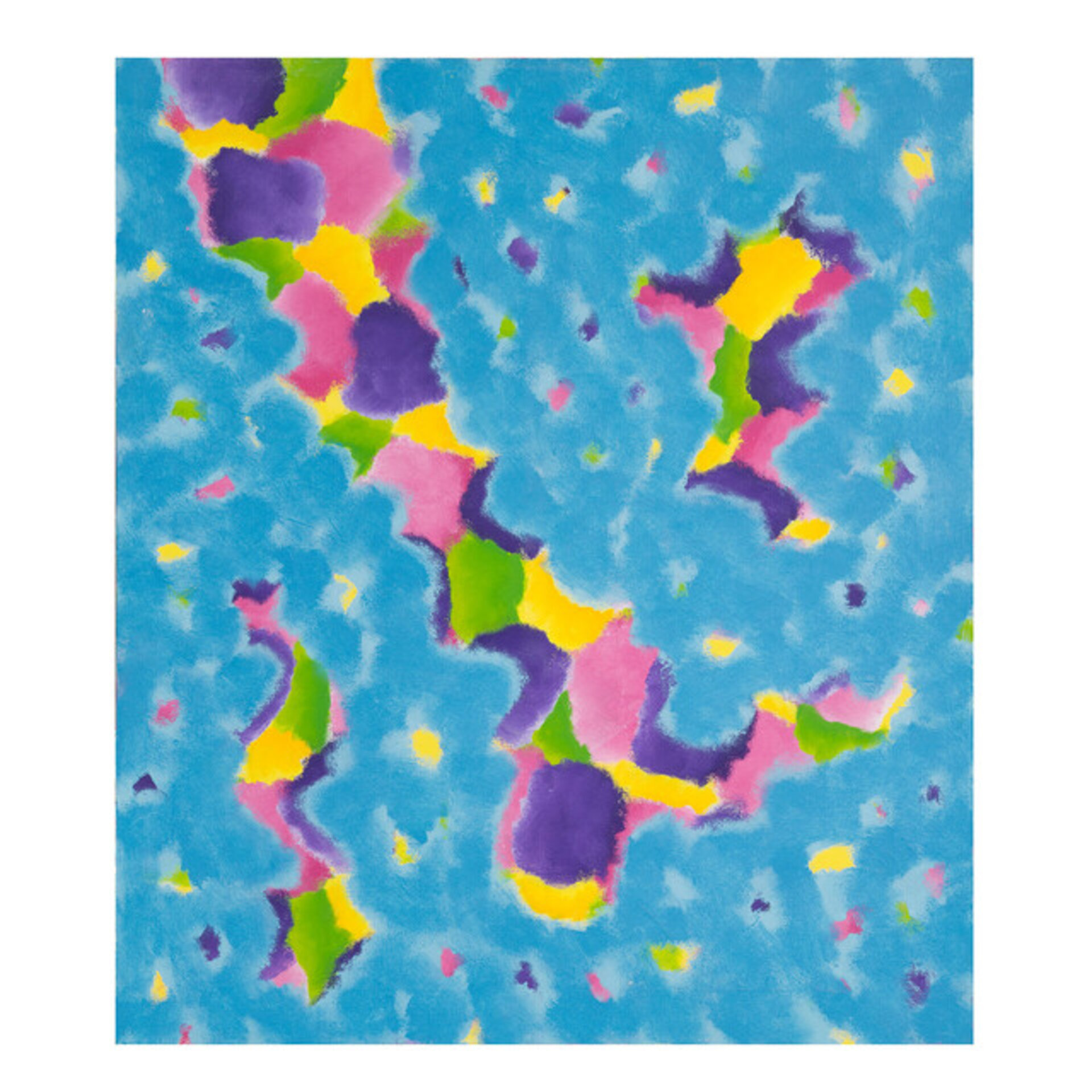
Add Texture to GoogleThe work of Gershon Iskowitz (1919–1988) resembles a long chromatic transformation, a journey from darkness toward absolute light. In Toronto, the Caviar20 Gallery is presenting a major retrospective tracing this unique journey from October 22 to November 28, 2026. From the horrors of concentration camps to the ethereal expanses of Canada’s Far North, the exhibition sheds light on an artist who transformed trauma into a vibrant exploration of color. Through key works such as *Blue Mauve-C* (1980), an oil on canvas estimated at $60,000, the public rediscovers a career path that defies traditional classifications of modern art.
The Instinct for Line Amid Turmoil
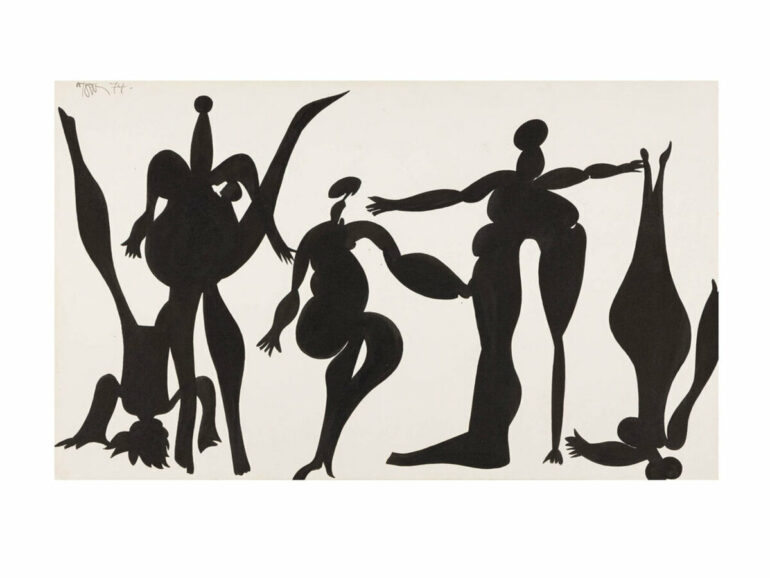
Gershon Iskowitz’s story begins in Kielce, Poland. While civil registry records list his birth date as November 24, 1919, the artist long kept the date vague, sometimes citing the year 1921. This biographical ambiguity is merely the prelude to a brutal upheaval: in 1939, just as he was preparing to enroll at the Academy of Fine Arts in Warsaw, war broke out. Imprisoned in the Kielce ghetto, then deported to Auschwitz and Buchenwald, Iskowitz lost his entire immediate family. As the sole survivor of his lineage, he found in drawing a mental lifeline.
Amid the nightly terror of the camps, he drew clandestinely on scraps of paper salvaged from the rubble after Allied bombings. This act was not, at the time, an aesthetic pursuit, but a visceral necessity to “maintain his sanity” in the face of starvation. From this period, only three works survived the liberation on April 11, 1945: *Action* (1941), *Buchenwald* (1944–1945), and *Condemned* (c. 1944–1946). These graphic testimonies mark the starting point of a body of work that would subsequently seek to break free from the figurative representation of mourning.
From European Mourning to Ontario Light
After a stint at the Feldafing displaced persons camp and a brief stay in Munich—where, according to his oral recollections, he took private lessons from Oskar Kokoschka—Iskowitz immigrated to Canada in the late 1940s. His early years in Toronto were marked by poignant figurative work. Paintings such as *Barracks* (1949) and *It Burns* (c. 1950–1952) reenact scenes from the Holocaust with raw naivety. Recent technical analyses, conducted notably by experts at the Art Gallery of Ontario (AGO), have revealed, however, that some of these works—although retrospectively dated by the artist to 1946—were actually created on North American canvases in the early 1950s.
The turning point came between 1952 and 1954. Iskowitz left his studio to paint outdoors. Upon discovering the wilderness of Georgian Bay, near Parry Sound, he began to replace his memories of the ghetto with the spectacle of foliage and the sky. While he admired the landscapes of the North, he rejected the nationalist approach of the famous Group of Seven. For him, the landscape was not a heroic monument, but a laboratory of perception. Around 1960, figurative elements began to dissolve: trees and horizons faded away, giving way to chromatic masses and increasingly free brushstrokes of pigment.

Churchill’s Aerial Revelation
The year 1967 marked a definitive break with classical spatial structure. Thanks to a grant from the Canada Council for the Arts, Iskowitz took flight over the subarctic tundra in Churchill, Manitoba. This flight was a major visual shock: seen from the sky, the earth loses its familiar landmarks. The horizon disappears, giving way to panoramic expanses where the ground and the atmosphere merge. This experience gave rise to the major series of his mature period, *Seasons* and *Uplands*.
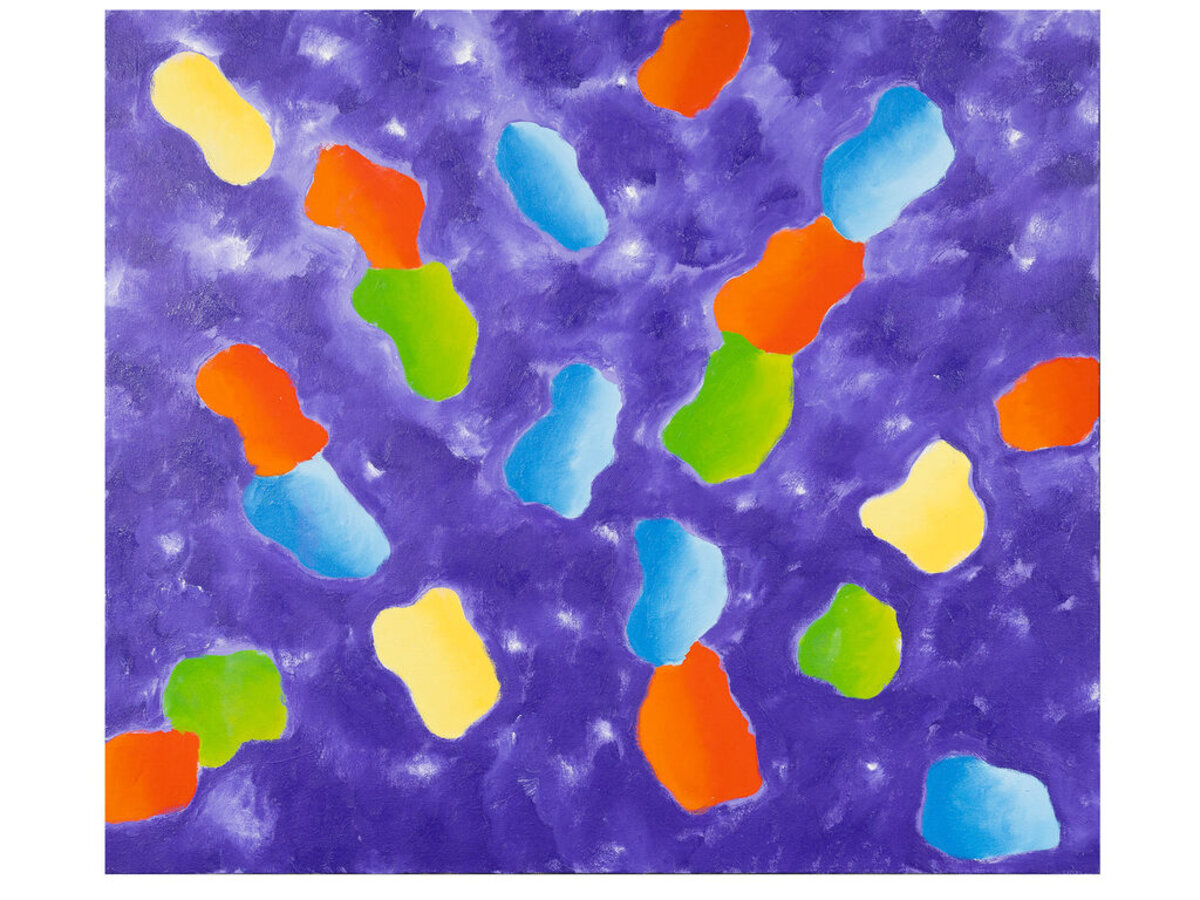
Far removed from the immediacy of American Action Painting, Iskowitz adopted a rigorous process in his studio on Spadina Avenue in Toronto. Working primarily at night, he made it a rule never to work on more than two canvases at a time. His technique relied on the meticulous layering of oil paint, creating a vibrant luminescence that seemed to emanate from within the painting. His watercolors, produced in intense series in the late 1960s and 1970s, served as a testing ground for experimenting with spatial relationships, which he then transposed onto large-scale canvases. In 1972, this mastery earned him the opportunity to represent Canada at the 36th Venice Biennale, cementing his place on the international art scene.
A Reality Beyond Abstraction
Despite the non-figurative nature of his paintings, Iskowitz always rejected the label of “abstract artist.” “My paintings are not abstract; they are real, very real… I paint what I see,” he asserted. Similarly, he refused to be confined to the status of a “Holocaust artist.” For him, his past as a deportee and his identity as a painter were two distinct spheres, and he emphatically declared that politics and the perpetrators had nothing to do with art.
Gershon Iskowitz’s legacy lives on today not only through his works held in institutions such as the National Gallery of Canada, but also through the Gershon Iskowitz Foundation. Established by the artist in 1985, the foundation, in partnership with the AGO, awards a prestigious annual prize designed to support Canadian artists. As the art market rediscovers the significance of his contribution to lyrical abstraction, the 2026 retrospective serves as a reminder that behind every cloud of color lies the resilience of a man who chose to look only at the sun.