
Make Texture a preferred source on Google to support us
Add Texture to GoogleThe Glass Ark and the Asphalt Fever
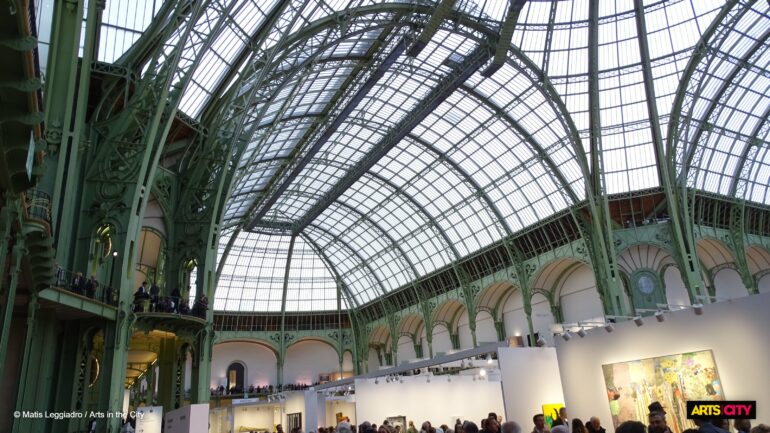
Sometimes there are collisions that single-handedly encapsulate an era. Beneath the monumental glass roof of the Grand Palais—an architectural gem inherited from the 1900 World’s Fair—the quiet machinery of the global art market was running at full speed, while the surrounding streets rumbled with a very different kind of urgency. The 2026 edition of Art Basel Paris came to an abrupt close on Friday, October 23, at 7:00 p.m. This shortening of the schedule was decided at the highest levels to anticipate the social protests announced for the weekend, transforming the iron-and-glass edifice into a temporary fortress. Private security personnel, backed by strict measures from the Prefecture of Police, sealed off access to this sanctuary where value is traded, sheltered from the world’s upheavals.
Yet this logistical strain did nothing to dampen the appetite of a clientele known for its formidable pragmatism. The capital’s paradoxical atmosphere even seemed to act as a catalyst. An analysis of data compiled by Artnet News is dizzying: in just forty-eight hours, the fair saw more than three hundred pieces change hands, generating an estimated transaction volume of $147 million. International buyers turned out in droves. American collectors—whose massive presence in the aisles was noted by *Le Monde*—demonstrated surgical precision. Their gaze was swift, their decision-making lightning-fast. The noise from the street did not penetrate the fair’s doors; at most, it quickened the pace of checkbook signings.
Status Takes Precedence Over Boldness
Faced with an outside world perceived as unstable, the market logically made a strategic retreat toward its most unshakable values. The time was no longer for speculative bets or niche discoveries, but for wealth consolidation. Major dealers understood this perfectly, lining their gallery walls with artists capable of weathering any economic storm. Acquiring a work of art is no longer merely an aesthetic act; it is a secure investment. Buyers have set their sights on works that are highly accessible, immediately recognizable, and guaranteed to retain their value on the secondary market.
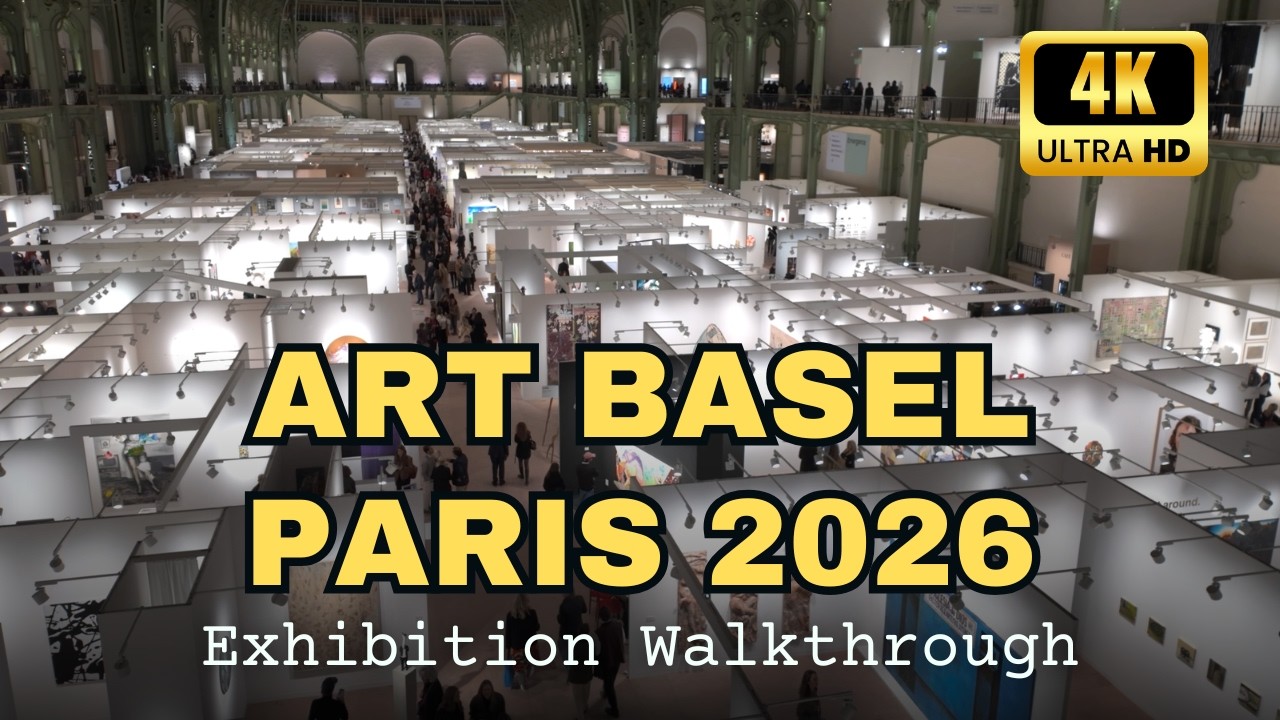
The list of artists who have sent prices soaring reads like a chronicle of contemporary art history. Lee Ufan, Anish Kapoor, Cristina Iglesias, Alexander Calder, and Jean Dubuffet formed the backbone of major sales. The Hauser & Wirth branch particularly exemplified this dominance of established masters, selling in quick succession a *Der Hirte* by Georg Baselitz and a *Rokokotisch* by Gerhard Richter—each painting approaching the stratospheric $10 million mark. The booth also saw the sale of other museum-quality pieces, including a work by Alexander Calder, one by Philip Guston, and a *Concetto spaziale* by Lucio Fontana. This trend toward financial over-caution was replicated exactly by the giants Lisson, Pace, and David Zwirner, who racked up transactions involving artists already deeply entrenched in institutional collections.
The Tenacious Roots of a Parisian Ecosystem
However, the fair was not merely an exclusive, closed-door affair for Anglo-Saxon gallery owners. One of the most interesting aspects of this edition was the vitality of the French offerings. Beyond the seven-figure sums, a market that is both more patient and more deeply rooted demonstrated its solidity. The event clearly seeks to maintain its status as a global crossroads while avoiding becoming completely detached from its host city.
Parisian galleries thus fared well with remarkable consistency. Kamel Mennour solidified his standing by closing a major deal involving a work by Lucio Fontana. At Sultana, enthusiasm was immediate: the gallery’s booth was 80% sold out within the first few hours reserved for VIP guests. This momentum was also evident at Crèvecœur, which easily sold several paintings by Cristof Yvoré, while players such as Jousse Entreprise, Ceysson & Bénétière, and Art: Concept maintained a steady sales pace. These results demonstrate that the local art scene operates at its own pace, capable of attracting a segment of collectors seeking long-term commitment rather than an immediate splash.

Parallel Cartographies: Matter and Memory
While the central aisle resembled a stock exchange, the specialized sections “Emergence” and “Premise” offered a much-needed intellectual respite, reminding us that art extends beyond its market value. The Emergence section stood out with a selection of spaces from Rome, Jakarta, Brussels, Seoul, and Paris. Far from displays of commercial might, the works there took on the character of physical or conceptual experiences. The relationship to the body and the roughness of the material took center stage in the works of Thảo Nguyên Phan, Beatrice Bonino, Haneyl Choi, and Angharad Williams. It was a way of affirming that contemporary art still has the right to be a zone of discomfort and pure perception.
The Premise section, for its part, served as a time machine, exploring the French capital’s historical role as a hub for the avant-garde. Galerie Zlotowski revived the work of Vera Molnár, a pioneer of a form of abstraction conceived long before the ubiquity of computers. Almeida & Dale exhibited Tarsila do Amaral, illustrating how Brazilian modernism drew inspiration from the artistic currents and tensions in Paris. The early work of Arthur Luiz Piza, presented by Galeria Raquel Arnaud, echoed this same theme. Finally, the exhibition curated by dealer Olney Gleason revealed an intimate facet of the American art scene by juxtaposing Ellsworth Kelly and Robert Indiana, bringing to life on the walls a shared life journey and a correspondence that began under the Parisian sky.
The Vulnerability of Prestige
The shortening of the art fair’s schedule will nevertheless remain the defining event of this period. The economy of major art events rests on extremely fragile elements: the fluidity of schedules, the security of travel, and the absolute trust of investors. The early closing of the Grand Palais’s gates laid bare the permeability between the cultural luxury market and the social divides surrounding it.
Despite everything, the event’s appeal has not waned. Foreign collectors did not desert the event, and it has maintained what constitutes its very essence. Selling art in Paris always means selling the setting that accompanies it, with its dizzying history and insoluble contradictions. It is precisely this perpetual friction between immutable heritage and the restless streets that gives the Parisian event its absolute uniqueness on the global map of contemporary art.