
Make Texture a preferred source on Google to support us
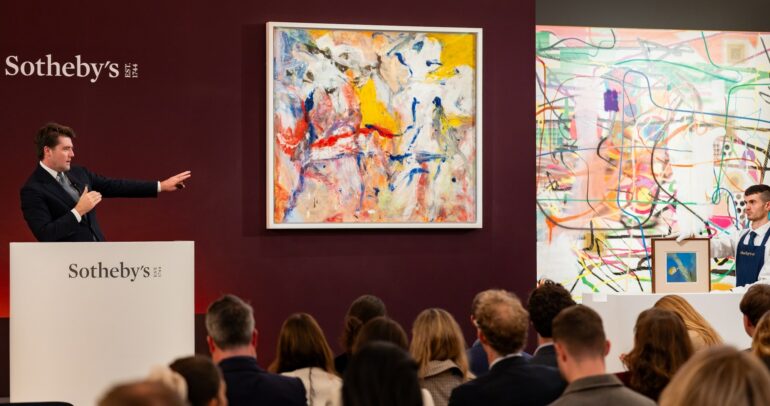
Add Texture to GoogleThe buzz surrounding Frieze London week wasn’t enough to dispel a certain sense of restraint in the galleries on New Bond Street. On Thursday, October 15, 2026, Sotheby’s London headquarters hosted its evening auction of contemporary art in a unique atmosphere, marked from the outset by a technical glitch: the sounding of an alarm. Although the situation was quickly brought under control, the alarm served as a prelude to a sale in which collectors’ caution outweighed the usual euphoria of international auctions.
A Cautious Financial Outcome
Under the gavel of Tom Eddison, co-director of contemporary art for the London auction house, the evening revealed a market in the process of recalibration. Of the 37 lots initially listed in the catalog, only 34 were actually put up for auction. Three major works were in fact withdrawn before the auction began: a mixed-media panel by Anselm Kiefer, a medicine cabinet by Damien Hirst, and a view of Willesden Junction by Leon Kossoff. These preemptive withdrawals automatically lowered financial expectations for the evening.
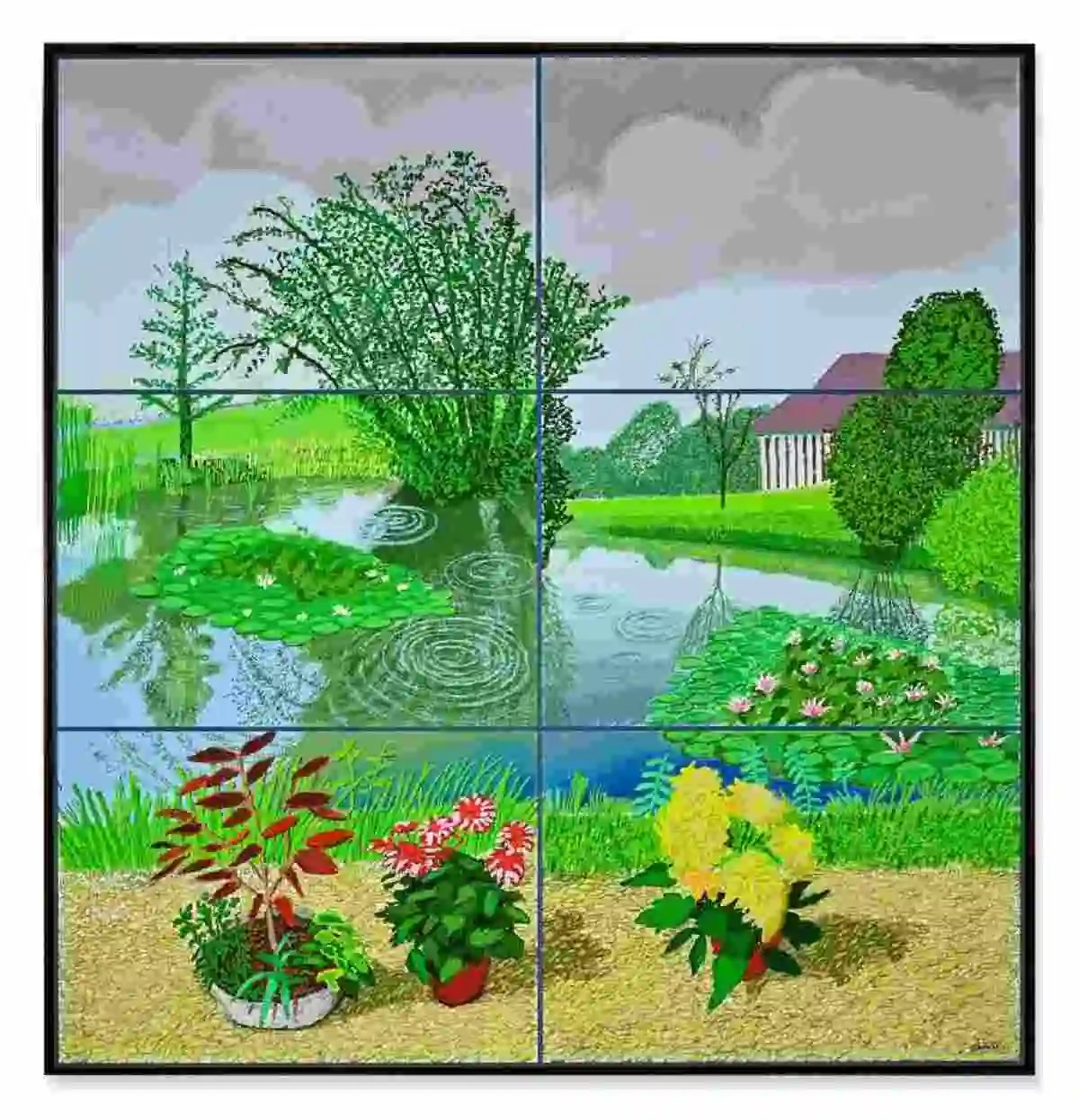
The total result came in at 46 million pounds (including auction fees), a figure down 3.3% from the October 2025 session, which had generated 47.6 million pounds. The total hammer price, excluding fees, amounted to 36.9 million pounds, or approximately 44.3 million euros. This amount fell short of the revised low estimate following the withdrawals, which had been set at 39.5 million pounds. With a sell-through rate of 82.4%, the evening reflected rigorous selectivity, leaving six works unsold.
The Willem de Kooning Paradox
The highlight of the auction was undoubtedly *Untitled* (1977), an oil on canvas by Willem de Kooning measuring 136.8 × 151.7 cm. This work, which was backed by a financial guarantee, was the subject of high expectations with an estimate ranging from 8 to 12 million pounds. However, the course of the auction illustrated the prevailing caution. Tom Eddison opened the bidding at 7 million pounds, a level below the low estimate. The hammer finally fell at 8.2 million pounds.

Despite this modest hammer price, the final amount including fees totaled 9.8 million pounds (approximately 11.8 million euros). This result sets a new record for Willem de Kooning at an auction on European soil. To put this in perspective, the value of this same work has increased 2.5-fold compared to its previous sale in New York in 2015. While the continental record has been set, the fact that the final bid barely exceeded the low estimate underscores the current difficulty in generating excitement in auction houses, even for historic artists.
Artists Seeking a Second Wind
The evening also put other established names in the global art market to the test. Yayoi Kusama, a leading figure in contemporary art, was represented by a complex mural titled *I Who Was Awestruck at the Shape of the Secret I Found in the Cosmos* (2021). This six-part padded piece, combining cotton, metal, and acrylic on panel, follows in the tradition of the Japanese artist’s immersive creations. However, the work struggled to generate the expected bidding competition, joining a list of lots that failed to reach the upper end of their initial estimates.
This trend of decline or stagnation affected several segments of the auction, confirming that buyers now prioritize the security of guarantees or the absolute accuracy of reserve prices. The overall picture of this October 2026 auction reveals a mature market, less prone to speculative fervor, where each sale is the result of a delicate balance between the object’s rarity and the economic realities of the moment.