Make Texture a preferred source on Google to support us
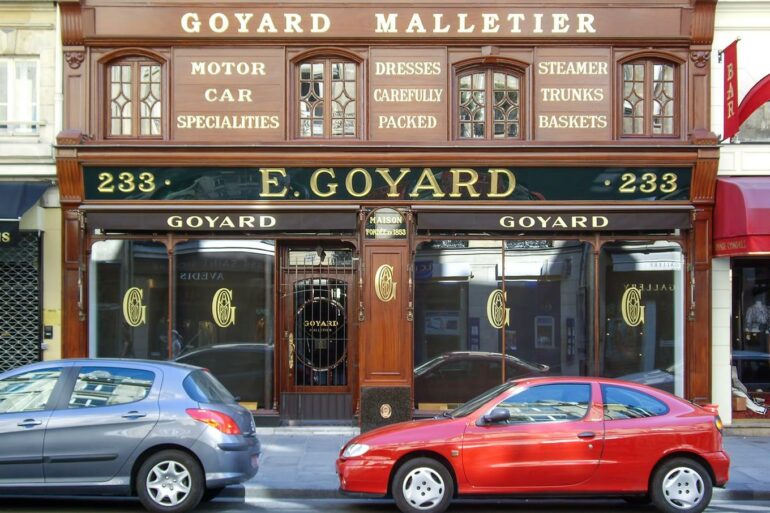
Add Texture to GoogleAt 233 Rue Saint-Honoré, the mahogany-paneled storefront imposes a polite silence on the hustle and bustle of Paris. No models adorn the windows, and no screens broadcast images of a flashy fashion show. In an ecosystem where an obsession with visibility dictates the course of corporate giants, Goyard cultivates a paradoxical strategy. To purchase a trunk or a tote bag bearing the famous chevron pattern, the process has remained unchanged since the last century: you must physically step inside a store, speak with a sales associate, and wait. Online shopping is a heresy that the brand flatly rejects. This stubborn refusal of digital immediacy is not a sign of archaism—quite the contrary. It is a form of desire-building that is formidably effective. By disappearing from the advertising radar, the brand stokes obsession.
A history shaped by long-distance journeys
The brand’s family tree has its roots in the upheavals of the French Revolution, long before the emergence of the surname that would make it famous. The adventure began in 1792 under the leadership of Pierre-François Martin. He did not present himself as a trunk maker, but rather as a maker of layettes, caskets, and packaging. His specialty was designing custom containers to protect the aristocracy’s fragile furniture and elaborate wardrobes during their seasonal moves. His craftsmanship and ingenuity quickly earned him the favor of the high nobility, eventually leading him to be granted the highly coveted title of official supplier to Her Royal Highness Marie-Caroline of Bourbon-Siciles, Duchess of Berry. This mark of respectability firmly established the reputation of his workshops.
With no direct heir to take over his business, Martin orchestrated the succession by marrying off his ward to one of his most promising workers, Louis-Henri Morel. The company moved and set up shop on Rue Neuve-des-Capucines. It was against this backdrop of artisanal vibrancy that a seventeen-year-old apprentice walked through the workshop’s doors in 1845. His name was François Goyard. Under Morel’s tutelage, the teenager mastered assembly techniques, the working of different types of wood, and the demands of a discerning clientele. Morel’s sudden death in 1852 propelled the young man into the role of leader. As early as 1853, the shop was renamed after him. A decisive transition then took place: the artisan packer truly became a trunk maker, keeping pace with the transportation revolution. The advent of transatlantic ocean liners and the expansion of the railroad network radically transformed luggage design, demanding structures that were sturdy, stackable, and elegant.
The engineering of canvas and the chevron pattern
While the first generation built the technical infrastructure, it was Edmond, François’s son, who gave the company its definitive visual identity at the end of the nineteenth century. Realizing that leather—traditionally used to cover trunks—was heavy and vulnerable to the dampness of ship holds, Edmond developed a major innovation in 1892. He created a supple, waterproof, and exceptionally lightweight coated canvas, the result of a complex weave combining linen, hemp, and cotton.
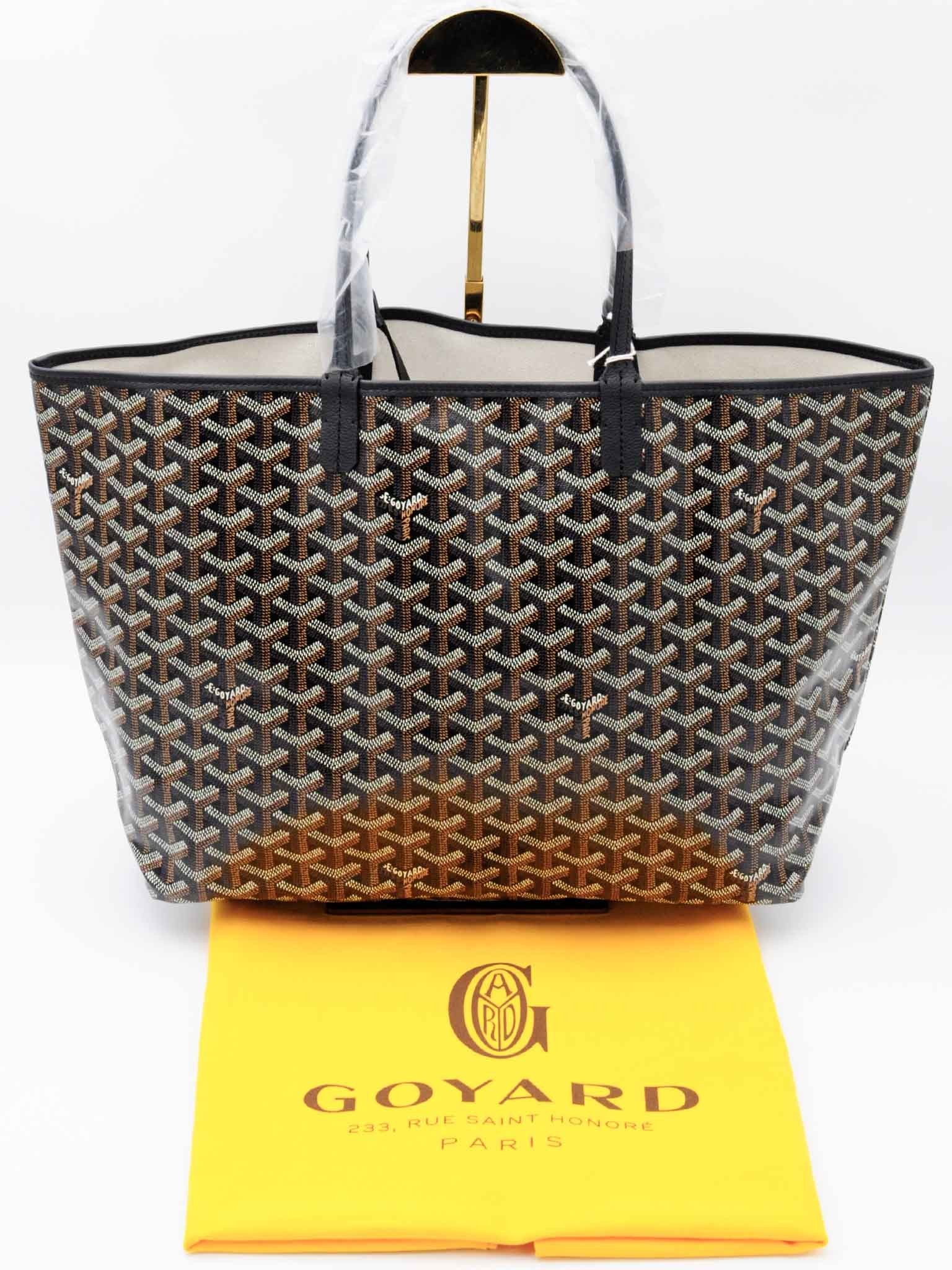
The surface of this unique material was not left blank. Edmond drew inspiration from the history of his ancestors, who were originally from Clamecy in Burgundy, to design a distinctive pattern. This region was home to river workers, who were responsible for transporting firewood to the capital by raft. The interlaced herringbone pattern of the new fabric, formed by a multitude of raised stitches, visually recreates the stacking of logs on the water. Initially hand-painted with extreme precision, this geometric design transcends its purely aesthetic function to become a rallying symbol. The material takes on symbolic significance. Under Edmond’s leadership, production diversified to include pet accessories and small leather goods, while distribution strategically expanded to the vacation destinations favored by the European bourgeoisie, from Biarritz to Monte Carlo.
A Gotha-style order book
Exploring the archives on Rue Saint-Honoré offers a detailed snapshot of twentieth-century high society. The absolute customization that characterizes every piece leaving the workshop builds loyalty among a clientele for whom standardization represents the ultimate lapse in taste. The Duke and Duchess of Windsor, magnificent exiles, demanded dozens of pieces with millimeter-precise dimensions to transport their imposing wardrobe from one continent to another. Sacha Guitry had specific storage solutions designed for his stage props. Arthur Conan Doyle requested luggage tailored to his manuscripts and writing materials. Later, Karl Lagerfeld would never travel without an impressive procession of black trunks with white herringbone patterns, taking his perfectionism so far as to have custom cases made to house his collection of iPods.

The frame of these custom-made pieces meets specifications of absolute rigidity. Poplar ensures the lightness of the base, while beech guarantees the strength of the reinforcements. The pieces are assembled without a single visible nail on the inside. The corners are reinforced with pieces of vegetable-tanned cowhide, sewn with a saddle stitch, and the solid brass hardware is stamped to certify its origin. The “marking” service puts the finishing touches on the piece. In the era of the great transatlantic liners, two-tone stripes and initials made it possible to immediately identify one’s luggage on crowded docks. Even today, this personalization is done by hand using natural pigments, eschewing industrial stencils to preserve the lively irregularity of the painter’s brushstrokes.
Independence as a Shield Against the Luxury Industry
The second half of the twentieth century saw the brand fall into a slight slumber, evolving in hushed silence while its direct competitors embarked on policies of massive globalization, fueled by the emergence of large conglomerates. The story picked up pace again in 1998 when the brand was acquired by Jean-Michel Signoles. This entrepreneur, a passionate collector of the founding family’s creations, took over the business in a manner that went against the grain of the methods of the time. Analysts expected the arrival of a star creative director and the launch of global advertising campaigns. The new owner chose the exact opposite path.
The archives were dusted off, the restoration workshops were brought back to the center of operations, and new shades came to shake up the limited historical palette of the coated canvas. But expansion remained tightly controlled. The company maintains its financial independence, regularly fending off advances from industry giants. The strategy of staying out of the spotlight has become a dogma: no press office distributes press releases, and no influencer is paid to be seen wearing a piece from the collection. On the official digital storefront, items are displayed as if in a virtual museum, stripped of the essential element: the “buy” button. The purchasing experience requires a return to a slower pace.
This positioning has given rise to one of the most striking phenomena in today’s luxury market. International shoppers plan their trips around the brand’s few physical locations. Waiting lists grow naturally, without needing to be orchestrated by a marketing department. The Saint-Louis tote, originally conceived as a simple reversible beach bag for carrying wet laundry, embodies this tension. Despite the global frenzy it sparks, its production and distribution remain subject to strict controls, shielding it from fatal visual saturation. In an era when a coveted item can be delivered in a matter of hours to the other side of the world, the necessity of making the trip and the acceptance of waiting constitute the only true barrier to entry. It is in this total renunciation of immediacy that the last great privilege lies.