Make Texture a preferred source on Google to support us
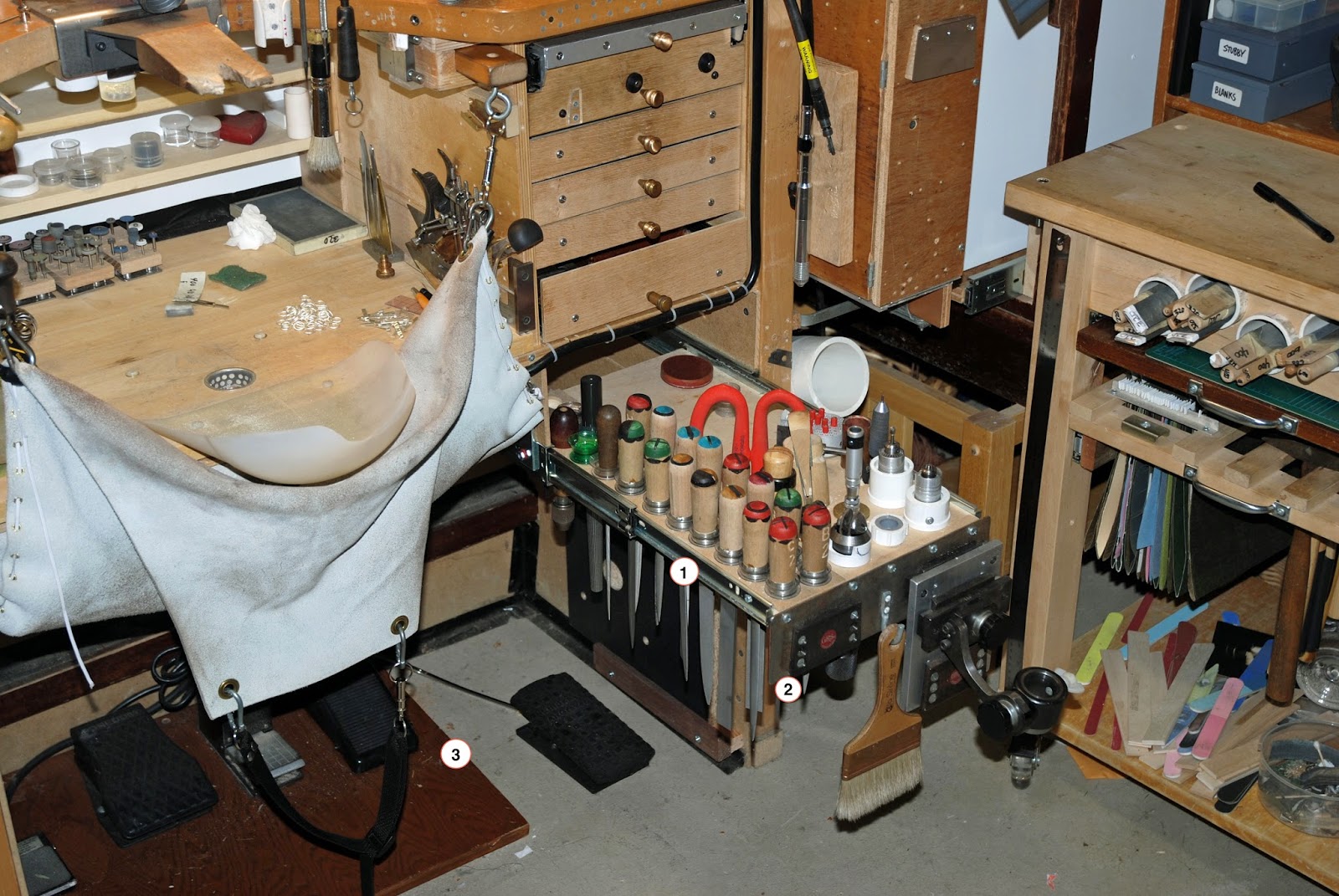
Add Texture to GoogleIt all begins with a handful of fine metallic dust at the bottom of a stretched leather pouch. Far from the heavily secured display cases and the glamorous glitz that will accompany its final existence, a fine jewelry creation takes root in the most austere of materials. Beneath the clear, unchanging light of a north-facing skylight, artisans with measured movements repeat a silent choreography. Above all, the process demands a radical letting go of haste. On the solid-wood workbench, irrevocably worn down by the friction of files and decades of labor, the creation of an articulated necklace or a tiara is never the result of spontaneous brilliance. The finished piece must create the illusion of absolute lightness, making one forget its very structure so that only the refraction of light is revealed—even as it embodies hundreds of hours of physical engagement with the material.
The promise frozen on tracing paper
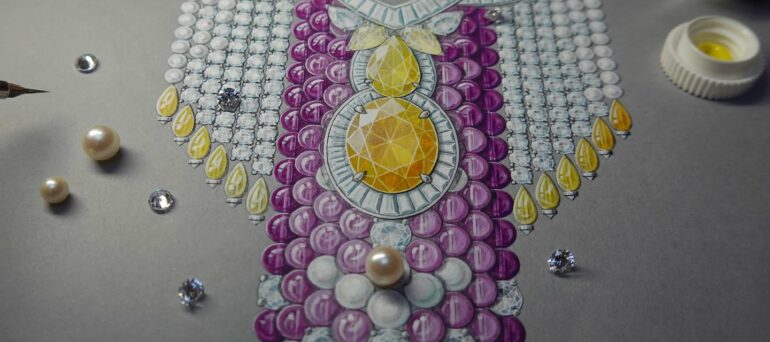
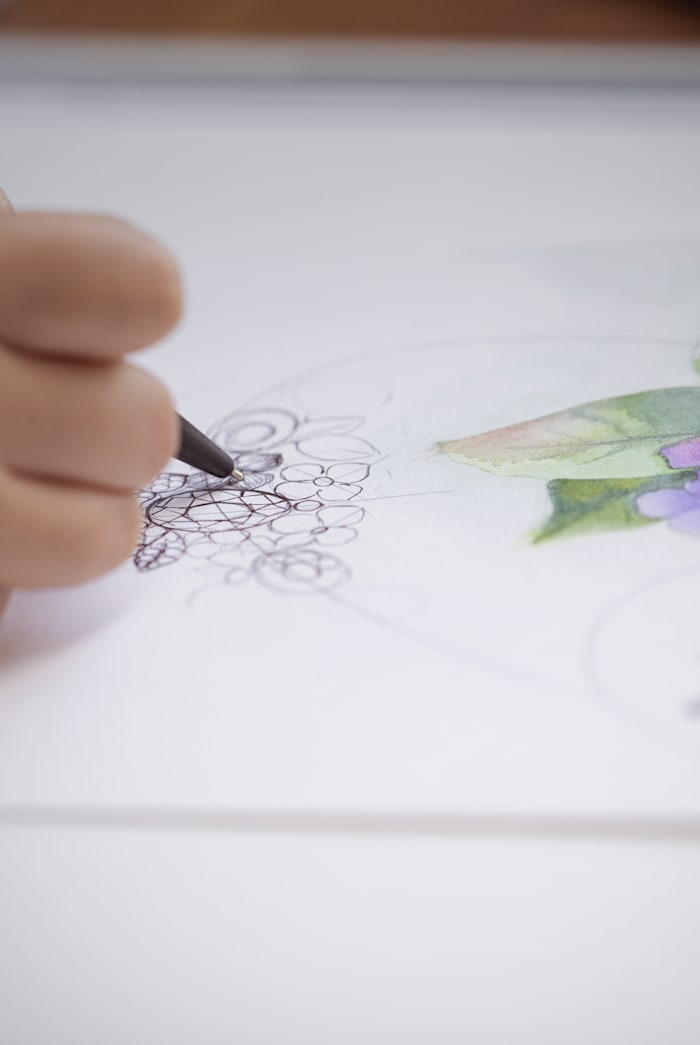
Before tackling the resistance of gold or platinum, the design’s form is conceived on a flat surface. The jewelry design, commonly called a gouache sketch, serves as a foundational technical and aesthetic blueprint. Using brushes of surgical precision, the artisan applies pigments in layered strokes to simulate the future brilliance of the gemstones. A formal rule has governed this discipline for generations: the virtual light source invariably comes from the upper left corner, dictating the exact location of every shadow and every surface reflection. Dots of zinc white mark the edges of the diamonds, while successive washes build the optical depth of an emerald. This document tolerates no form of approximation. It definitively establishes the proportions of the motifs, the balance of the masses, and the curvature of the guiding lines. It is around this rigorous, full-scale model that discussions between the art direction team and the workshop managers then take place, with the aim of anticipating even the slightest mechanical constraint before the first ingot is cast.
Architecture shaped by the geometry of the gemstones
The design trajectory of a jewelry set inevitably shifts when confronted with the physical volume of the gemstones. Sometimes, the design’s vision requires an international search to find the perfect pair; other times, it is the unexpected acquisition of a unique lot that dictates the jewelry’s overall architecture. Under a 10x magnifying glass, gemologists scrutinize the internal network of inclusions, evaluate the color intensity of a ruby, and verify the symmetry of a pear-shaped diamond’s cut. Once entrusted to the workshop, these stones are temporarily arranged on a malleable support—often modeling clay—to allow the jeweler to assess their spatial dimensions. The task then is to design a structure capable of holding them with unbreakable strength, while remaining visually unobtrusive. The metal must stand out for its strength and disappear through its delicacy.
From Ephemeral Sculpture to Molten Metal
The transition to the third dimension often requires a detour through ephemeral modeling. The model maker shapes blocks of green or blue wax, which he hollows out with a scalpel and refines using a heated spatula. He sculpts the void with as much care as he does the solid material. This exact replica of the future piece is then encased in a cylinder filled with a liquid refractory coating. Placed in a furnace where the temperature rises in strict stages, the assembly is fired until the wax evaporates completely, leaving behind a hollow mold with millimeter-level precision. This is the unaltered principle of lost-wax casting. The molten precious metal, injected by centrifugal force, fills this negative mold. After rapid cooling, the plaster cylinder is destroyed. The piece emerges in its most primitive form: matte, covered in oxidation from the heat, light-years away from the expected brilliance.

The Mechanics of Fluids and Joints
The jeweler then takes the raw cast piece. Armed with a bocfil—a small hand saw with a serrated blade barely thicker than a cotton thread—he trims away the excess material and adjusts the various components. He uses a variety of files to redefine the edges blunted by the casting process and to hollow out the settings that will hold the stones. The key challenge of this stage lies in the flexibility of the entire piece. A high-jewelry plastron must not feel like a rigid straitjacket; it must follow the movement of the collarbone and conform to the texture of the skin. To achieve this, the artisan incorporates numerous invisible hinges, tiny leaf springs, and complex interlocking joints to ensure a flawless “drape.” At the same time, he performs the “mise à jour,” a process of openwork on the back of the settings. By cutting the metal into regular patterns, he creates openings through which light will pass to illuminate the stone’s back. The philosophy of these workshops demands that the reverse side of the piece reflect the same exacting standards of finish as its visible face.
The Subtle Tension of Stone Setting
Once the gold or platinum framework has been fully assembled, the piece is passed on to the gem-setter’s station. This sequence is marked by a palpable tension. The metal structure, rigid by nature, must enclose crystals that are both extremely hard and sensitive to thermal or mechanical shocks. Peering through the eyepieces of his binocular microscope, the setter manipulates chisels—tiny, contoured steel tools. His technique involves pushing metal shavings onto the stone’s facets to secure it. Whether he chooses to set tiny grains for a dense pavé, to fold back tapered prongs, or to slide the gems into invisible channels, his work requires absolute control over the force applied. A slip of the blade or uneven pressure can irreparably fracture the gemstone. The level of concentration is evident in the stillness of the figures gathered around the workbench. Only the sharp, steady screech of the tool cutting into the gold breaks the silence of the workshop. Every stone, without exception, receives individual attention when being set.
The Deliberate Erasure of the Tool
The final stage of the manufacturing process aims for a paradoxical goal: to erase every trace left by the human tool. Entrusted to the polisher, the piece undergoes a meticulous assault by rotating brushes, felt discs, and abrasive pastes whose grain size gradually becomes finer. To polish areas inaccessible to the machine—notably the interior of the openwork cells or the narrow gap between two links—the artisan uses cotton (thrum thread). Coated with a very fine diamond paste, this thread is tirelessly drawn by hand in a back-and-forth motion until the surface catches the light evenly. Any residual roughness is smoothed away, giving way to a perfect mirror finish. The final inspection concludes with the manual stamping of the government and master’s hallmarks—recessed markings that guarantee the alloy’s composition and the piece’s origin. The workshop manager examines the assembly one last time under white light. At his workstation, now cleared of all tools, the jeweler gathers the machining debris that has accumulated on the surface of his workbench, sweeps the rough wooden surface, and lays down a new sheet of tracing paper.