Make Texture a preferred source on Google to support us
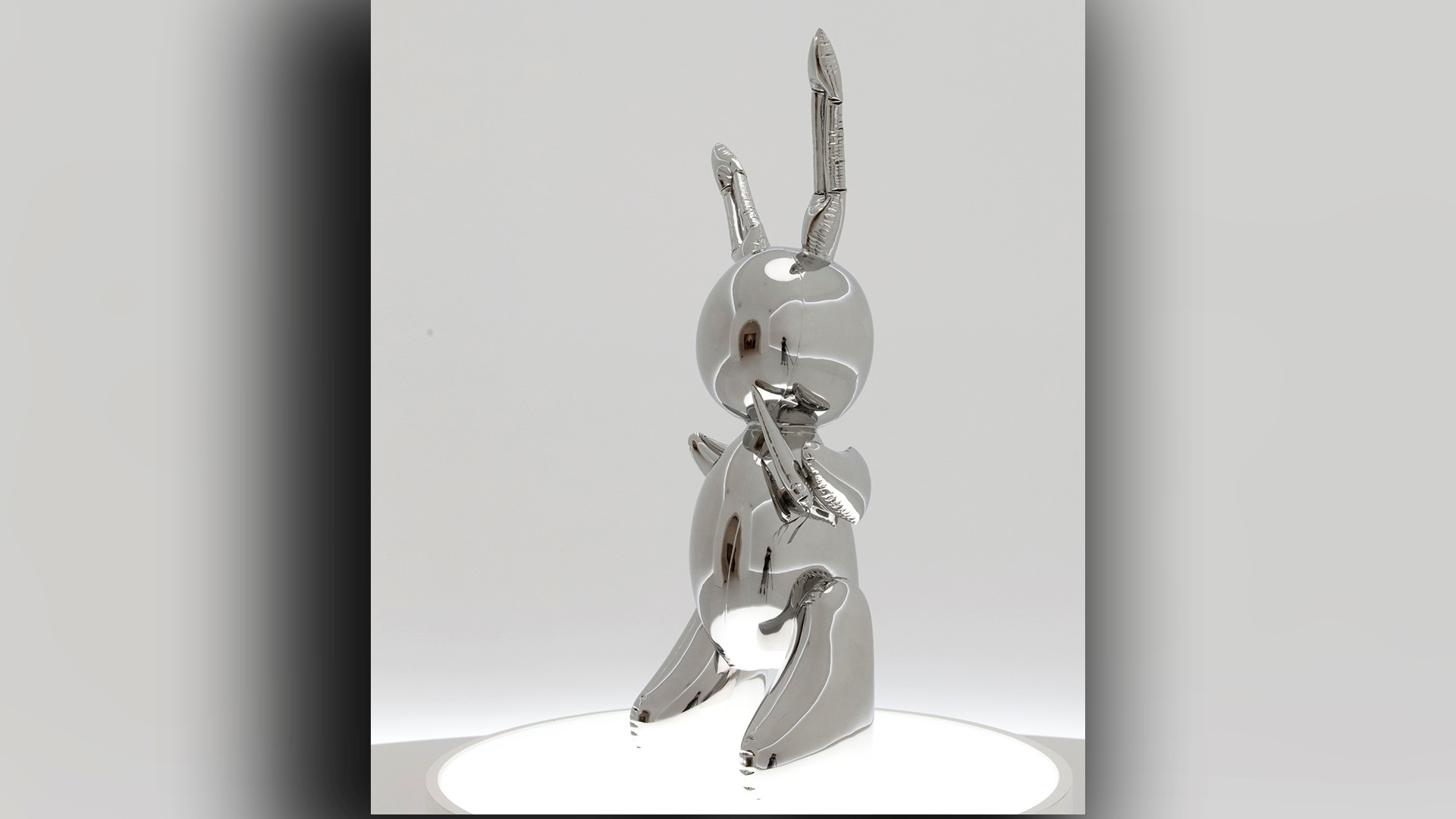
Add Texture to GoogleIn 2019, Christie’s auction house in New York was abuzz as a stainless-steel rabbit soared to the top of the global art market. At over $91 million, *Rabbit* earned Jeff Koons the all-time record for a work by a living artist. Five years later, the same auction house sought to capitalize on the American artist’s star power—not to sell his creations, but to auction off part of his private collection. The outcome of this auction, titled “Heroes and Lovers,” paints a grim picture: a famous owner’s signature on a certificate of provenance is no longer enough to mask the cold, hard reality of a market that has become ruthless.
Pre-auction estimates projected a total range of between $104 million and $153.5 million for the seven lots on offer. Under the hammer, the total barely reached $87.8 million. It took the addition of buyer’s premiums to artificially push the total to the $104 million mark, narrowly meeting the lowest estimate. The message sent by the bidders is clear: not a single lot came close to its high estimate, and more than half of the lots sold below their psychological reserve threshold. The myth of the infallible artist-collector has come up against the cold reality of calculators.
The Hard Lesson of Inflation
The centerpiece of this sale was a set of four paintings by Pablo Picasso, which were supposed to guarantee the auction’s profitability. Particular attention was focused on *Le Baiser* (1969), a work whose exhibition pedigree borders on perfection. Over the years, the painting has hung on the walls of the Musée d’Art Moderne in Paris, the National Gallery in London, and the Guggenheim in New York. This flawless museum history raised hopes for a final bid between $40 million and $60 million.
However, the enthusiasm did not carry over into the auction room. The hammer fell at $26.5 million (31.2 million including fees). While the sum may seem substantial at first glance, the financial analysis tells a very different story. Koons had paid 17.4 million to acquire this painting in 2008. Once that initial amount is adjusted for U.S. inflation, the real purchase price comes to around 27.1 million. The work was therefore sold at a loss in constant terms.
This pattern of financial erosion has been repeated with other works by the Spanish master. The most striking example is a *Head of a Woman* painted in the early 1940s. Purchased by Koons in 2012 for $7.9 million (the equivalent of 11.5 million today), the painting drew no bidding war and sold for 6 million, far below its low estimate of 10 million. The painting *Couple*, also dated 1969, went under the hammer for 13 million, just within the expected low range. Only the 1941 *Head of a Woman (Dora Maar)* limited the losses. Estimated at a minimum of 25 million, it sold for 25.5 million (30 million including fees), generating a negligible profit compared to its 2007 acquisition cost, now revalued at 26.1 million.
A Secret Cabinet of Curiosities
The very fact that these works belong to Jeff Koons nearly went unnoticed. In the catalogs, Christie’s had taken care to conceal his identity behind the neutral description “distinguished collector.” The open secret was quickly exposed by investigations from The New York Times, based on sources within the art market. This discretion is entirely in line with the stance the artist has maintained for decades. While he collects historic pieces, he never flaunts them.
The few clues about the scope of his tastes date back to 2010. At the time, a journalist had sneaked into his Upper East Side apartment, noting the presence of works by Jean-Honoré Fragonard, Gustave Courbet, and Quentin Massys. The businessman, who is verbose when it comes to justifying his own creations, responded with polite silence to any questions about his private acquisitions.

The decision to part with them today appears to be driven by strictly business considerations. The creation of Koons’ sculptures requires heavy machinery, highly skilled engineers, and materials whose production costs are sky-high. According to industry professionals, liquidating this portion of his collection was intended to inject fresh capital into his studios. To ensure the success of this move, Christie’s reportedly provided him with a financial guarantee—a standard safety net for sellers of this caliber—though the auction house declined to comment on the matter.
When a Museum-Quality Pedigree Is No Longer Enough
While modern art suffered during this auction, the section dedicated to Old Masters and Impressionists came close to a complete rejection. Art market lore often holds that a prolonged exhibition at a public institution definitively cements a work’s value. The New York auction has just undermined that assumption.
Édouard Manet’s pastel, *Woman with a Tub* (circa 1878–1879), perfectly illustrates this disconnect. Koons had paid $2.3 million for it in 2014. Following that, the drawing went on a series of prestigious loans, finding its way to the Metropolitan Museum of Art, the Getty, and the Art Institute of Chicago. On the strength of this track record, the lot was estimated at between $1 million and $1.5 million. However, bidding stalled at $800,000.
Older pieces saw a similar decline. Tilman Riemenschneider’s wooden sculpture, Saint Catherine, carved in the very early 16th century, had been on display in the Met’s galleries for over a decade. Purchased for $6.3 million in 2008, it went under the hammer for $4.5 million. The same fate befell Northern Mannerism: the giant canvas *Hercules and Achelous* (1590) by Cornelis Cornelisz. van Haarlem did not exceed $11.5 million, falling short of its low estimate. And this despite the fact that it had set the world record for this artist in 2008 at 8.1 million and had also benefited from a ten-year loan to the Metropolitan Museum.
The final tally of this auction marks a shift in tone. The era when the mere fact that a painting had passed through the hands of a celebrity in the art world was enough to increase its speculative value tenfold seems to be over. Buyers now demand a perfect balance between intrinsic quality, rarity, and freshness on the market—a balance that neither the New York museums nor the shadow of Jeff Koons managed to achieve that evening.