Make Texture a preferred source on Google to support us
Add Texture to GoogleTake a look at the dial of a mechanical watch. Beyond the steady movement of the hour, minute, and second hands often lies an ecosystem of gears of unimaginable complexity. In the strictly codified lexicon of Swiss watchmaking, any additional function that goes beyond simply indicating the current time is designated by a single term: the complication. The word carries a nuance of difficulty, almost a warning. Yet it is precisely in this mechanical complexity that the soul of fine watchmaking resides. Far from being jargon reserved solely for insiders or obsessive collectors, the language of complications first and foremost tells the story of human ingenuity. It is about solving concrete problems—finding one’s way in the dark, measuring a sporting feat, anticipating irregularities in the calendar—with only springs, cams, and gears as tools. Deciphering this grammar means understanding how artisans have sought to master the cosmos and the laws of physics within a space no larger than a few square centimeters.
Mastering the Interval: Chronograph and Split-Seconds
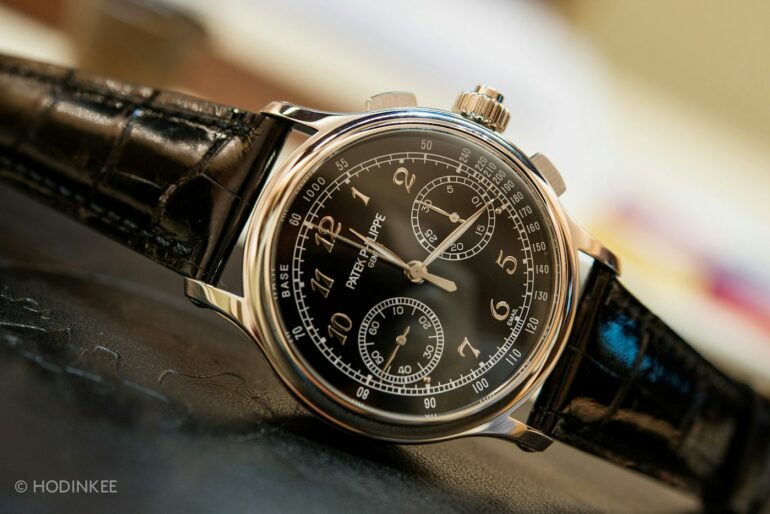
One of the most common sources of confusion in the world of watchmaking is the conflation of the terms “chronometer” and “chronograph.” The former refers to a mark of precision, generally attested by an independent testing body, certifying that the movement maintains an extremely regular rate. The latter, on the other hand, is an active measuring tool. A chronograph allows you to measure a specific interval of time without interrupting the normal passage of time. Visually, it is immediately recognizable by the presence of pushers on the side of the case and by subdials that track elapsed minutes and hours.
The internal architecture of a chronograph relies on a delicate clutch mechanism. Pressing the upper pusher activates a column wheel—the traditional control mechanism favored by purists—or a cam system. This action engages the central seconds hand. Pressing the push-button a second time freezes the hand to allow for reading. The lower push-button then triggers the reset, a dazzling mechanical ballet in which small hammers strike asymmetrical cams to instantly realign the hands. Watchmakers have taken this concept a step further with the “flyback” function—originally designed for pilots—which allows a new timing sequence to be started with a single press. Even more challenging to assemble, the “split-seconds” mechanism superimposes two seconds hands to measure split times: one stops on command for reading, while the other continues running in the background.
Navigating Between Meridians: GMT and World Time
The conquest of airspace and the acceleration of transcontinental travel in the middle of the last century gave rise to a new technical necessity: reading multiple time zones simultaneously. The GMT (Greenwich Mean Time) function addresses this need with remarkable efficiency. The dial features a fourth hand—often marked with a colored arrow—that completes a full rotation not in twelve, but in twenty-four hours. By pointing to a specially graduated bezel, it allows the wearer to instantly distinguish between day and night in the destination time zone, thus avoiding waking a contact on the other side of the world.
For diplomats and travelers whose daily lives span the globe, the mechanism is refined with the world time function. Designed in the 1930s, this mechanism replaces the additional hand with rotating peripheral discs. A fixed outer disc bears the names of twenty-four reference cities, each representing a time zone. A second ring, graduated over twenty-four hours and divided into two colored zones, rotates continuously. Reading the time is intuitive: simply locate the name of a city on the outer ring to see, just below it, the exact local time corresponding to that city. The dial is thus transformed into a constantly moving world map.
The brass movement: annual and perpetual calendar
Our Gregorian calendar, with its irregular months of 28, 29, 30, and 31 days, presents an anomaly that traditional mechanics struggle to accommodate spontaneously. A watch equipped with a simple date window advances blindly, systematically jumping from the 30th to the 31st. Its owner is therefore forced to manually correct the display five times a year.
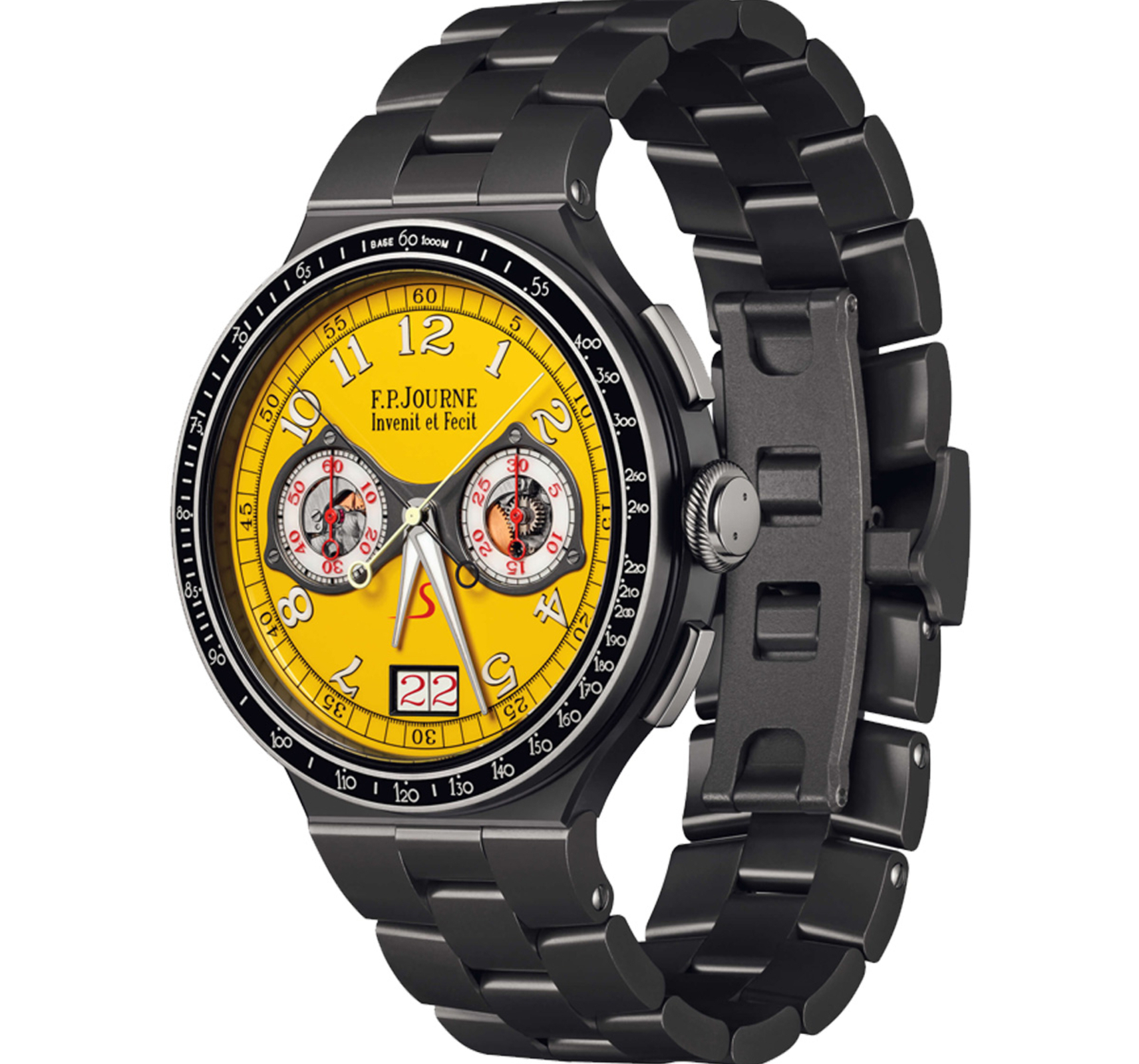
This watchmaking innovation operates on two levels of complexity. The annual calendar has a partial mechanical memory. Thanks to a specific program wheel, it distinguishes between months with 30 and 31 days. This system requires only a single human intervention each year, at the end of February. The perpetual calendar takes it a step further, functioning much like a brass computer. Through a precise interplay of rockers and a central wheel that completes one full revolution in forty-eight months, the movement anticipates the arrival of a leap year. February 29 is incorporated without any manual intervention. This marvel of programmed gears will operate completely autonomously until the year 2100, at which point the rules of the Gregorian calendar will require the omission of a leap year, necessitating the intervention of a watchmaker to readjust the mechanism.
The Poetry of Orbit: Moon Phases
Often associated with calendar displays, the moon phase indicator transcends strict contemporary utility to enter the realm of aesthetics. Behind a semicircular opening in the dial, a disc—often adorned with a starry sky in enamel and two moons made of precious metal—rotates with imperceptible slowness. It faithfully reproduces the synodic cycle of 29 days, 12 hours, 44 minutes, and 2.8 seconds.

Standard mechanisms accumulate an error of one day every two and a half years, requiring regular readjustment via a corrector hidden within the case. In contrast, so-called “astronomical moon” systems, equipped with wheels featuring 135 teeth, achieve such precision that they deviate by only one day after 122 years. While this feature is no longer of much use in guiding maritime navigation or agricultural harvests, it retains its undiminished appeal by anchoring the timepiece on the wrist to the unchanging rhythm of the universe.
The Mechanics of Sound: The Minute Repeater
Before the advent of luminescent materials and indoor lighting, checking the time in the dark was a challenge. Watchmakers therefore found a way to translate the visual display into acoustic signals. The minute repeater is unanimously regarded by artisans and collectors as the pinnacle of technical difficulty. Activating a lever or pusher on the side of the case winds an independent barrel. The movement then “reads” the time displayed by the hands and reproduces it using tiny hammers that strike gongs—thin wires of hardened steel coiled inside the case.
The sound coding is precise: a low-pitched tone to mark the hours, a double strike (high-pitched followed by low-pitched) to announce the quarters, and a high-pitched tone to count the minutes elapsed since the last quarter. Developing such a mechanism requires overcoming countless obstacles. It is necessary to isolate the parasitic noise from the striking mechanism using a centrifugal regulator that rotates in absolute silence, design a case whose air volume optimizes resonance, and tune the gongs manually. No digital tool can replace the master watchmaker’s ear during this final adjustment, which gives each piece a unique sonic signature.
The gravitational anomaly: the tourbillon
From a strictly semantic standpoint, purists often point out that it is not a complication in the literal sense, since it provides no additional information on the dial. The tourbillon nevertheless remains a symbol of exceptional craftsmanship. Patented in the very early 19th century, this device was designed to compensate for the effects of Earth’s gravity on the regulating mechanism (the balance-spring pair) of pocket watches, which were inevitably held in a vertical position in waistcoat pockets.
The solution devised involved enclosing the escapement in a rotating cage that completed a full rotation, typically in one minute. The timing error caused by gravity is thus distributed and smoothed out across all positions. While wearing a watch on the wrist—which naturally varies in inclination throughout the day—has made the chronometric advantage of the tourbillon less decisive, its visual allure remains undiminished. Observing this cage as it breathes and rotates simultaneously, suspended in a void of just a few millimeters, requires machining tolerances on the order of a micron. Contemporary variations have allowed it to rotate on two or even three axes, transforming the display of time into a kinetic spectacle of fierce precision.