Make Texture a preferred source on Google to support us
Add Texture to GoogleThe muffled click of a leather jewelry box worn down by decades. Inside, resting on faded velvet, a ring from the 1930s, a heavy necklace, or a watch whose mechanical movement has stopped. Passing down a piece of jewelry is a unique act, at the intersection of affection and the weight of history. It is one of the few objects in our daily lives designed to outlive us. Unlike a piece of fabric that tears, a perfume that evaporates, or a piece of furniture that wears away, gemstones and precious metals possess that arrogance of permanence. Behind the obvious romanticism of the act of passing on a piece of jewelry, however, lie geological, aesthetic, and sometimes cruel realities. The object we bequeath is not merely a mass of crystallized carbon or molten gold: it is a distillation of memory, a marker of time that demands to be handled with a goldsmith’s precision, long before the fateful moment of inheritance.
The Relentless Physics of Materials
Paradoxically, the anticipation of an inheritance begins the very moment of acquisition. Not all gemstones are cut to withstand eternity. A stone’s hardness, measured on a scale of one to ten on the Mohs scale, ruthlessly dictates its ability to endure through generations without bearing the scars of daily life. Diamonds (which score a ten), sapphires, and rubies (which score a nine) can withstand accidental impacts, repeated friction against table edges, and vigorous cleaning. They form the foundation of a worry-free legacy.
On the other hand, choosing an emerald to seal a union means accepting a compromise. This fascinating gem is renowned for its internal frost—those famous inclusions poetically dubbed “gardens”—which make it vulnerable to even the slightest fracture during thermal or physical shock. Opals, saturated with water, fear dryness and sudden temperature changes, which can cause them to crack. Fine and cultured pearls, composed of mother-of-pearl, inevitably lose their luster and deteriorate upon prolonged contact with the skin’s natural acids, cosmetics, or perfume sprays.
The design of the setting follows this same logic of survival. A closed setting, where a band of metal completely encircles the stone’s girdle, provides infinitely sturdier protection than a setting with delicate prongs. Over the years, the simple friction of clothing will wear down these prongs until they give way, releasing the stone into the void. The ideal family heirloom is, first and foremost, a testament to engineering designed for durability.
The Pitfall of Aesthetic Dissonance
The passing of the torch is most often orchestrated around the turning points of life: coming of age, an engagement, a wedding, or the reading of a will. The intention, though always commendable, frequently runs up against the wall of personal taste. It’s the classic “poisoned gift” syndrome. A heavy Victorian brooch in yellow gold, adorned with cameos, or a bulky cocktail ring from the 1980s can intimidate or simply repel an heiress whose wardrobe is built around strict minimalism. There is a high risk that the piece will end up in the darkness of a bank vault, transformed into an untouchable relic rather than a living adornment.
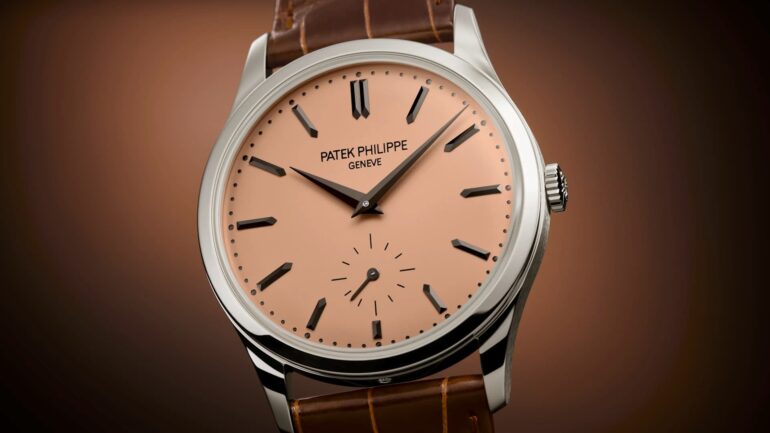
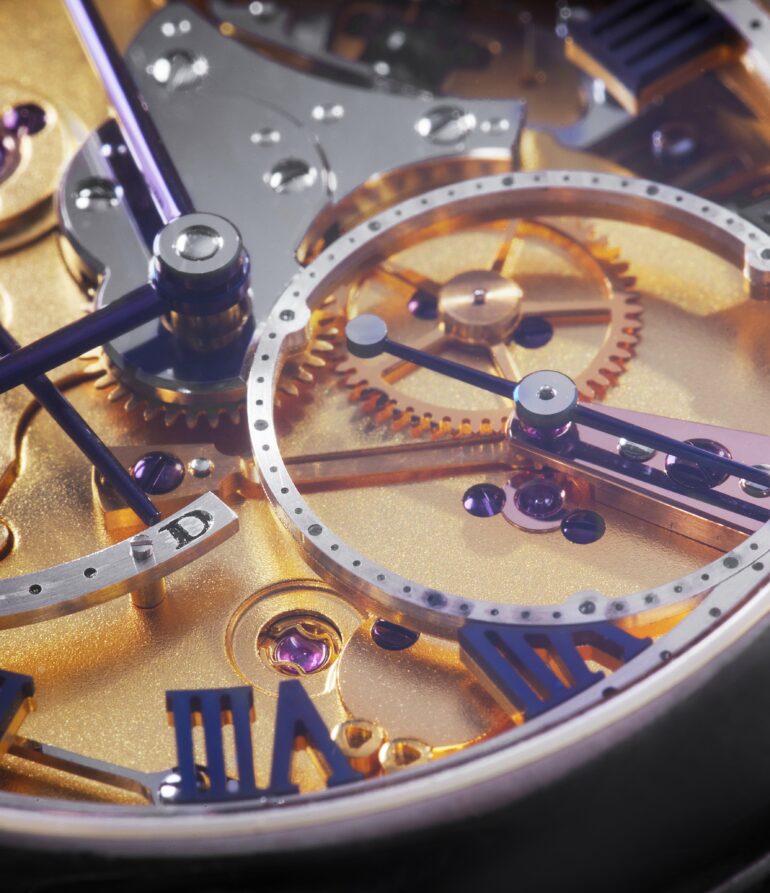
The silence surrounding this dilemma stifles the passing down of heirlooms. The giver would do well to accept that once an object is given, it is no longer under their stylistic control. On the men’s side, the ritual generally centers on the signet ring, bearing the family coat of arms, or the mechanical watch. The latter requires special care. The oils that lubricate its gears dry out over time. A timepiece left unused for twenty years will require disassembly and a complete overhaul of its movement before it can be worn on a new wrist without risking damage to its components.
Dismantling to Make History One’s Own
When the aesthetic gap between the original piece and its new owner’s style is too wide, an alternative emerges in the quiet of the workshops: redesign. This practice, sometimes mistakenly viewed as sacrilege by purists in the field, is in fact part of a centuries-old jewelry tradition. History courses offered by renowned institutions such as L’École des Arts Joailliers emphasize that the reuse of gemstones has always existed. In the past, royal tiaras and court jewelry sets were dismantled in response to changes in regime, financial difficulties, or shifts in fashion.
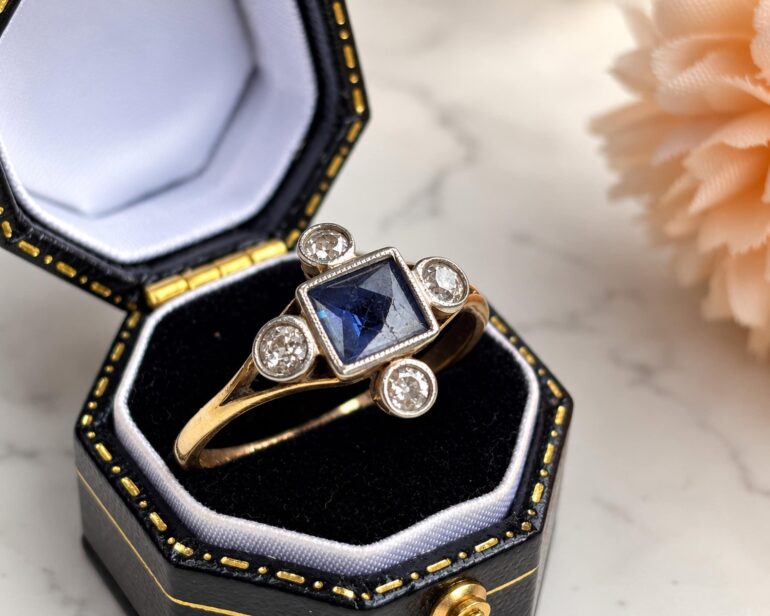
The contemporary process is akin to delicate surgery. The jeweler delicately dismantles a vintage engagement ring to extract the center stone. An old-cut diamond—immediately recognizable by its cut culet and deep luster, less sparkling but more sensual than modern brilliant cuts—suddenly comes to life. This stone, a true repository of the family’s DNA, is then set in an architecturally designed setting from its era, often in brushed rose gold or matte platinum. The original metal, stripped of its gemstones, is melted down to be incorporated into the new creation or to offset the cost of labor.
Through this act of creative destruction, the new generation physically makes the object its own. The wearer no longer adorns the jewelry of their ancestor with the weight of obligation; they carry the memory of their lineage, fused through the prism of their own aesthetic identity. Paradoxically, it is by altering the form that the essence is ensured to survive.

The Cold Arithmetic of Division
The emotional weight of the jewelry inevitably clashes with the coldness of the law during probate. The sentimental object abruptly becomes a financial asset again, subject to fluctuations in the price of gold, the rarity of gemstones, and the rules of tax-related division. The equation becomes precarious when a family has three children and the inheritance consists of nothing more than a spectacular ring set with an unheated Burmese ruby. When not properly prepared for, joint ownership disputes end up in court, destroying the harmony that the patriarch or matriarch had hoped to strengthen through their bequest.
The only solution lies in timely and regular expert appraisals. The appraisal must be entrusted to a certified and independent gemologist. A detailed appraisal report does more than just list zeros; it maps out the identity of the object. Exact carat weight, clarity, color grading, detection of any heat treatments or fillings, identification of master and guarantee hallmarks: every technical characteristic is recorded. A clear distinction must be made between the insurance value—which corresponds to the cost of replacing the item with a new one—and the market value, which indicates the expected price upon immediate resale on the secondhand market or at an auction.
Updating these documents every ten years helps establish irrefutable financial fairness at the time of division. Whoever chooses to keep the ring or the family jewelry set must pay a cash settlement—a monetary compensation—to their co-heirs, calculated on objective grounds rather than based on buried resentments.
Engraving the body of the piece of jewelry remains the final step in a well-managed transfer. The inside of a ring or the back of a chronograph case offers a limited yet inviolable space. Intertwined initials, the date of a meeting, the geographical coordinates of a place of significance. A discreet typeface, invisible to the rest of the world, anchors an era within the material. When the original engraving fades due to wear from the skin and the passage of time, the descendant may ask a craftsman to restore it, or decide to add their own initials in succession. The metal’s surface then becomes a portable family register, accumulating successive layers of a family’s history—far removed from the mere glitter of carats.