Make Texture a preferred source on Google to support us
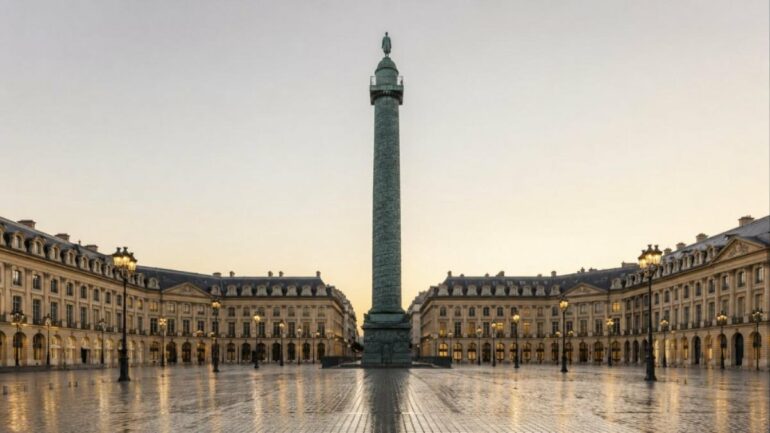
Add Texture to GoogleThe shadow of the bronze column stretches across the cobblestones, a mineral sundial marking the hours of a silent epicenter. Seen from above, the octagon designed by architect Jules Hardouin-Mansart in the late 17th century imposes its strict geometry, encircled by classical facades where symmetry reigns supreme. Originally designed to house the institutions of the monarchy and celebrate the glory of Louis XIV, the square has seen its destiny diverge from its original purpose. The true magnetic force of this Parisian space no longer lies in political homage. Beneath the slate roofs and behind the tall, small-paned windows, another power has taken root. A hushed ecosystem, governed by the cut of diamonds, the fire of Burmese rubies, and the malleability of platinum. At the heart of this geography of luxury, three names trace an intimate map, an invisible yet omnipotent golden triangle: Cartier, Boucheron, and Chaumet. Their respective histories are intertwined with the city’s evolution, marking the transition from courtly craftsmanship to the modern fine jewelry industry.
Settling in the Sun: A Pioneer’s Vanguard
The migration of master jewelers to this specific area followed the logic of urban transformation. In the 19th century, the arcades of the Palais-Royal still housed the bulk of the luxury retail trade. It wasn’t until the end of the century that the social scene shifted toward the western part of the capital. Frédéric Boucheron then made a landmark decision. In 1893, he left the arcades to set up shop at 26 Place Vendôme, becoming the first in his profession to open a boutique there. This choice of location reflected a keen understanding of the surroundings: the northwest corner of the octagon enjoyed exceptional natural light. Sunlight bathed the display windows and showrooms for much of the day, allowing the gemstones to reveal their natural brilliance without the need for the artificial lighting of the time.
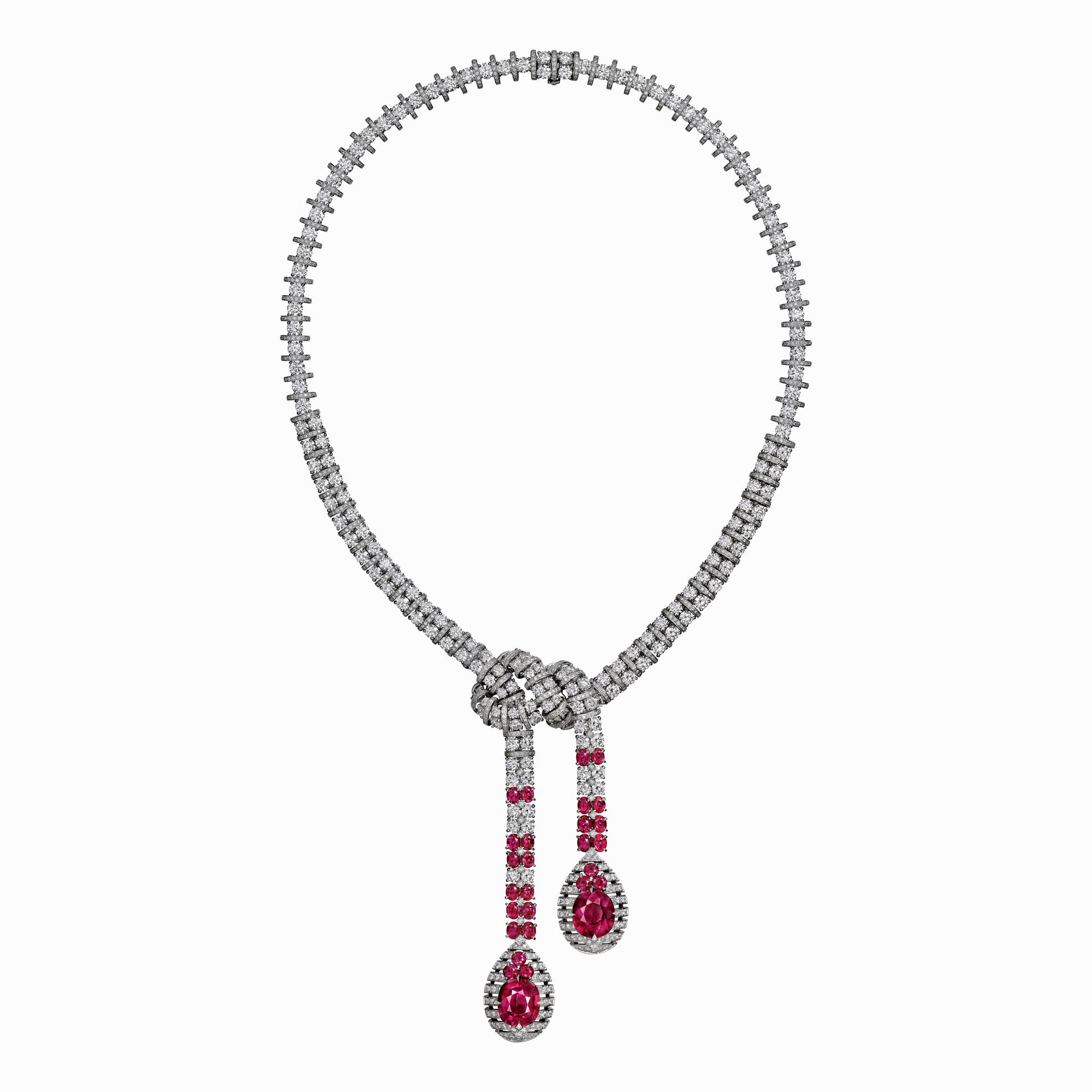
Behind this light-filled façade, Boucheron forged a scandalous and avant-garde reputation. Legend has it that the Countess of Castiglione, a fascinating socialite of the era, resided on the mezzanine floor of the building. Shunning harsh light for fear of seeing her beauty fade, she stood in stark contrast to the energy emanating from the workshops above. The house quickly distinguished itself through radical technical choices. As early as 1879, the creation of the “Point d’Interrogation” necklace—which had no clasp and was designed to wrap freely around the neck—upended the conventions of symmetry. The gold is worked with unprecedented flexibility, engraved and sculpted. This initial foothold in the area served as a signal: the neighborhood gained a magnet capable of drawing an international clientele in search of pieces free from conservatism.
Echoes of the Empire and the Architecture of the Tiara
In contrast to this innovative drive, No. 12 embodies a more ancient legacy, deeply rooted in French history. Although the Chaumet brand took up residence at the Hôtel Baudard de Saint-James in 1907 under the leadership of Joseph Chaumet, the house’s DNA dates back to the First Empire. Marie-Étienne Nitot, the spiritual father of the lineage, served as jeweler to Napoleon I and Empress Joséphine. This political and sentimental legacy permeates the brand’s stylistic approach, which has established the tiara as its signature specialty.
In this historic building, the grand salon on the first floor still features its original 18th-century wood paneling. It is a space steeped in literary and musical history, where Frédéric Chopin lived during his final months in 1849. There is a constant dialogue between the venue’s classical architecture and the creations from the workshops. Chaumet translates Joséphine’s botanical passion for wheat, ivy, and hydrangeas into diamond designs. The invention of the “fil couteau” setting—a technique designed to thin the metal to the extreme to make it invisible—allows the stones to appear to float above the hair. Belle Époque headpieces succeeded the imperial tiaras, but the design language remained the same: naturalism tamed by geometry, a lightness that defies gravity. The house turned No. 12 into a living museum of headdresses, attracting Europe’s great aristocratic families during the ball season.
Rue de la Paix and the Structural Revolution
The third vertex of this triangle shifts the center of gravity toward the thoroughfare connecting the Octogone to the Opéra district. By establishing Cartier at No. 13 Rue de la Paix in 1899, Louis Cartier—followed by his brothers Jacques and Pierre—permanently cemented the area as a must-visit destination for high society and industrial magnates. The immediate proximity to the Ritz, opened by César Ritz a year earlier, ensured a steady stream of wealthy travelers.
This location’s contribution to the history of the decorative arts rests on a fundamental technical breakthrough: the systematic use of platinum. Before Cartier, silver—which is prone to oxidation—or gold—which required significant thickness to ensure the strength of the settings—made the jewelry heavy. Platinum, a demanding metal with a melting point approaching 1,700 degrees, required the development of specialized tools. The artisans at 13 rue de la Paix mastered it with surgical precision. This technological leap gave rise to the “Guirlande” style, of unprecedented finesse, before paving the way for the geometric abstraction of the 1920s. The atelier becomes a laboratory. Under the influence of Jeanne Toussaint, creative director appointed in 1933, the aesthetic becomes more radical. The three-dimensional panther made its debut, onyx contrasted with diamonds, and the engraved gemstones brought back from Jacques Cartier’s travels in India gave rise to the “Tutti Frutti” style. The boutique was no longer merely a retail outlet; it dictated the tastes of its era.

The Invisible Hive and the Circulation of Knowledge
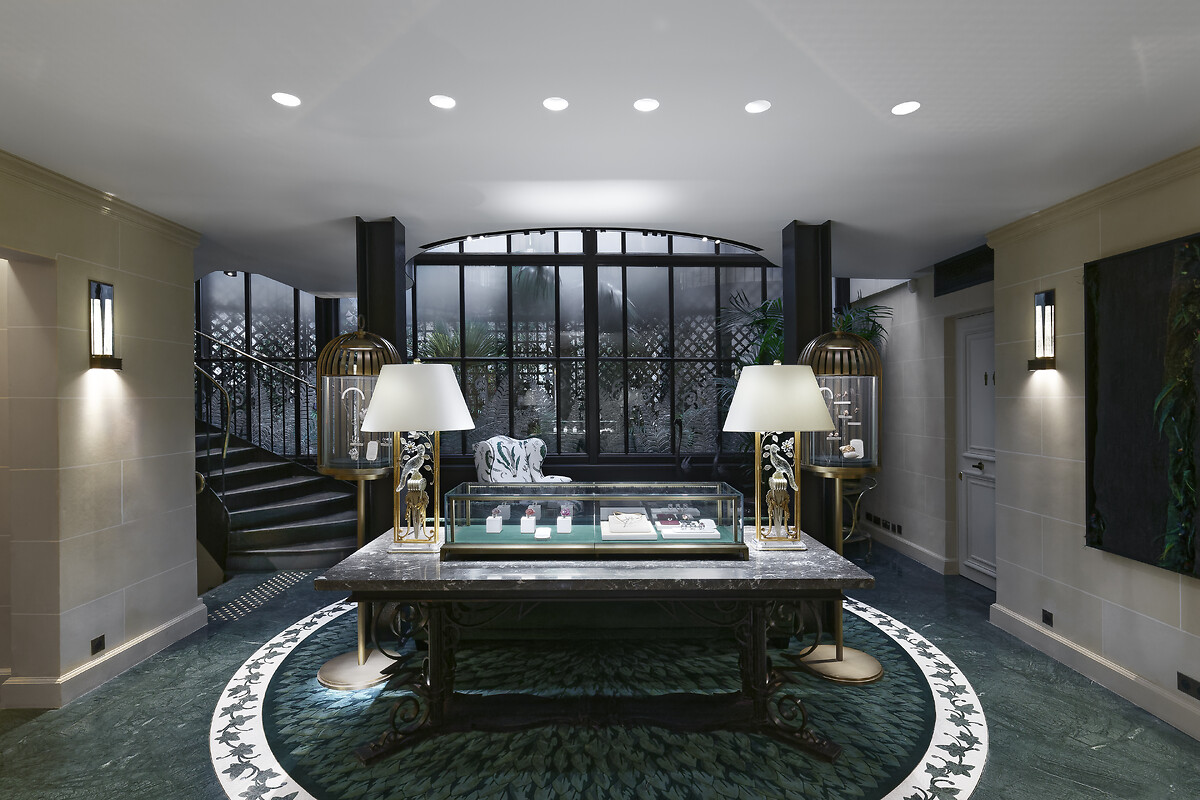
To view this landscape solely through the lens of the ground-floor storefronts would be to strip the neighborhood of its true driving force. Beneath the zinc roofs, beyond the hidden stairwells, a silent industry thrives. Designers, gemologists, casters, jewelers, setters, and polishers make up a community of several hundred artisans. On weathered workbenches, wooden pegs, bocfil files, and precision files now sit alongside 3D imaging, yet the final act of creation remains subject to the pressure of the finger and the discernment of the eye.
This extreme concentration of talent generates a level of competition of rare intensity. Gem brokers walk back and forth between numbers 12, 13, and 26, presenting the same Colombian emeralds or Kashmir sapphires to different buyers from the various houses. Rumors from the workshops circulate, and technical challenges are met with counter-challenges. When an innovation emerges—a novel setting, a custom gem cut, a new flexibility in metal—it sends shockwaves that compel every competitor to refine their own research. The physical proximity of Cartier, Boucheron, and Chaumet does not lead to uniformity but, on the contrary, acts as a catalyst for identity. To hold its own against rivals separated by just a few dozen meters of cobblestones, each house must sharpen its own stylistic vocabulary.
The Mineral Imprint of History
Place Vendôme functions as a stone theater stage where French prestige is played out. Come evening, when the ballet of armored vans comes to an end and the creations return to the underground vaults, the space regains its architectural solemnity. The streetlights illuminate the pale stone, the pilasters, and the mascarons, erasing the commercial frenzy for a few hours. The nighttime visitor perceives only the triumph of the classical layout envisioned by the Sun King.
Yet the reality of this area extends beyond the mere beauty of its facades. The three houses that form its backbone have done more than simply rent out square meters of prestige. They have internalized the spirit of the place, transforming a royal square into a benchmark of absolute excellence. By continually pushing the boundaries of goldwork, platinum alloys, and the fire of gemstones, Cartier, Boucheron, and Chaumet prove that the most complex material shaped behind these windows is time itself. A story constantly reimagined, where every stroke of the goldsmith’s hammer reaffirms that high jewelry is, above all, the art of subjecting the eternity of gemstones to the fleeting nature of desire.