
Make Texture a preferred source on Google to support us
Add Texture to GoogleSeptember 30, 2026, marks a turning point in the historiography of contemporary fashion with the publication of Virginie Viard’s book, *Un regard: A Life at Chanel*. Published by Éditions Stock in the “Essais et Documents” collection, this 256-page account lifts the veil on one of the most talked-about yet most secretive periods at Rue Cambon. Behind the discreet demeanor of Karl Lagerfeld’s successor lies a fierce determination to claim her place in the lineage of Gabrielle Chanel, refusing to let her five years as creative director be reduced to a mere transitional interlude.
The Long Shadow of Karl Lagerfeld
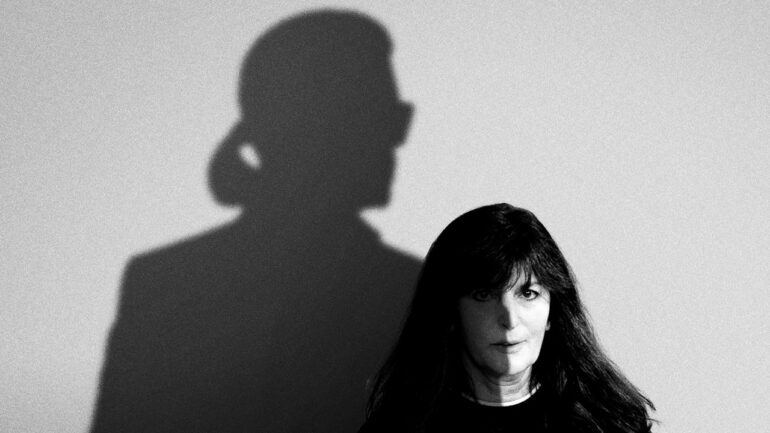
The bond that united Virginie Viard and Karl Lagerfeld went beyond the traditional framework of a professional collaboration. She joined Chanel in 1987 as an intern in the embroidery department and spent nearly three decades in the “Kaiser’s” wake. Their bond was so close that the designer publicly referred to her as his “right-hand woman and left-hand woman.” She even followed him to Chloé in the 1990s before returning to Rue Cambon in 1997 to head the haute couture studio, and then the ready-to-wear studio in 2000.
Yet this creative partnership left an indelible mark. In her book, Virginie Viard confides that she has been constantly haunted by the memory of her mentor. The final third of the book takes on a unique dimension: an open letter addressed to Lagerfeld that blends tribute with a certain bitterness. In it, she expresses a quiet regret, implicitly reproaching him for having been the only one to truly recognize her potential—thereby creating a dependency from which it was difficult to break free after his death on February 19, 2019.
The account also explores the complexities of life within the studio, notably mentioning the tensions she experienced with Amanda Harlech, Lagerfeld’s muse. These rivalries had once led the designer to consider other professional paths, before she ultimately established herself as the natural heir upon the couturier’s death.
The Sudden Departure on June 5, 2024
Virginie Viard’s departure, officially announced on June 5, 2024, sent shockwaves through the luxury industry. While Chanel soberly paid tribute to a “rich five-year collaboration,” the designer’s personal account paints a much more abrupt reality. According to her account, she was fired without notice during a face-to-face conversation with co-owner Alain Wertheimer. The phrase “We’ll stop here,” followed by a terse “It won’t be easy,” reportedly brought an end to her thirty-seven-year tenure at the house, leaving no room for discussion or explanation.
This dismissal came at a particularly cruel time: the July 2024 Haute Couture collection had already been finalized under her direction, but it was presented without her presence. For Virginie Viard, the trigger for this sudden break was the very mixed reception given to the 2024/2025 Cruise show. Held in May 2024 on the rooftop of the Cité Radieuse in Marseille, the event was marked by difficult weather conditions and a lukewarm critical reception—an episode she now views as the turning point in her tenure with the brand.
Rejecting the “Interlude” Label
One of the major themes of *Un regard: Une vie chez Chanel* is to challenge the dominant narrative that characterizes her tenure as merely an “interlude” or a technical parenthesis between two major eras. To counter this perception, the author has structured her book into five acts. This structural choice aims to establish her five-year tenure as a historical period in its own right, challenging the customary division of Chanel’s history—often boiled down to three names: Gabrielle Chanel, Karl Lagerfeld, and now the house’s future.
The paradox of her era lies in the disconnect between critical reception and financial performance. While her stylistic offerings frequently drew harsh criticism from fashion observers, the house posted record-breaking sales figures under her leadership. This financial success does not seem to have been enough to alleviate the designer’s sense of isolation; in her memoir, she laments that no one within the company sought to reverse what she describes as a “disaster” during her final months in office.
The hiring of Matthieu Blazy to take over as creative director marks a clear break from the direct legacy of the Lagerfeld-Viard era. Far from harboring any resentment toward her successor, the author states that she felt genuine “relief” at the announcement, seeing this transition as the end of an exhausting personal cycle weighed down by archives and ghosts.
A Document for the History of Luxury
Available for €20.50 in paperback and €14.99 in digital format, the book published by the Hachette Livre Group serves as an essential record for understanding the power dynamics within a luxury house of this stature. (Paperback ISBN: 978-2-234-11217-9; Digital ISBN: 978-2-234-11243-8).
By choosing to tell her story in writing, Virginie Viard does more than simply recount the behind-the-scenes details of her departure; she seeks to restore the vision of fashion she championed for five years—far from the spotlight she has always shunned—while paying a final, bittersweet tribute to the man who made her who she is.