
Make Texture a preferred source on Google to support us
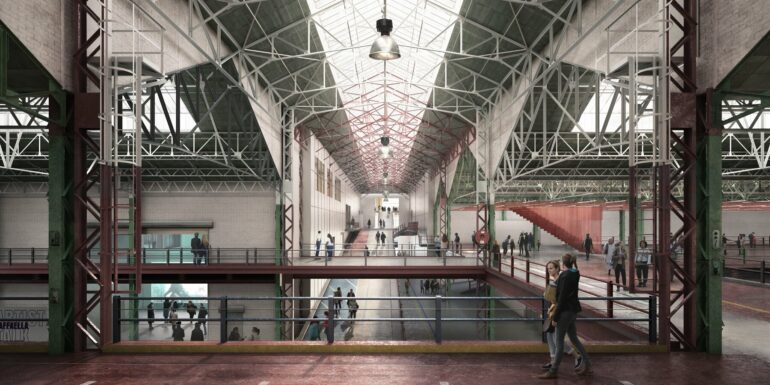
Add Texture to GoogleThe excitement of the big opening-night events can’t quite mask the budgetary headwinds sweeping through the 40,000 m² of concrete and glass at Place Sainctelette. With just a few weeks to go before the official opening of Kanal, scheduled for November 28, 2026, the flagship of Brussels’ cultural scene is faltering. While popular success seems already assured—the 30,000 free tickets for the opening weekend sold out in twenty-four hours— behind the scenes, the institution is facing a governance crisis and a financial equation whose unknown variable threatens the project’s long-term viability.
A Breakup at the Top of the Institution
The sudden departure of Yves Goldstein, executive director of the Kanal Foundation, has sent shockwaves through the capital. Initially, the project’s driving force had announced in May 2026 his intention to remain in office until a successor was appointed, scheduled for early 2027. The timeline suddenly accelerated under political pressure. The office of Brussels Minister-President Boris Dilliès and the Brussels-Capital Region have formalized a termination of contract effective November 30, 2026—just two days after the doors open to the public.
This hasty departure is not the result of a simple schedule change, but the culmination of a standoff that began in September 2026, when the regional executive reportedly attempted to remove the director before reaching a compromise in the fall. The reason cited—a “difference of opinion regarding the future of Kanal”—reveals a deep rift over the museum’s management and strategic vision. As a sign of this definitive removal, Yves Goldstein will not serve on the selection committee tasked with finding his replacement.
This instability at the top comes as the renovation project for the former Citroën garage—a modernist and Art Deco gem from the 1930s purchased from the PSA Group in 2015 for 20.5 million euros—remains incomplete. While the five floors of galleries are ready to welcome visitors, the Kanal Architecture space remains closed. This delay is a direct result of a fire that broke out on the roof of the construction site in early July 2026; water damage caused by the emergency response slowed down the finishing work on this specific wing.
The Cost of Ambition and the Burden of Debt
The architectural project, entrusted to the Atelier Kanal consortium—comprising noAarchitecten (Brussels), EM2N (Zurich), and Sergison Bates Architects (London)—has seen its costs rise considerably over the years. Now estimated at approximately 230 million euros, the cost of the work has jumped by 80 million compared to initial projections, driven by inflation and the technical complexity of bringing this industrial behemoth up to code. To complete the vital ventilation, security, and air conditioning systems, the Region had to urgently secure a 60-million-euro loan in 2026.
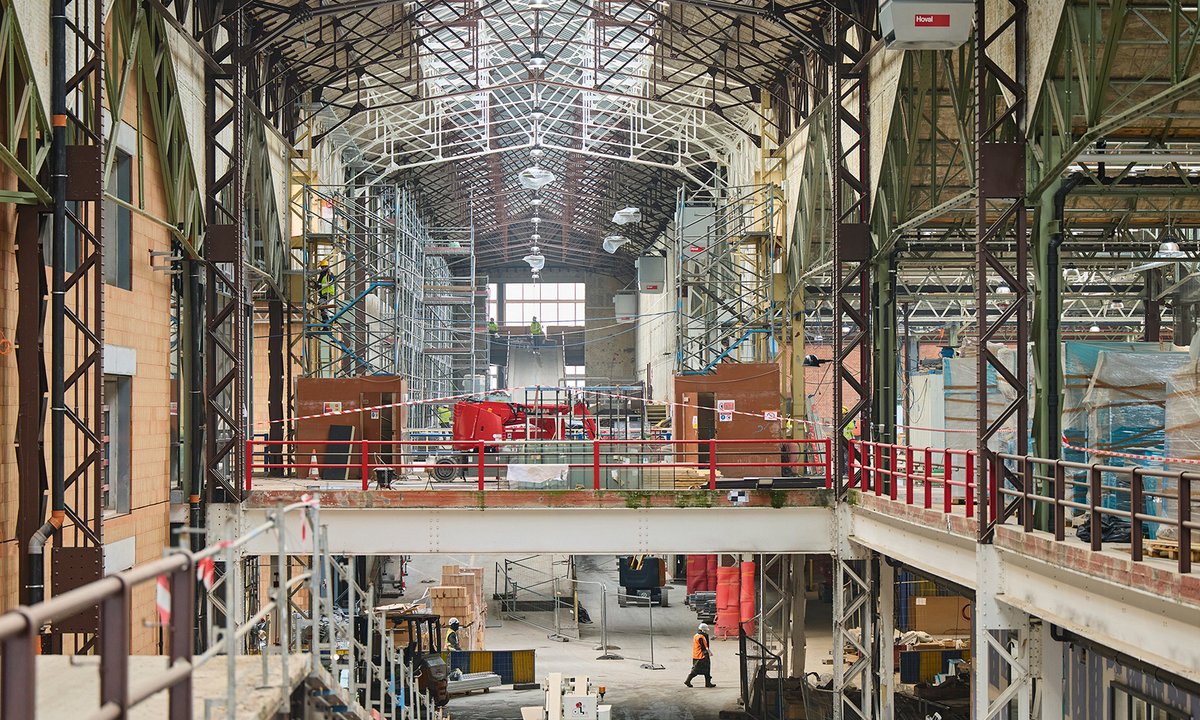
This is where Kanal’s business model falters. This 60-million-euro loan must, in theory, be repaid by the museum within one year—an accounting requirement that seems out of touch with the institution’s actual capabilities. The Foundation’s projections for 2025 anticipate annual revenue of 16.5 million euros, including 6 million from ticket sales and the gift shop, 6.5 million generated by the restaurant, and 3.4 million from events. Even if the ambitious goal of 550,000 visitors per year is met, full repayment of such a debt from equity within twelve months seems unfeasible, fueling the fears of some political observers who view this as a disguised subsidy.
The budget debate is all the more heated because the figures vary depending on the source. While management sticks to a renovation budget of 230 million euros, voices in the Brussels Parliament are pointing to total public spending that has reached 400 million euros. Although this figure is not corroborated by official investment accounts and appears to include land acquisition and future cost adjustments, it illustrates the political tension surrounding the financing of the project at the be.brussels site.
A Parisian Partnership at a High Price
Beyond the museum’s walls, the museum’s collection itself represents a significant fixed cost. Kanal has entered into a partnership with the Centre Pompidou in Paris through an expertise and branding agreement that runs through 2031. To benefit from the loan of 350 works and Parisian cultural expertise, the Brussels institution must pay an annual fee of 2 million euros.
This fixed cost comes at a time when regional operating subsidies are on the decline. The initial promised allocation of 35 million euros per year has already been cut to 28 or 29 million euros for fiscal year 2026 by the Dilliès government. Even more concerning is that, as part of its austerity plan, the regional government is considering lowering this allocation to just 10 million euros per year by 2029. While the museum’s spokesperson clarifies that this drastic cut is not yet in effect and must still undergo formal deliberations, the threat of financial strangulation looms over the planning of the ten inaugural exhibitions.
Kanal thus finds itself at a crossroads: between the public’s enthusiasm for an exceptional industrial heritage site and the reality of an economic model based on very high attendance projections and increasingly fragile public funding. The opening weekend will mark not only the birth of a major new cultural hub but also the beginning of a phase of budgetary survival, in which every ticket sold will carry significant weight in the face of a 60-million-euro debt whose due date is already fast approaching.