
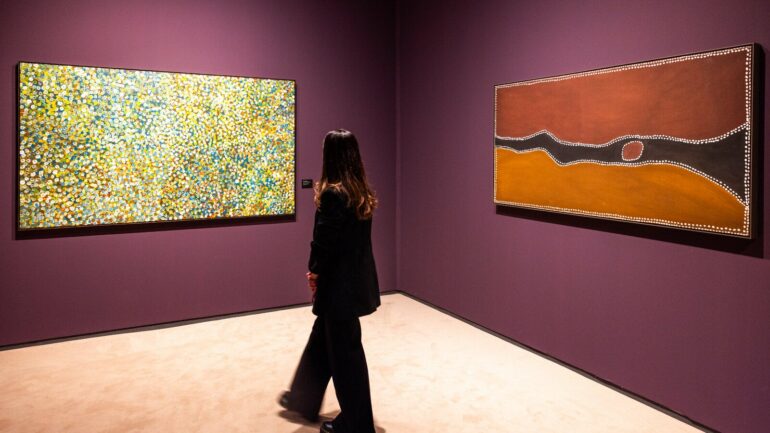
Make Texture a preferred source on Google to support us
Add Texture to GoogleThe buzz in the aisles of Art Basel, the electrifying openings at Frieze, and the solemnity of TEFAF come together each year to create an exhausting marathon for those in the art market. But behind the glimmer of neon lights and the adrenaline rush of immediate transactions, a sense of weariness sets in. The increasingly packed international calendar imposes a pace that now seems to be reaching a breaking point. For some privileged observers based in the heart of London’s St. James’s neighborhood, this frenetic pace does more than just wear out the body; it profoundly alters the psychology of buyers, prompting a marked return to safe-haven values, far from the media hype surrounding the ultra-contemporary.
Art Fair Fatigue and Visual Exhaustion
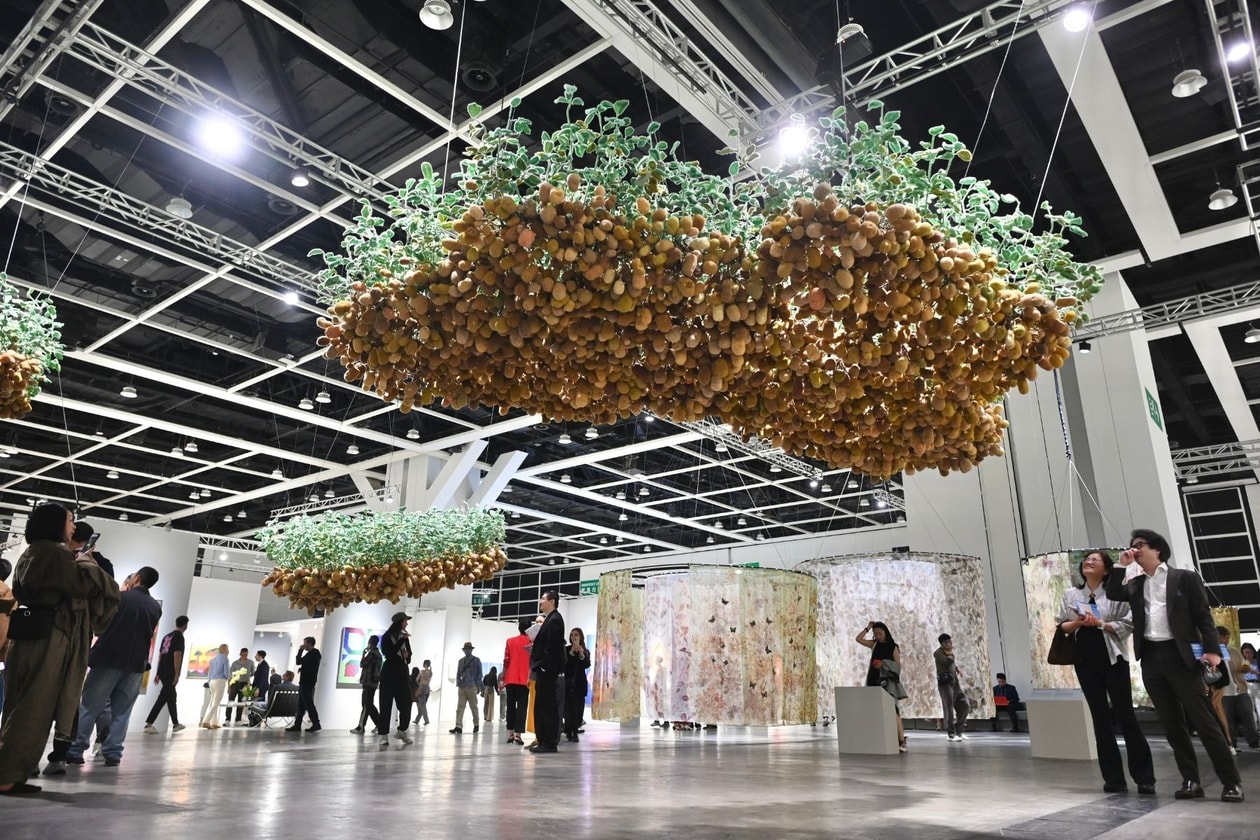
This observation is shared by professionals who navigate the Mayfair district: keeping up with the constant influx of emerging artists has become a full-time job, almost incompatible with the life of a private collector. Between The Armory Show, Frieze, and the countless satellite fairs, the time investment required to stay relevant in the realm of “hype”—those speculative new trends whose lifespan is sometimes shorter than a fashion season—proves to be colossal. This saturation, dubbed “Fair Fatigue,” is no longer just a complaint at art fairs but a factor transforming the market.
This constant pressure, coupled with a global economic slowdown observed between 2024 and 2026, has weakened the ecosystem of mid-tier galleries. Cash flow difficulties and gallery closures in the contemporary segment point to structural fragility. For Dotahn Pissarro-Stern, director of the Stern Pissarro Gallery, this context naturally pushes buyers to turn away from volatility in search of a more solid foundation. The race to find the next raw talent, while still appealing to a speculative fringe, is losing its luster in the face of the need for financial stability.
From Media Hype to Historical Clarity
The market appears to be undergoing a semantic shift: the focus is no longer on the novel at any cost, but on “legibility.” This concept, championed by the London gallery co-directed by David Stern and Lélia Pissarro (great-granddaughter of Camille Pissarro), is based on the idea that a work must embody its own context, validated by time and academic research. Purchasing a painting from the School of Paris or a late Impressionist work offers an immediate understanding that even the most radical contemporary art can no longer guarantee in an environment saturated with information.
This quest for aesthetic and historical clarity restores the secondary market’s prestige. Whereas ultra-contemporary art suffers from rapid obsolescence, established masters benefit from a discourse solidified by decades of museum exhibitions. A work such as *L’Anse des Pilotes, Afternoon, Sunny Weather, Le Havre*, painted by Camille Pissarro in 1903, embodies this stability. It requires no complex explanation tied to a fleeting market trend; its significance is established by art history.

The Safe Haven of Established Values
Recent results from major auction houses confirm this interest in segments with firmly established market values. In October 2026, a bronze by Medardo Rosso, *Ecce Puer* (1912), sold for $2.8 million at Sotheby’s New York, exceeding a high estimate of $2.2 million. In Paris, in June of the same year, a late painting by Giorgio de Chirico sold for 1.2 million euros. These figures illustrate a concrete reality: capital is shifting toward artists whose place in the aesthetic canon is well established.
This shift toward pre- and post-war modernism does not signify a total lack of interest in contemporary art, but rather a growing demand for institutional validation. Collectors no longer want to be the sole guarantors of an artist’s value; they expect museums and scholars to have already paved the way. The Stern Pissarro Gallery’s specialization in Impressionism and the works of Camille Pissarro’s descendants responds precisely to this demand for intellectual and financial security.
Persistent Confidence Despite the Shift
While some dealers perceive an end to the cycle of rampant speculation, the global market is by no means collapsing. Macroeconomic indicators reveal surprising resilience. According to a survey conducted by Art Basel and UBS in 2026, 57% of collectors still anticipated growth in the fine art market in the short term, and 60% said they were optimistic over a ten-year horizon. This is therefore not a withdrawal of capital, but rather a strategic reallocation.
The art market of 2026 thus appears to be moving at two different speeds. On one hand, the contemporary sector must reinvent itself to combat the fatigue of its own model; on the other, the historical market is capitalizing on its clarity to provide reassurance. For galleries based in Mayfair, this transition is an opportunity to remind people that art, before being a volatile financial asset, is an ongoing conversation with history. By favoring names they already know, collectors are not merely opting for caution; they are choosing the enduring nature of a dialogue that began long before the invention of international art fairs.