
Make Texture a preferred source on Google to support us
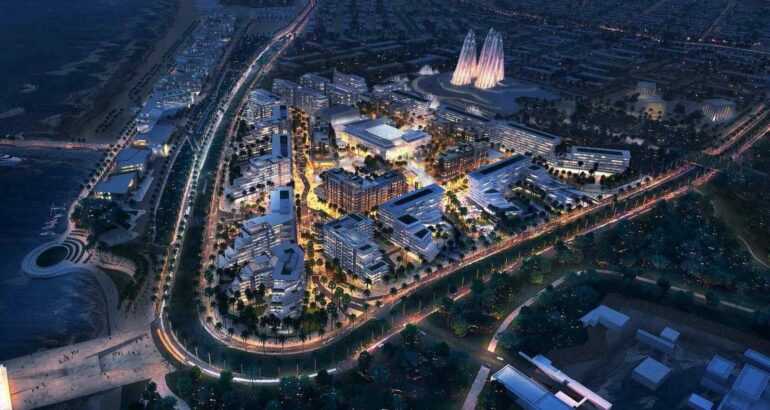
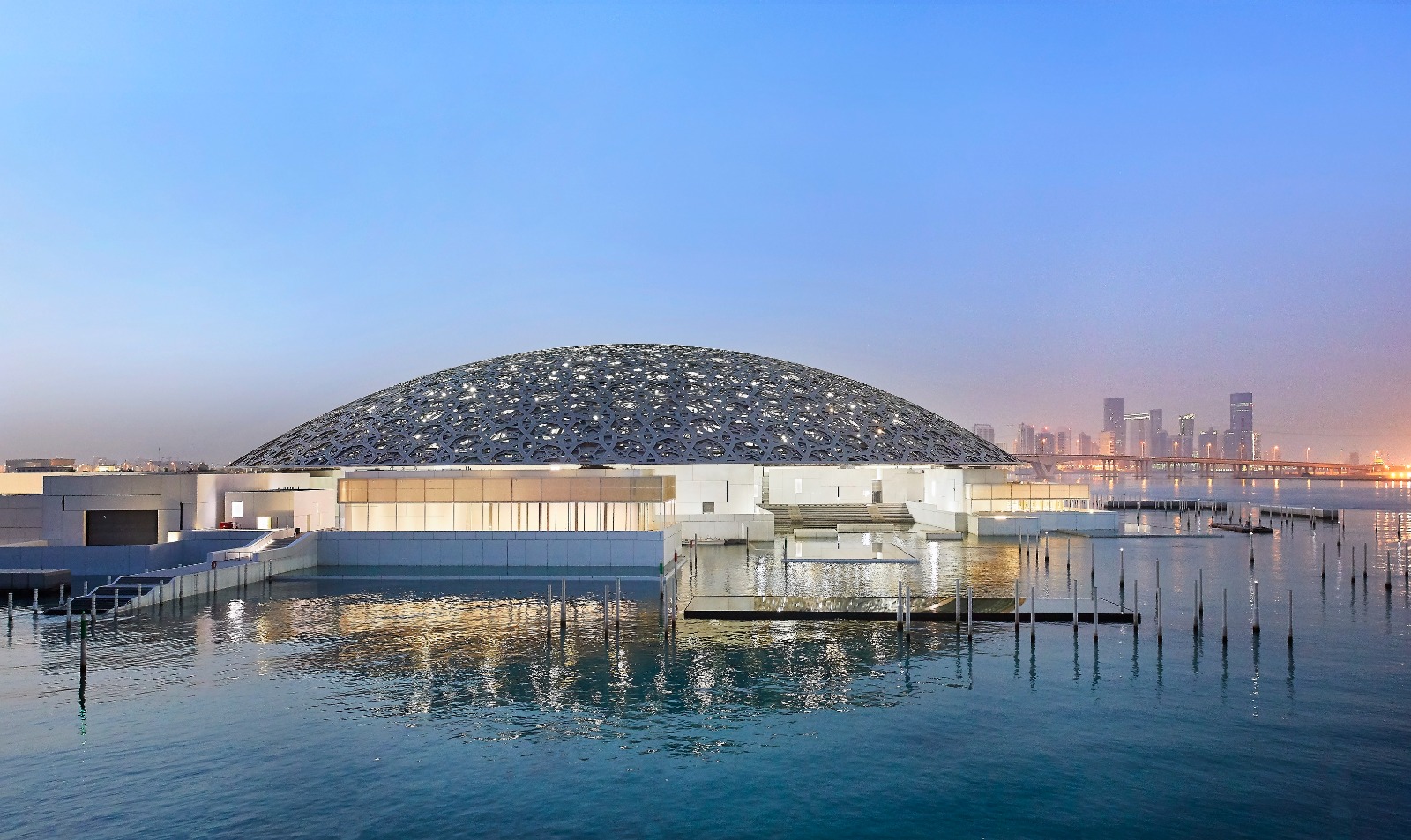
Add Texture to GoogleFitting physically between the spider-web-like dome designed by Jean Nouvel and the deconstructed forms of Frank Gehry’s future building is a major urban planning challenge. Yet it is on this triangular plot of land—at the precise intersection of the Louvre Abu Dhabi, the Guggenheim, and the Zayed National Museum—that the next chapter in high-end retail is being written. By the fourth quarter of 2026, Saadiyat Island will unveil a unique network. On this sliver of the Emirati capital, real estate developer Aldar is orchestrating a head-on collision between state-led cultural engineering and the luxury industry. Named Saadiyat Grove, this approximately one-square-mile area is tasked with doing away with the model of the enclosed shopping mall. The specifications call for a radical transformation: weaving an urban ecosystem where financial transactions take a back seat to aesthetic immersion and neighborhood life.
Prestige Urbanism as a New Grammar
Historically, the Arabian Peninsula has built its relationship with commerce on the sheer scale of its malls—these temples of consumption cut off from the outside world. The approach developed at Saadiyat takes the exact opposite stance to this legacy. What will rise from the ground in a few months is no longer just a shopping mall, but a multifaceted and self-sufficient micro-city. The strategy is based on a density of uses pushed to its peak—an approach that is now central to territorial planning in the Gulf. By bringing together hotel complexes, wellness clinics, office spaces, and a culinary scene highlighted by the opening of Abu Dhabi’s first Time Out Market within a single continuum, the project creates a true functional hub.
The immediate goal is to attract and retain a remarkably diverse range of visitors: the passing art collector, the international tourist drawn by major exhibitions, and, above all, the permanent resident. The associated real estate developments—such as the Louvre Abu Dhabi Residences, The Arthouse complex, and the Saadiyat Residences—reflect this commitment to establishing a lasting presence. The goal is to encourage a permanent population within this district, to avoid at all costs the “cultural district syndrome”—where the area empties out completely once night falls and the museum gates close.
When the Boutique Becomes a Stage
Situated alongside the region’s most closely scrutinized cultural institutions, luxury brands are facing a new reality. They can no longer rely on simple displays of leather goods arranged on backlit shelves. The immediate proximity to these giants of the global art world forces them to strengthen their own narrative. Faced with a clientele well-versed in digital shopping and weary of uniformity, the physical space must absolutely justify the trip. The retail space is thus transforming into a theatrical setting, sometimes verging on the abstract.
At Fendi, the collection display will cede part of its floor space to a movie theater and a multipurpose room, designed to host a continuous program of events. The Roman brand is shifting its focus from ready-to-wear to content distribution. Chaumet is embracing a similar exhibition approach by structuring its space around the history of the tiara. The Parisian jeweler has created an interactive journey that breaks down the complex stages of crafting this ornament, deliberately blurring the lines between a retail showcase and an art and craft gallery.
Between Bespoke Design and Architectural Innovation
This theatrical presentation takes on highly eclectic forms depending on the brands involved. While the international expansion of the luxury sector has long been synonymous with the strict replication of a single concept from Tokyo to New York, the trend is now reversing. Cartier announces a deliberate dialogue with its host environment. The French brand is enlisting Emirati artists to design a unique façade and materials, thereby seeking to integrate the local narrative into its DNA. In contrast to this approach of assimilation, Audemars Piguet has chosen to import its own geographical legacy. The watchmaker will unveil a groundbreaking concept whose aesthetic draws direct inspiration from the topography and landscapes of Le Brassus, its Swiss birthplace.
Elsewhere, visual and monumental extravagance takes precedence. Van Cleef & Arpels will draw on strictly Art Deco codes, while Tiffany & Co. will channel the majestic spirit of its New York “Landmark” format. For its part, Loewe will move away from passive contemplation toward active engagement by inaugurating its first “Personalization Bar” in the Middle East, a hands-on workshop dedicated to creating custom charms and accessories. Louis Vuitton is also among the confirmed brands rounding out this panorama of the global luxury sector.
The Paradox of Duplicated Uniqueness
The accumulation of these spectacular initiatives nevertheless raises a fundamental question about the sector’s evolution. By treating every location as an extraordinary anomaly, the industry is verging on saturation. If every retail space becomes “experiential,” the element of surprise evaporates. The promise of uniqueness, ardently defended by every brand, risks being diluted in an environment where all concepts compete in ingenuity to the point of ultimately canceling each other out.
The challenge for Saadiyat Grove lies precisely in managing this tension. Culture, invoked here as the ultimate source of legitimacy, offers luxury brands a setting infinitely more prestigious than that of the major shopping thoroughfares in downtown areas. Setting up shop in the shadow of the Louvre or the Zayed National Museum lends an intellectual veneer to the act of consumption. But this very setting sets a ruthless standard for the relevance and longevity of the concepts on offer.
The Test of Time
Once the euphoria expected by the end of 2026 has subsided and the string of grand openings under the flashes of the international press has come to an end, the project will face the only test that truly matters in urban planning: time. Successfully blending the colossal planning ambitions of a Gulf power with the spontaneity of neighborhood life remains a formidably complex equation. Ultimately, the site’s viability will depend far less on the glitter of its facades or private projections of Italian fashion than on the public’s embrace of these spaces.
Maintaining the interest of foreign visitors beyond the novelty factor, fostering daily activities centered around healthcare facilities or the gourmet market, and forging genuine social ties around residential developments. Only this human depth—organic and unscripted—will prevent this ultra-premium enclave from becoming a splendid but sterile architectural postcard.