
Make Texture a preferred source on Google to support us
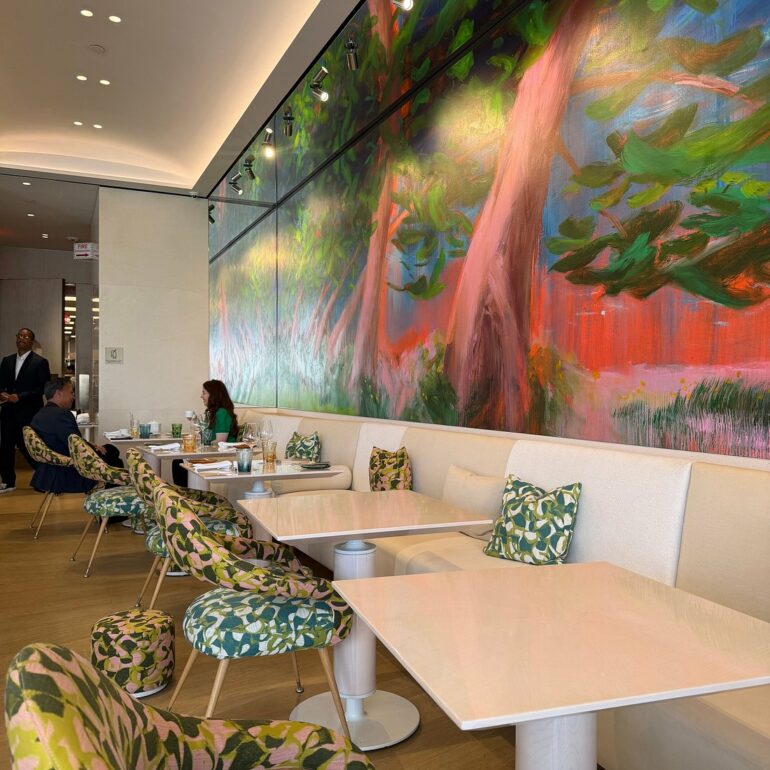
Add Texture to GoogleAt Dior on Rodeo Drive, you can now reserve a table. The Monsieur Dior restaurant, helmed by Dominique Crenn, complements the fashion house’s collections in Beverly Hills, while the upper floors feature private lounges and a reserved terrace. This shift from fashion to hospitality speaks volumes about the battle brands are waging in the United States. The challenge is no longer just to sell a single item, but to carve out a place in the customer’s schedule. A lunch, an exhibition, or a customization appointment gives the boutique what simply showcasing products cannot guarantee: a reason to come back.
The location becomes an asset to defend
To understand this shift, one must first look at the building itself. In December 2023, Prada paid $425 million to acquire the building at 724 Fifth Avenue, where its store was already located. The brand was not, therefore, changing its address; it was securing long-term control of the property. At this level of investment, location ceases to be a mere commercial variable: it becomes a lasting element of the strategy.
In Beverly Hills, Hermès invested $400 million in the purchase of 338 North Rodeo Drive. The complex, spanning approximately 2,300 square meters, is occupied by Tom Ford, Balenciaga, and Moncler. The details matter: this real estate transaction is not simply about immediately opening a store under its own brand. Above all, it illustrates the value placed on securing a prime location on a street where competition is fierce.
Not all luxury brands buy their own properties. Some relocate their stores a few numbers down the street to give them a new dimension. After a stint at 433 North Rodeo Drive, Bulgari moved to 401, at the corner of Brighton Way. Some 540 square meters spread over four levels house the retail space, as well as a private lounge, concierge services, and a terrace with a bar capable of hosting events. The geographical proximity masks a shift in strategy: the new space is designed to accommodate a wider range of uses.
A more focused clientele, a broader range of services
These investments respond to a growing concentration of spending. According to Bain & Company, consumers spending more than 20,000 euros per year on luxury goods accounted for over 46% of the sector’s spending in 2025, compared to 30% in 2019. A much larger share of the market therefore relies on this high-spending clientele. For brands, increasing the number of entry points matters less than refining the spaces where they wish to be welcomed.
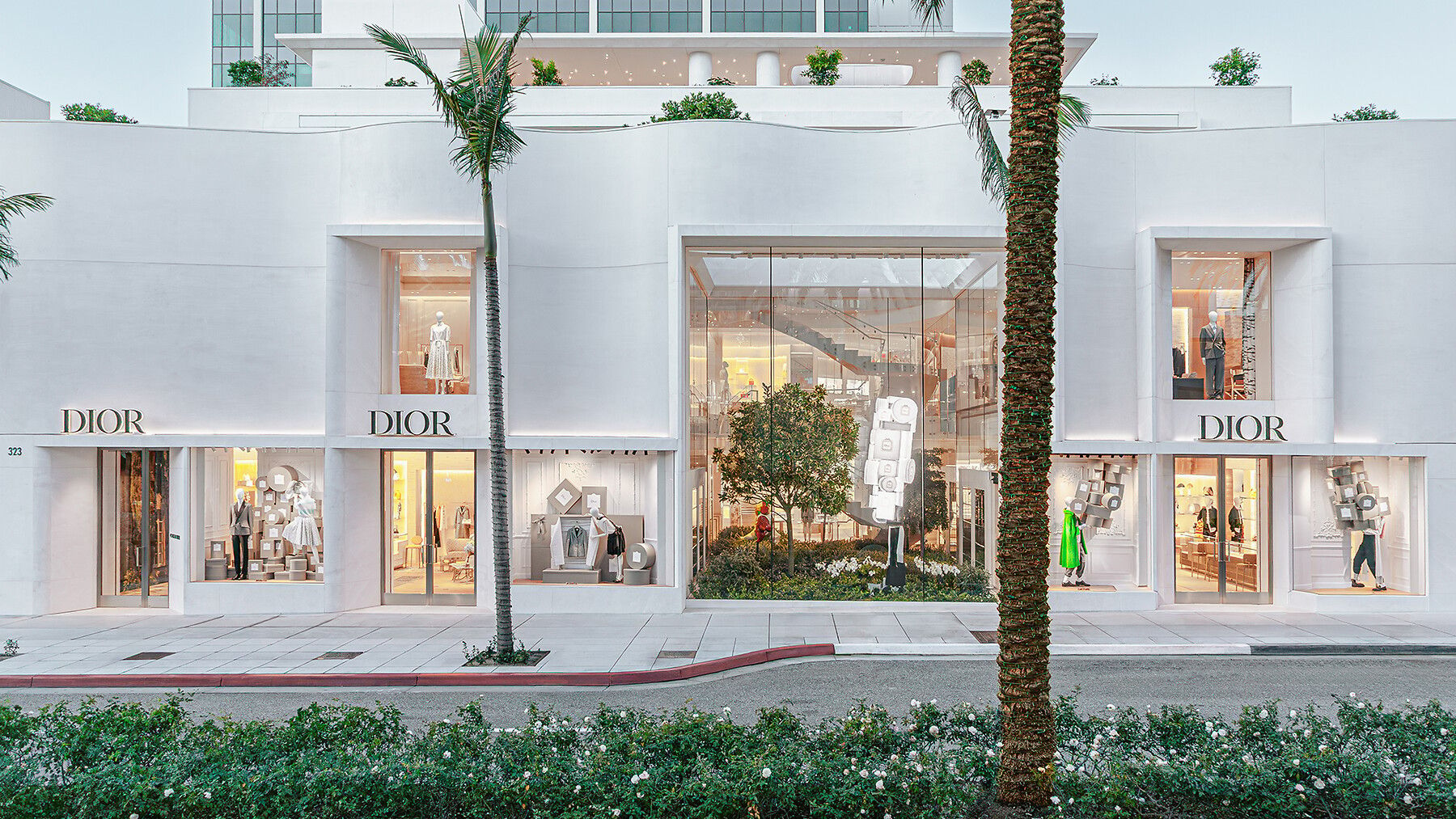
The store is being redesigned around this reality. A lounge allows for a more intimate interaction; a customization workshop provides a specific item as part of the experience. These spaces take up square meters without serving the same function as a traditional retail floor. Their value is also measured by the quality of time spent on-site and the opportunity to extend the relationship beyond the purchase.
The contrast between goods and experiences reinforces this shift. Bain estimates that luxury goods will decline by about 1% by 2025, while experiences will grow by about 3%. According to this market analysis, since 2023, experiences have been the only segment contributing to the growth of overall luxury spending. Luxury brands thus have an economic—and not merely decorative—reason to introduce other activities into their boutiques.
Dior: The Art of Expanding the Experience
Dior’s projects make this logic particularly evident within the LVMH group. In New York, the store opening in 2025 at the corner of Madison Avenue and 57th Street spans over 4,800 square meters. It houses the first permanent Dior spa in the United States. The spa experience brings into the retail space a practice that has its own duration, distinct from that of a fitting or a trip to the checkout.
On Rodeo Drive, the House of Dior, which opened that same year, ventured into the restaurant business. Monsieur Dior is the House’s first restaurant outside of Paris. With Dominique Crenn at the helm, this restaurant gives the venue an attraction that justifies a visit in and of itself. The private dining rooms and reserved terrace offer another form of hospitality, separate from the retail spaces.
The term “boutique” now seems a bit narrow. Yet it remains essential not to lose sight of the commercial purpose of these amenities. The restaurant and spa do not replace the collections; rather, they create more opportunities to engage with the brand’s environment. Hospitality becomes a means of building customer loyalty, with an additional requirement for the brand: the quality of the welcome must live up to the promise embodied by the products.
Exhibitions and workshops: two ways to return
Other brands choose to make culture a regular feature. In May 2026, after closing its Tribeca location, Issey Miyake opened a store spanning approximately 1,200 square meters at 45 Madison Avenue. It features the Galleria Mago, designed for rotating exhibitions, collaborations, and special projects. This is the brand’s first permanent exhibition space integrated into a store outside of Japan.

This programming introduces a different sense of time from that of the collections. An exhibition changes, one project succeeds another: the public can return to a familiar location to discover new content. At Issey Miyake, the dialogue with art and design thus takes on a physical presence within the store, rather than remaining merely a discourse centered on clothing.
Moncler, for its part, combines cultural creation and customization in its new Fifth Avenue store, which opened in September 2026. Spanning approximately 2,200 square meters across two levels, it is the brand’s largest store in the world. The Collection, Genius, and Grenoble lines are all brought together there. The location also houses Moncler to Measure, a made-to-order workshop dedicated to customizing outerwear.
Artworks, installations, and a calendar of experiences round out the experience. Bringing the different lines together provides a broader perspective on the brand; offering personalized services creates a more personal connection. These two approaches coexist under one roof, which also explains the need for space.
Fewer Openings, But No Less Ambition
These major projects might give the impression of unchecked expansion. The numbers tell a different story. The JLL Luxury Retail 2026 report indicates that in the United States, the retail space associated with new openings declined by 46% in the first half of the year: approximately 11,400 square meters, compared to 21,100 during the same period in 2025. It is indeed the newly opened space that is decreasing, not a measure of the total existing retail space.
Another comparison, conducted by Bain, sheds light on the paradox: in the first eleven months of 2025, single-brand store openings were 15 to 20% lower than in the equivalent period of 2022, while the average size of flagship stores had increased by more than 30%. The network is expanding more slowly, but its major locations are growing in size.
It remains to be seen how the fall openings—which are traditionally more numerous leading up to the holidays—will affect the annual U.S. figures. They will help clarify the extent of the slowdown. The layout of the new locations, however, is already evident: square meters dedicated to a beauty treatment, a dining area, or an exhibition—where one might initially have expected clothing racks and display windows.