Make Texture a preferred source on Google to support us
Add Texture to GoogleSigning a contract, taking the helm of a new department, or completing a long-term project often inspires a desire to mark the occasion. The moment of professional success is, by its very nature, fleeting; the object chosen to celebrate it must be enduring. Watchmaking naturally stands out as the antidote to the fleeting nature of a career. Yet, equating a timepiece with a mere corporate reward is a strictly commercial oversimplification. The Indian retailer Kapoor Watch Co. openly embraces this approach by compiling a list of ten models designed to mark these milestones. While watch manufacturers document the technical details and history of their calibers, they are careful not to reduce them to mere promotional gifts. The purchase of a watch transcends the corporate hierarchy: price, aesthetics, and the physical connection to the object are part of a deeply personal journey.
Function Superseded by Style
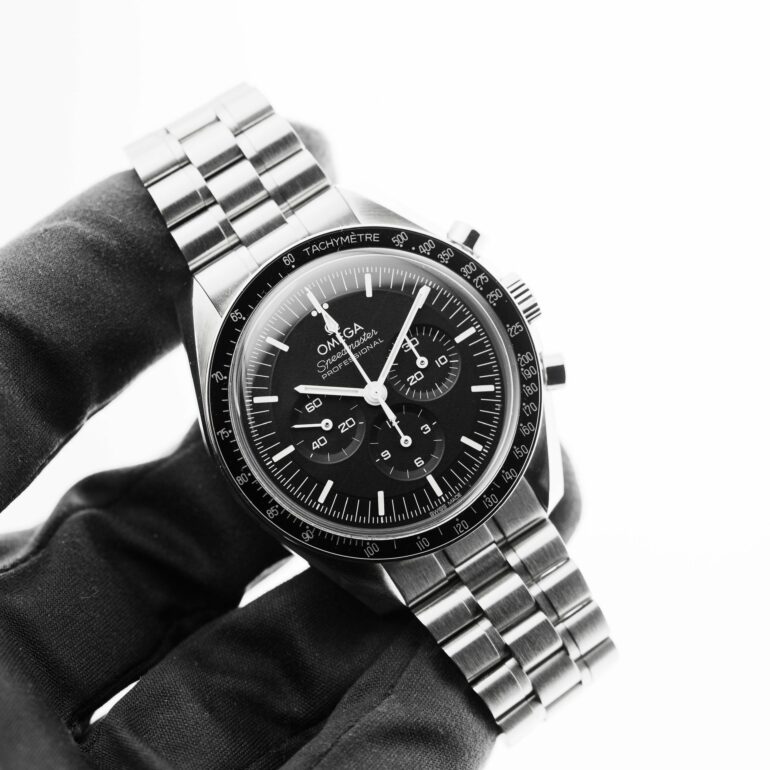
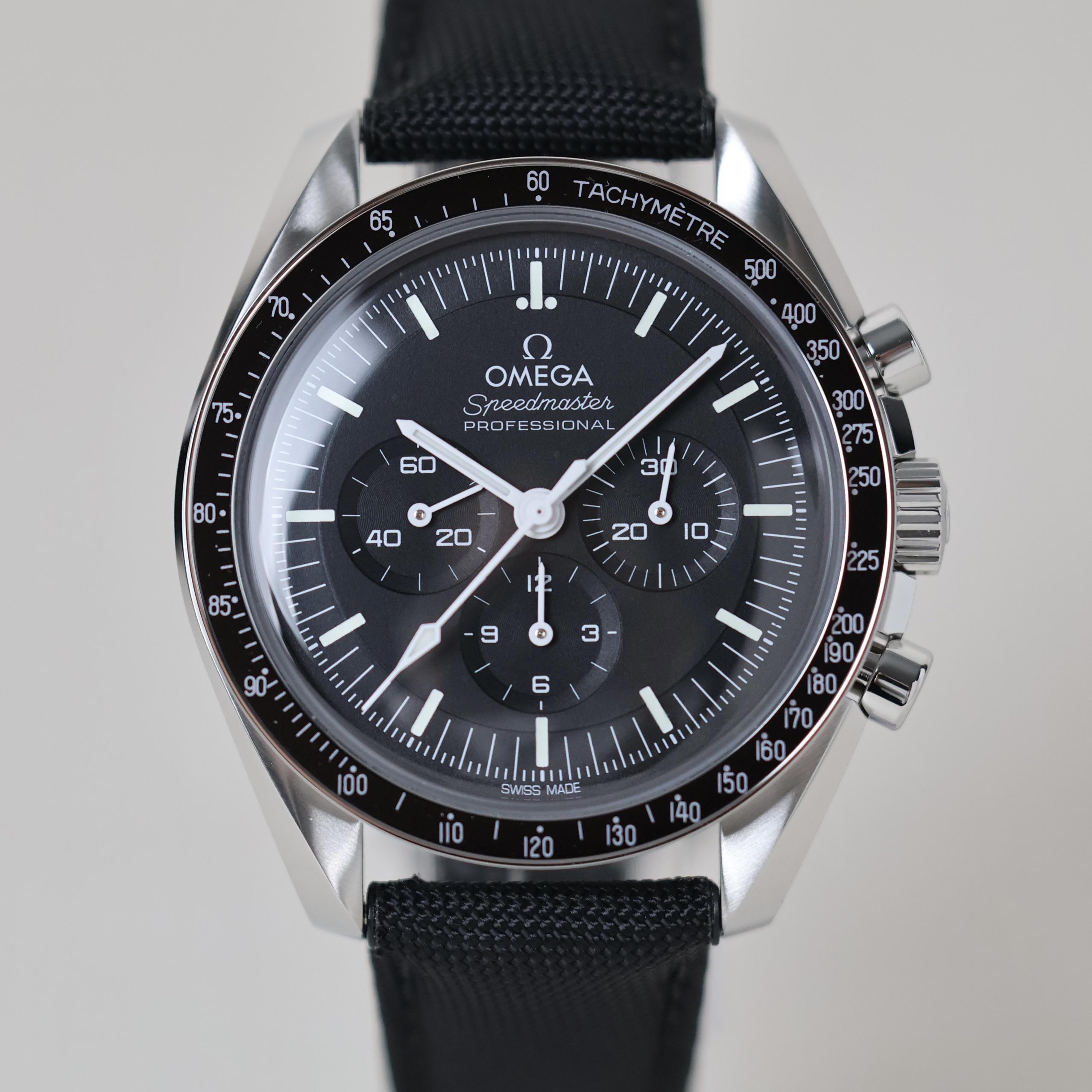
The chronograph, once conceived as a vital tool for professionals working in extreme environments, has seen its perception evolve. The Omega Speedmaster Moonwatch Professional is the most striking illustration of this. Behind its reference number 310.30.42.50.01.001 lies a 42-millimeter stainless steel case and a black dial, powered by the hand-wound Caliber 3861. This movement guarantees a 50-hour power reserve, while the case is water-resistant to 50 meters. Its tachymeter scale and its history tied to space exploration give it a symbolic significance that far exceeds its everyday use. Operating its pushers is now appreciated for the sheer mechanical pleasure it offers, far removed from the need to time atmospheric burn times.
The situation is similar with Breitling’s Navitimer B01 Chronograph 41 (AB0139A71G1P1). Designed in the very early 1950s to meet the requirements of the association of aircraft owners and pilots, this timepiece features a bidirectional bezel equipped with a circular slide rule. What was once used to draw up flight plans is now worn on the wrist as a piece of aviation history. Powered by the automatic B01 caliber, which provides approximately 70 hours of power reserve, this 41-millimeter stainless steel version starkly underscores its aviation heritage through its water resistance. Limited to 30 meters, it precludes any prolonged immersion, proving that an instrument panel does not make a diving watch.
The rigor of the lines contrasts with the exuberance of the volumes
When the complication takes a back seat, the architecture of the case takes center stage. The Tank Louis Cartier (WGTA0011) exemplifies this primacy of form. Its 18-karat rose gold rectangular case, measuring 33.7 millimeters, encloses a silver dial of absolute simplicity. Devoid of any additional functions, it simply displays the hours and minutes via a hand-wound mechanical movement. Water-resistant to 30 meters, it embodies a sense of distinction where the purity of design takes precedence over technical display.
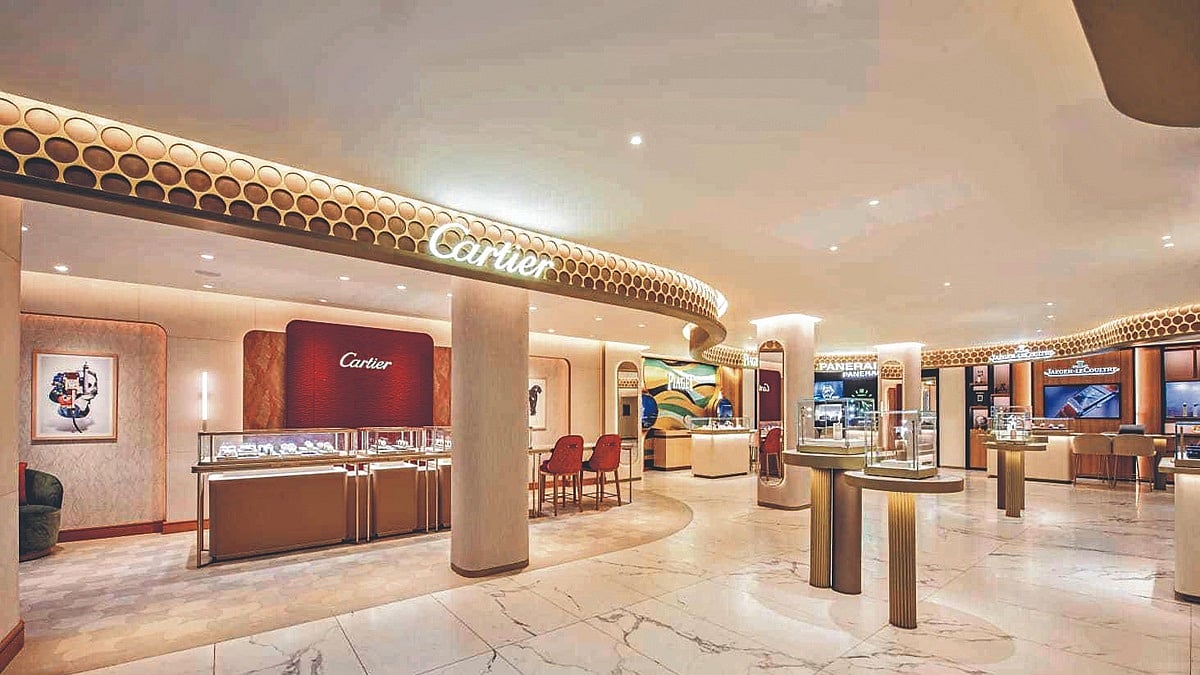
In a similar geometric style but with a distinctly sportier flair, the Santos de Cartier (WSSA0083) features a 39.8-millimeter steel case. With a history rooted in the evolution of watch design, this chronograph is powered by the 1904-CH MC automatic movement. Its silver dial, featuring alternating sunburst and satin finishes, complements a case designed for a more active lifestyle, as evidenced by its certified water resistance to 100 meters.
When it comes to size, Bvlgari and Franck Muller offer diametrically opposed approaches. The Roman watchmaker showcases its vision of extreme slimness with the Octo Finissimo Automatic (reference 103812). The contrast is striking: the classic luster of 18-karat yellow gold and the depth of a blue lacquered dial are balanced by a dizzying thickness of 6.40 millimeters and a diameter of 40 millimeters. The BVL 138 automatic movement, equipped with a platinum micro-rotor, provides a 60-hour power reserve and drives the essential functions: hours, minutes, and small seconds—all water-resistant to a depth of 100 meters. At the other end of the spectrum, Franck Muller’s Vanguard (V45 SC DT AC NR) makes a bold statement. Its 45-millimeter stainless steel case and black dial house an automatic movement with a 42-hour power reserve. With a water resistance of 30 meters, it eschews the understated elegance of classic watches in favor of a massive silhouette and a presence on the wrist that’s impossible to ignore.
Ergonomics for Everyday Life
Versatility sometimes dictates the choice of a timepiece designed to accompany its owner beyond the confines of the boardroom. IWC explores this concept through two distinct approaches. On one hand, the Pilot’s Watch Chronograph 41 (IW388101) embraces a bold color scheme. Its blue dial echoes a strap of the same shade, mounted on a 41-millimeter stainless steel case. Practicality is key here: the EasX-CHANGE system allows the strap to be replaced without any tools. Powered by the automatic Caliber 69385, which offers a 46-hour power reserve, this model features a day-date display and is water-resistant to 100 meters, combining practicality with color.

On the other hand, the same manufacturer offers the Portugieser Chronograph (IW371604). While the stainless steel case diameter remains the same at 41 millimeters and the power reserve stays unchanged at 46 hours thanks to the automatic caliber 69355, the design leans toward urban elegance. Heir to an aesthetic refined since 1998, this chronograph with a silver dial is secured to the wrist by a black leather strap. With water resistance limited to 30 meters, it is clearly intended for formal occasions and everyday wear away from aquatic environments.
The Challenge of Color and Durability
Moving away from traditional color schemes is another way to make a timepiece your own. Hublot explores this path with the Classic Fusion Titanium Sage Green (542.NX.891G.NR). The 42-millimeter case, crafted from titanium with polished and satin-finished surfaces, frames a dial in a distinctive sage green. The strap, combining rubber and fabric, extends this color scheme. The HUB1110 automatic movement provides approximately 48 hours of power reserve, while the 50-meter water resistance makes it suitable for everyday wear, though not intended for diving.
Panerai approaches color through the lens of absolute ruggedness. The Luminor Marina (PAM03323) pairs a light blue dial with an imposing 44-millimeter steel case. The watch’s design is dominated by the crown guard, a functional element that has become the collection’s signature aesthetic feature. The technical specifications match this rugged appearance: water resistance guaranteed to a depth of 500 meters and a P.980 automatic movement providing a full three days of power reserve. The steel bracelet features a fastening mechanism designed for quick adjustment and replacement.
The Reality Check
The selection available on the Indian market highlights an unavoidable constraint: the market’s partial opacity. Many timepieces in this selection are sold without a fixed price, as prices in rupees are merely a snapshot of market conditions at a given moment, subject to fluctuations in the market, geographic location, and the time of purchase. Purchasing such a timepiece requires careful verification of the exact model number, local inventory status, and warranty specifics with authorized retailers or the manufacturers themselves.
Ultimately, a watch’s status as a celebratory piece fades the moment it leaves its presentation box. Whether it’s a slender yellow-gold model, an aviation-inspired timepiece from the 1950s, or a colossal timepiece built for the depths of the ocean, the choice cannot be measured by the addition of a new line on a résumé. Marking a personal achievement with a mechanical watch is meaningful only if the timepiece aligns with the wearer’s habits and style. A watch is experienced in everyday life, far removed from the symbolism of the giver, and solely according to the wearer’s own pleasure.