Make Texture a preferred source on Google to support us
Add Texture to GoogleA Bar jacket with a reimagined silhouette, a Lady Dior bag whose surface has been redesigned by a textile artist, and crochet pieces meticulously assembled by Caribbean communities. These fragments sketch the contours of a fashion industry in the midst of transformation, torn between the weight of its immense heritage and the urgency of articulating a contemporary vision. The game of musical chairs currently shaking up the creative leadership of luxury giants is not merely a matter of personnel turnover. It reflects a deeper anxiety: the fear of seeing history become frozen in time. As conglomerates desperately seek to breathe new life into their archives, a generation of independent designers is proving that clothing can convey social and geographical narratives that are far more visceral. The stakes are no longer merely aesthetic. They lie in the ability to transform a legacy into a living entity—or risk reducing it to nothing more than a theatrical backdrop.
Cultural relevance: the new battleground
The schedule for the coming seasons serves as a barometer of this tension. Kering recently played one of its most talked-about cards by announcing Demna’s appointment as creative director of Gucci, with his start date set for July 2025. The language used by the group to justify this appointment stands in stark contrast to the usual rhetoric about timeless beauty: the explicit aim is to restore a sense of sharpness and relevance to the Italian brand within its current era. Entrusting the reins of a historic fashion house to a figure whose signature style is rooted in provocation and a departure from the norm underscores a market reality. Simply reissuing past successes is no longer enough to capture attention. The brand’s strategic intent points toward a new direction, but the gamble carries a major risk: the public’s acceptance of this stylistic shift remains the sole factor that will determine the project’s survival.
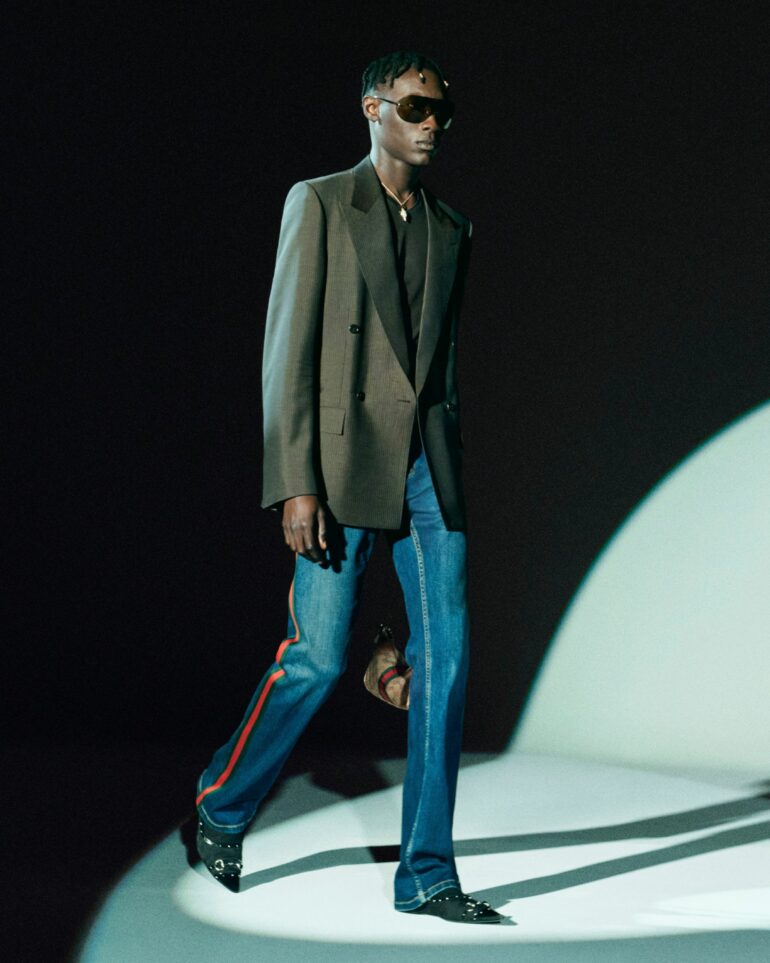
This need to shake up the brand’s legacy in order to better anchor it in the present found tangible expression in Jonathan Anderson’s first runway show for Dior Men, unveiled for summer 2026. LVMH highlighted how the designer performed a veritable surgical overhaul on the Parisian label’s body of work. The fitted waist and flared hems of the Bar jacket—originally designed to sculpt the postwar female silhouette—have been transposed, reworked, and adapted for the men’s wardrobe. Moreover, this approach is not limited to the cut alone.
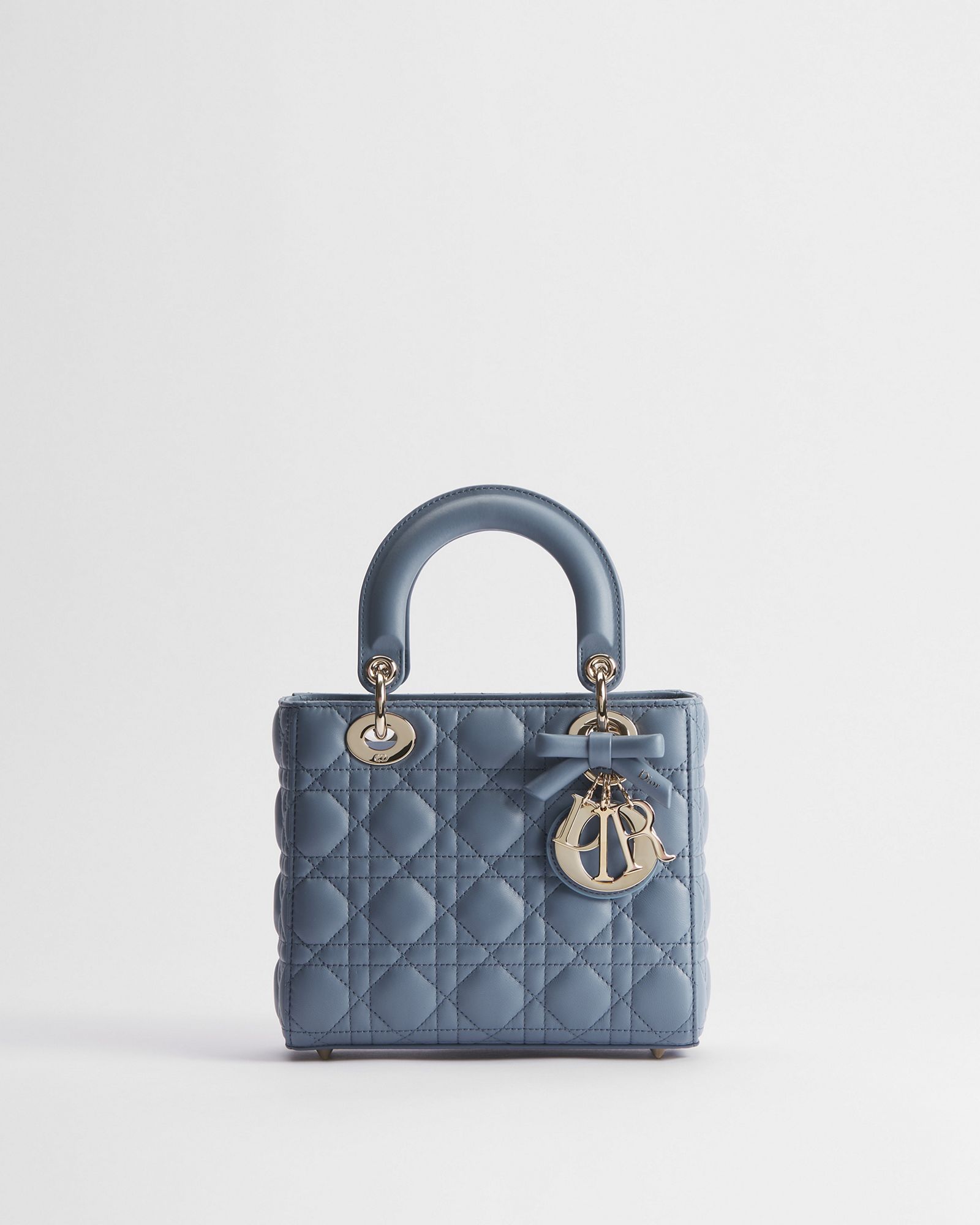
By inviting American sculptor Sheila Hicks to reimagine the Lady Dior bag, Anderson demonstrates that the archive requires alteration to retain its impact. This approach perfectly illustrates the challenge facing the creative directors of mega-brands: literal references are boring; only by distorting the frame of reference can one create a contemporary resonance.
The Dizziness of Heritage in the Face of Artisanal Demands
The reorganization of creative forces is shaking the very foundations of Rue Cambon. Matthieu Blazy’s arrival at Chanel, set for 2025, carries a rare level of responsibility. By simultaneously overseeing haute couture, women’s ready-to-wear, and the vast accessories division, the designer is entrusted with the house’s entire visual universe. The official communications surrounding this transition are careful not to make any promises about the future aesthetic. Instead, it prefers to ground its legitimacy in the unshakable foundation of the ateliers and the dialogue with the artisanal crafts. This wait-and-see approach reveals the management’s caution: before redefining the brand’s aesthetic, it is essential to reassure the public about the enduring nature of its craftsmanship.
This institutional reflex—using craftsmanship as a shield and a mark of seriousness—permeates the entire sector as it undergoes a transition. The appointments of Sarah Burton, who now oversees the women’s and men’s lines at Givenchy, and Louise Trotter, who has taken the helm at Bottega Veneta, are part of a similar dynamic. Press releases follow one after another, all strikingly similar, invariably weaving together the same notions of creative renewal grounded in the vastness of the past. Yet the recent history of fashion is rife with failed revivals. A profusion of spectacular embroidery or references to a legendary founder are not enough to spark desire if the concept isn’t rooted in today’s obsessions.
Geographical and Social Roots as True Identity
It is precisely in this realm of embodiment that the most interesting divide of the period plays out. Far from the elaborate communication strategies devised in the skyscrapers of Parisian conglomerates, young brands infuse their collections with an authenticity that cannot be fabricated. The recent profile that the Council of Fashion Designers of America dedicated to Rachel Scott helps us understand the impact of her label, Diotima, launched in 2021. The designer doesn’t need to dig up old sketches to justify her legitimacy. Her creative process builds a permanent, tangible bridge between the urban energy of New York—where she lives part of the time—and Jamaica.

At Diotima, cultural expression doesn’t come down to printing a folkloric pattern on a cotton T-shirt. The label’s identity lies in its production chain itself. The crochet work, done directly on the Caribbean island in close collaboration with local artisan collectives, gives each piece a social depth. The garment thus becomes the literal vehicle for a human, economic, and technical story. This level of rigor in manufacturing standards demonstrates that traditional craftsmanship does not need the trappings of major European fashion houses to express a powerful and contemporary vision of luxury.
Other independent players are contributing to this welcome fragmentation of the dominant narrative. Designers such as Raul Lopez with his brand Luar, or Public School New York—recently highlighted by The Garnette Report—are helping to enrich the landscape. Although the details of their respective production processes are less well-documented in recent statements, their mere presence in the critical discourse underscores an obvious truth: the revitalization of the discipline, the questioning of aesthetic norms, and the integration of minority narratives take place first and foremost on the fringes of the grand boulevards of luxury.
The Test of Clothing
This period thus witnesses two dynamics that coexist without always intersecting. On one hand, the cathedrals of luxury are attempting to reshape their age-old codes by drawing on cutting-edge talent to avoid becoming stale. On the other, young brands building their foundations on intimate cultural histories and hyper-local artisanal practices. This landscape highlights a redefinition of the concept of novelty. Innovating today does not require making a clean break with the past or ignoring technique. Modernity lies in shifting one’s perspective, in the desire to question the origins of forms and to make room for expressions that previously had no place on international runways.
The industry excels at the art of writing new chapters on glossy pages. However, statements of intent and high-profile appointments are merely the preface to the book. The validity of a creative direction, the success of a textile collaboration, or the sincerity of a community-driven approach cannot be judged by a financial report or the media buzz surrounding an announcement. The only truth that will stand up to critics and buyers will become apparent the moment the first silhouette steps into the light. The coming months will pit institutional rhetoric against the relentless reality of the cuts, materials, and craftsmanship actually put into practice. The garment, in its most literal form, will alone determine whether the promises of reinvention were well-founded, or whether they were merely a clever illusion.