Make Texture a preferred source on Google to support us
Add Texture to GoogleThe heel clicks sharply against the cobblestones. Amid the city’s constant background noise, the sound of a leather sole striking the stone immediately signals a certain attitude. Choosing to wear a hand-stitched shoe is a singular choice, almost a step against the tide. Our era overwhelmingly favors immediacy, silent rubber soles, and the planned obsolescence of synthetic materials. Preferring pieces structured by thread and needle marks a deliberate break with this disposable fluidity. Traditional construction goes beyond mere aesthetic vanity or a fetish for the past. It provides an architectural solution to a complex engineering problem: how to design an object capable of adapting to its owner’s anatomy, withstanding hundreds of thousands of flexions, and lasting for several decades? For the connoisseur of the art of living, the answer is not to be found in the display windows of mass-market chains, but in the exacting standards of the workshop, where raw materials submit to the constraints of rigorous construction.
The anatomy hidden beneath the sole
The vast majority of contemporary production simply glues the upper to the outsole. This industrial process is extremely fast and highly profitable. However, it dooms the product to an immediate end of life as soon as the adhesive fails under pressure or the polymer crumbles. Luxury footwear, on the other hand, requires a strictly mechanical bond. Linen thread, coated with a resin mixture to withstand street moisture and rot, connects the shoe’s various layers. This technical approach demands an intimate understanding of the foot’s geometry, coupled with precise control over tension during stitching.
At the heart of this architecture lies the insole. This insole, upon which the foot rests directly, is never left flat in a construction sewn according to the rules of the art. It is meticulously incised with a knife to create a construction wall—a thin ridge invisible from the outside. It is to this wall that the bootmaker will sew the upper leather. This structural complexity, invisible at first glance, ensures that the shoe retains its shape over time. The shoe does not sag limply: its sturdy framework supports the outer leather, while the sole gradually molds to the wearer’s bone structure.
From the wooden last to the precision of the assembly
While prestigious brands offer ready-to-wear shoes of exceptional craftsmanship, the very essence of the craft is found in the art of bespoke shoemaking. The process begins with taking a detailed impression and hand-carving a wooden last from hornbeam or beech wood. This block faithfully reproduces the contours, natural asymmetries, and unique characteristics of the client’s foot. From this one-of-a-kind mold, a pattern is drawn and then cut by hand.
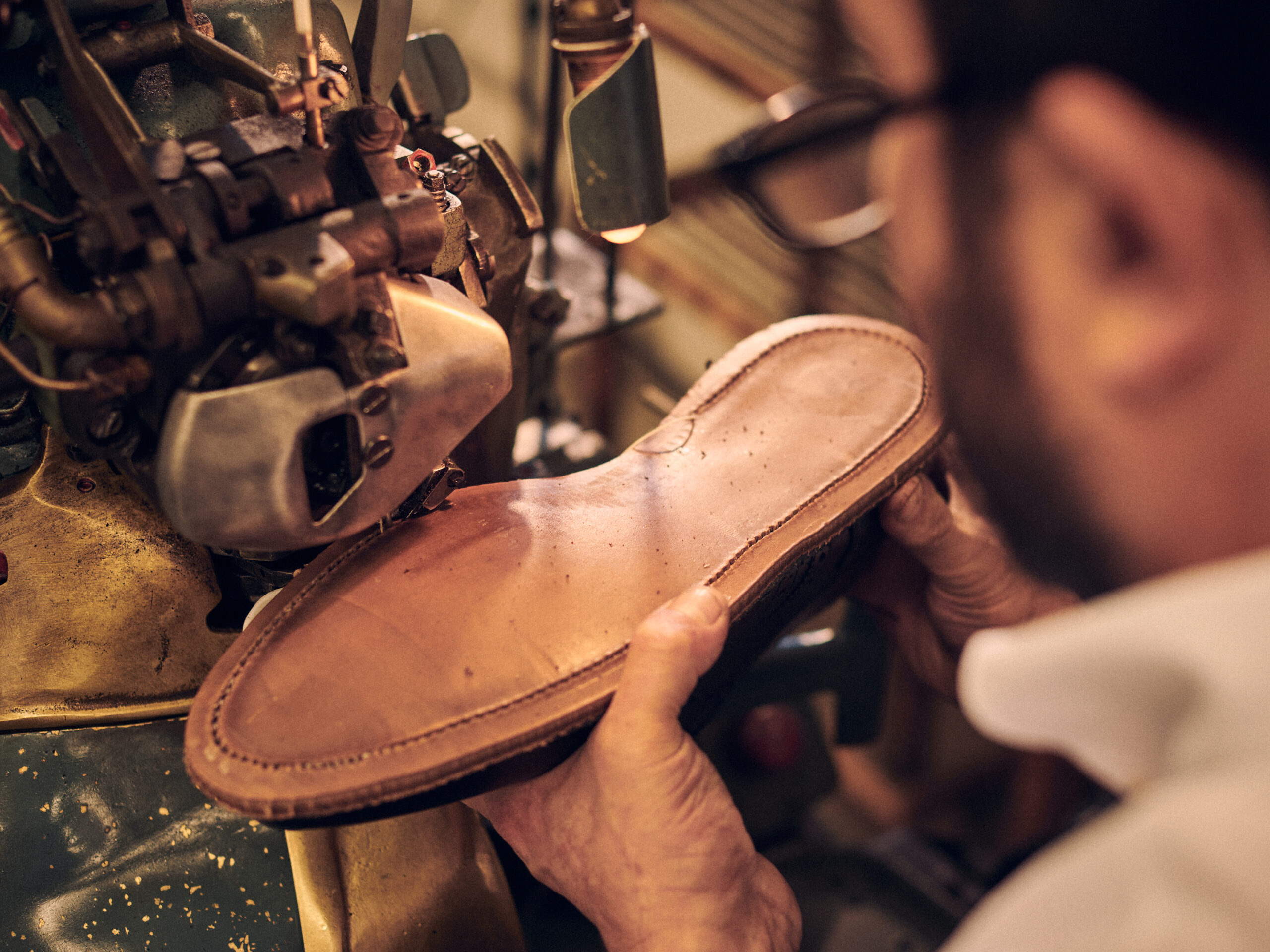
In these quiet workshops, the hum of assembly lines gives way to the rhythmic hammering and the squeak of the awl piercing the thick leather. The artisan often uses a pig’s silk thread attached to the end of his awl to guide the thread through the tiny holes with surgical precision. The heel is assembled layer by layer, secured with brass or wooden pegs, then neatly trimmed with a knife to achieve a tapered or straight line. This level of craftsmanship requires patience amounting to dozens of hours of work per pair, placing the finished product in the same category as a high-end mechanical timepiece.
The Technical Supremacy of the Welt
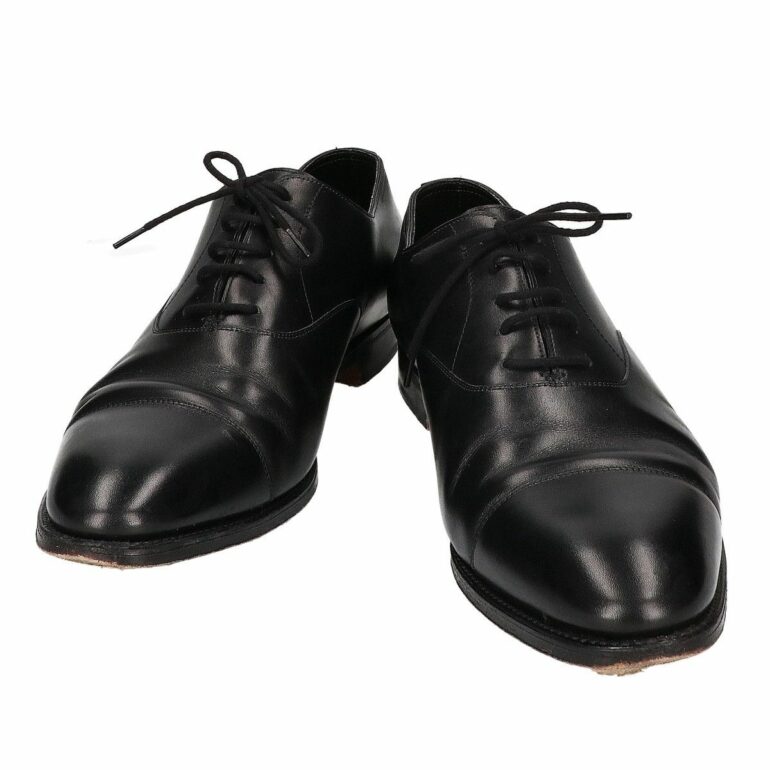
Among the construction methods that have forged the reputation of the great shoemakers of Northern Europe, the Goodyear welt defines the vocabulary of English and French shoemaking. It takes its name from the machine developed by Charles Goodyear Jr. in the late 19th century, although its logic derives directly from hand-welted construction. The key technical innovation lies in the incorporation of this intermediate piece. This strip of leather, a few millimeters wide, runs along the outer edge. A first, horizontal stitch joins the insole, the upper, and the welt together. A second, vertical, and substantial stitch then secures the welt to the outsole that comes into contact with the ground.
Naturally, a gap is created between the two soles. The artisan fills it with a natural paste made of compressed cork. Under the weight of walking and the effect of body heat, this layer settles unevenly to conform to the curve of the arch of the foot. When the sole wears through after heavy use, the shoemaker simply cuts open the outer seam to replace it with a new piece of extra-slow-tanned leather. This process affects neither the internal structure nor the shape the upper has taken on.
To withstand the rigors of winter, some workshops favor the Norwegian stitch. Once limited to work boots or mountaineering boots, this technique shifts the position of the welt, making the two seams conspicuously visible along the edge of the upper. The resulting waterproofing withstands the elements. Visually, the Norwegian stitch exudes a deliberate rusticity—an asymmetrical texture that appeals to men seeking a bold silhouette capable of balancing the bulk of heavy flannel or tweed pants.

The Refined Radicalism of the Blake Method
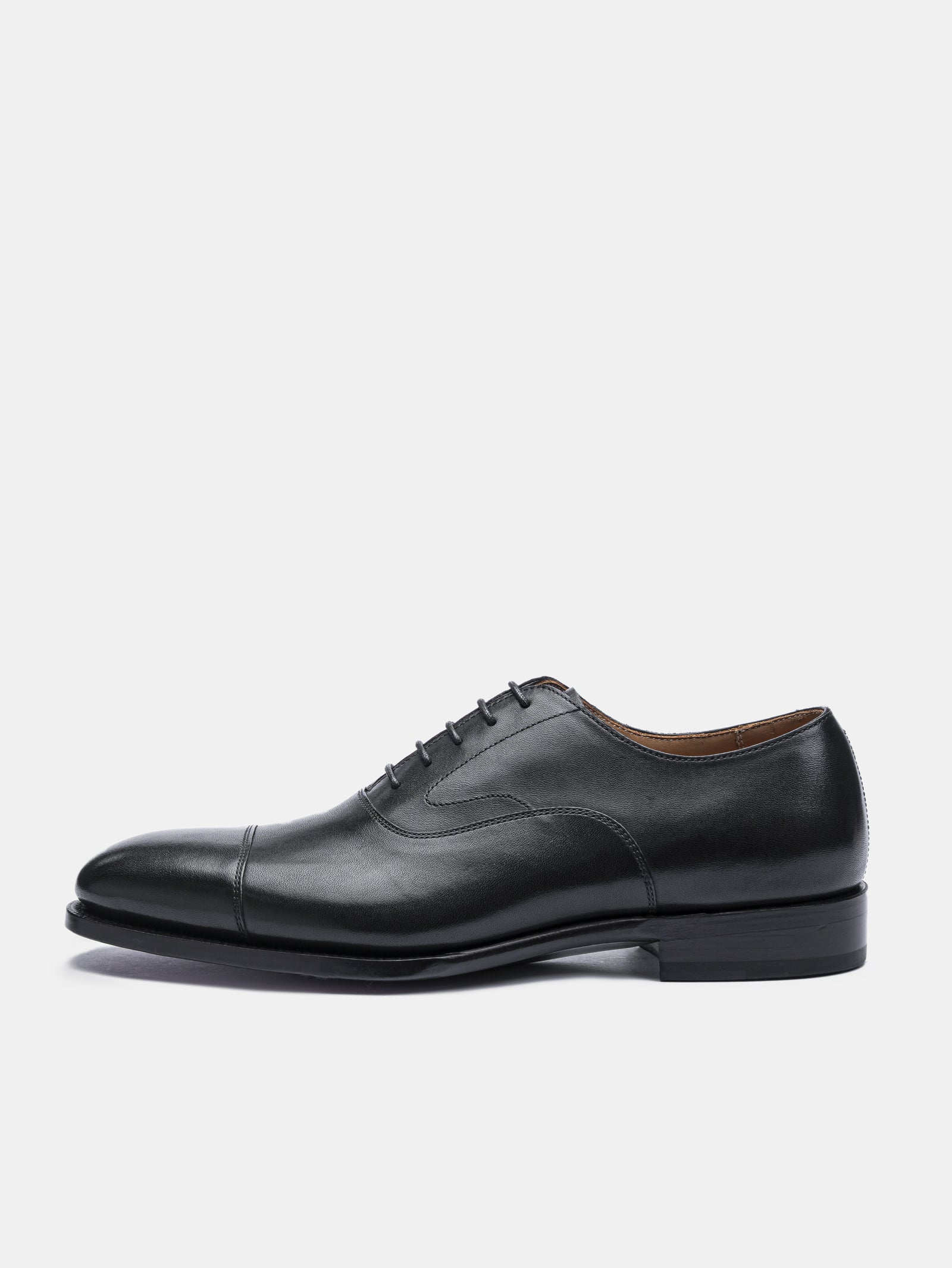
Beyond the Alps, the transalpine school has historically sought to refine lines, pushing the shoe toward an elegance that is at times more sharp. The Blake stitch perfectly meets this quest for finesse. The approach is direct: a single stitch runs straight through the insole, the base of the upper, and the outsole. Without a welt or cork padding, the shoe gains remarkable flexibility and becomes noticeably thinner. The silhouette becomes sleeker, and the visual bulk of the protruding sole disappears.
This simplified construction excels in the creation of unlined loafers or particularly tapered oxfords, whose uppers seem to skim the pavement. The shoe becomes virtually unnoticeable from the very first steps, sparing the wearer the often grueling break-in period required by the Goodyear welt construction. This slenderness, however, comes with a mechanical trade-off. Since the thread runs through the sole from top to bottom, water can seep up through capillary action if one walks for a long time in the rain. A new resole is still possible using specialized machines, but repeated perforation of the sole leather ultimately proves more damaging to the shoe’s overall durability.
The Living Material and the Ritual of Care
Even the most sophisticated construction will inevitably fail if the leather betrays the artisan’s craftsmanship. Box-calf leather, produced through a highly controlled chrome-tanning process, offers a grain of exceptional density. Its initial firmness ensures that the panels fit perfectly around the ankle and the vamp over the instep. Leading tanneries supply hides whose grain, free of sanding or synthetic corrective varnish, continues to breathe and react to light. The soles, meanwhile, require vegetable-tanned leathers, immersed for eight to twelve months in vats filled with oak bark, until they acquire a density nearly that of oak itself.
Purchasing such a piece requires letting go of the modern illusion of a static, perfect object straight out of the box. Leather is alive; it oxidizes slightly, darkens in the sun, and bends where the foot flexes. Care is not to be viewed as a chore, but as a discipline of ownership. Raw cedar shoe trees are inserted as soon as the shoe is removed to draw out accumulated moisture and restore the leather’s tension. A strict twenty-four-hour rest period between each wear prevents the leather from becoming waterlogged and the seams from deteriorating. Next comes regular massage with moisturizing cream, followed by the application of wax to prevent snags. “Glazing”—which involves patiently layering hard shoe polish and water onto the rigid parts of the heel counter and toe cap—applies a spectacular mirror-like shine, creating a sharp contrast with the matte, supple grain of the sides.
Rejecting Ephemeral Consumption
The investment required for these shoes automatically rules out the logic of impulse buying. The initial price is quickly offset by the physical durability of the construction. A pair that is regularly conditioned—and whose heel counter is replaced before the leather base begins to wear—will serve its owner faithfully for a quarter of a century. Over the years, the material develops an extremely rich patina, accumulating reflections and nuances that no factory will ever be able to artificially reproduce. Signs of wear lose their status as defects signaling the end of a product. They bear witness to a journey. The shoe then transcends the realm of mere clothing to become a resilient, repairable, and deeply personal tangible testament.