Make Texture a preferred source on Google to support us
Add Texture to GoogleThe hustle and bustle of Sukhumvit—Bangkok’s main thoroughfare, where massive shopping malls vie for space with nightlife hotspots—forces those in the hospitality industry to constantly reevaluate their assumptions. On Soi 29, a street teeming with activity and storefronts, KROMO Bangkok seeks to offer an architectural and social response to this density. For its first location in Thailand, the Curio Collection by Hilton brand is unveiling an imposing 28-story building housing 306 guest rooms. However, far from embracing the isolating verticality typical of traditional luxury hotel towers, the project led by Jennifer Vivian champions an opposite strategy. The stated ambition is to break down the boundaries between a sanctuary for passing travelers and a popular hangout for local residents, through a sophisticated program where French-inspired lifestyle meets contemporary Thai craftsmanship.
A mineral landscape far removed from folklore
The narrative thread chosen to shape the venue’s identity deliberately distances itself from postcard-style exoticism. The team chose to explore a more abstract dimension of the national heritage: the ceremonial name of the Thai capital, historically known as the “City of Nine Gems.” This conceptual framework is realized not through literal ostentation or hackneyed traditional motifs, but through a rigorous chromatic, material, and spatial treatment designed to punctuate the visitor’s physical journey.
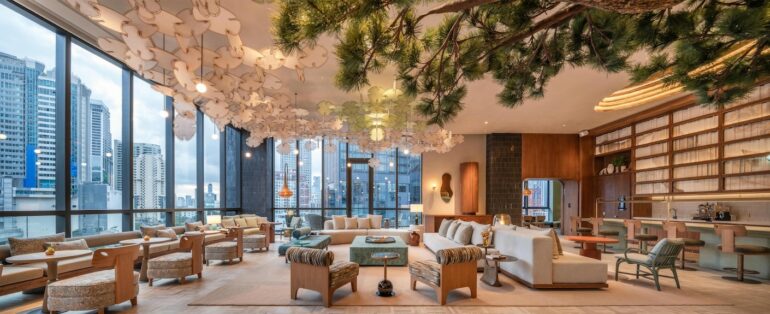
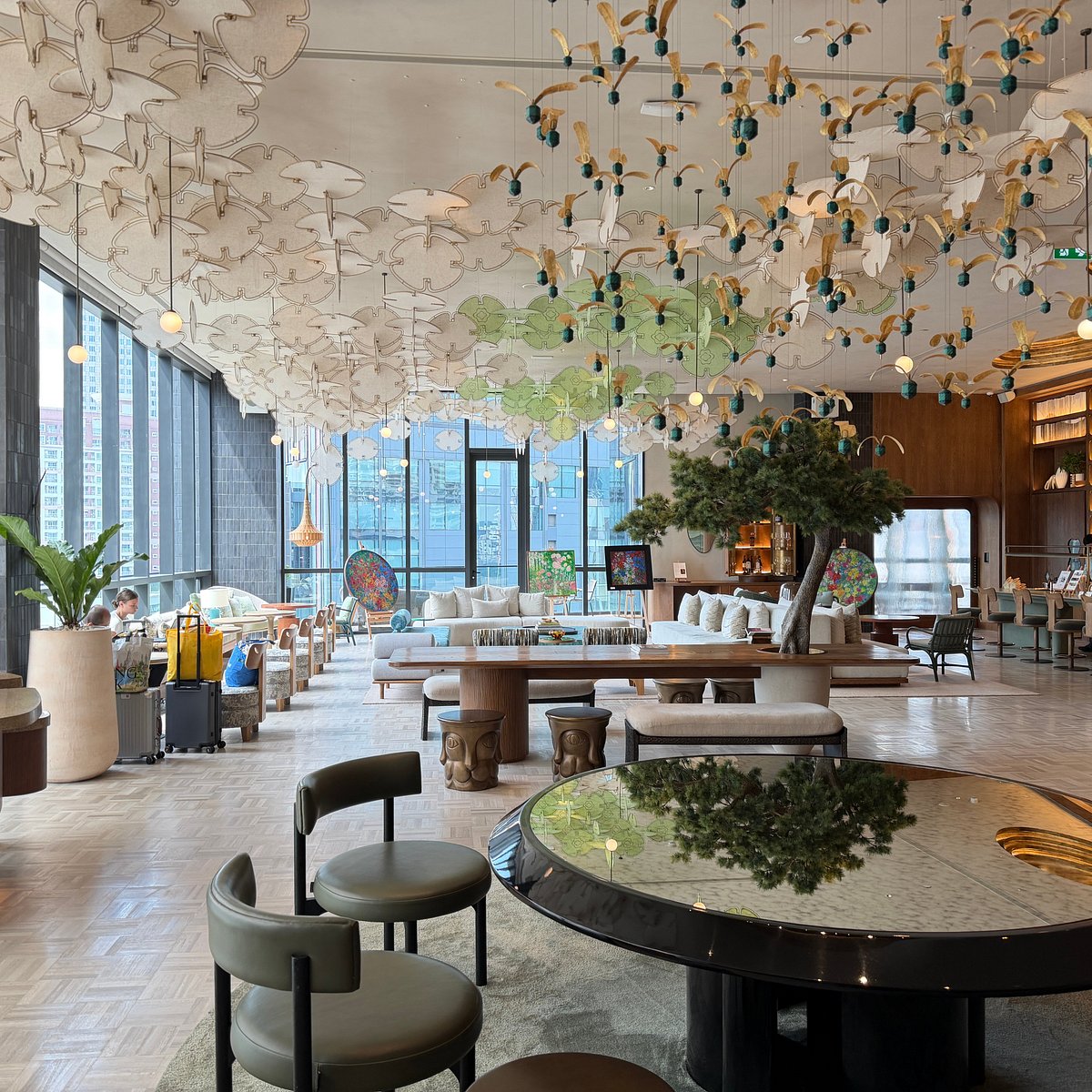
The experience begins upon entering the ground floor, where a welcoming garden is steeped in the deep, earthy hues of garnet, offering an initial transition space. The vertical ascent then leads to the tenth floor. There, the main lobby features an aesthetic dominated by shades of emerald, marking a clear visual and auditory break from the mineral-like bustle of the street below.
This visual identity is built on the integration of a cutting-edge Thai creative scene. Art commissions were entrusted to leading local design studios, including Studio JEW+, PATAPiAN, and Pichaya Osothcharoenpol. By partnering with these creators, the project avoids aesthetic clichés in favor of contemporary works that anchor the common spaces in a confident modernity. The geological narrative extends even into the unexpected nooks and crannies of the bar and restaurants, where stylized sculptures of Siamese fighting fish punctuate the decor, adding a local bestiary to this mineral-inspired aesthetic.
Time Stretched Out and the Diplomacy of Flavors
The cultural hybridization championed by the establishment finds its most evident expression within the Colette Bistro & Bar. The space embraces a delicate gastronomic concept: creating a dialogue between the precision of French culinary techniques and the aromatic power of Thai ingredients. This approach is particularly evident in the cocktail menu. Mixology here is conceived as a liquid journey, built around the profiles of eight major French wine regions, subtly reimagined with locally sourced infusions and botanicals.
Beyond the plate and the glass, it is in its management of timing that the management sets itself apart. Breakfast is served à la carte and runs until 2:30 p.m. This flexible schedule stands in stark contrast to the rigid morning buffets that dominate traditional hotel chains. It aligns with the reality of an urban clientele—flexible, often dealing with jet lag, or simply embracing a more hedonistic pace of life.
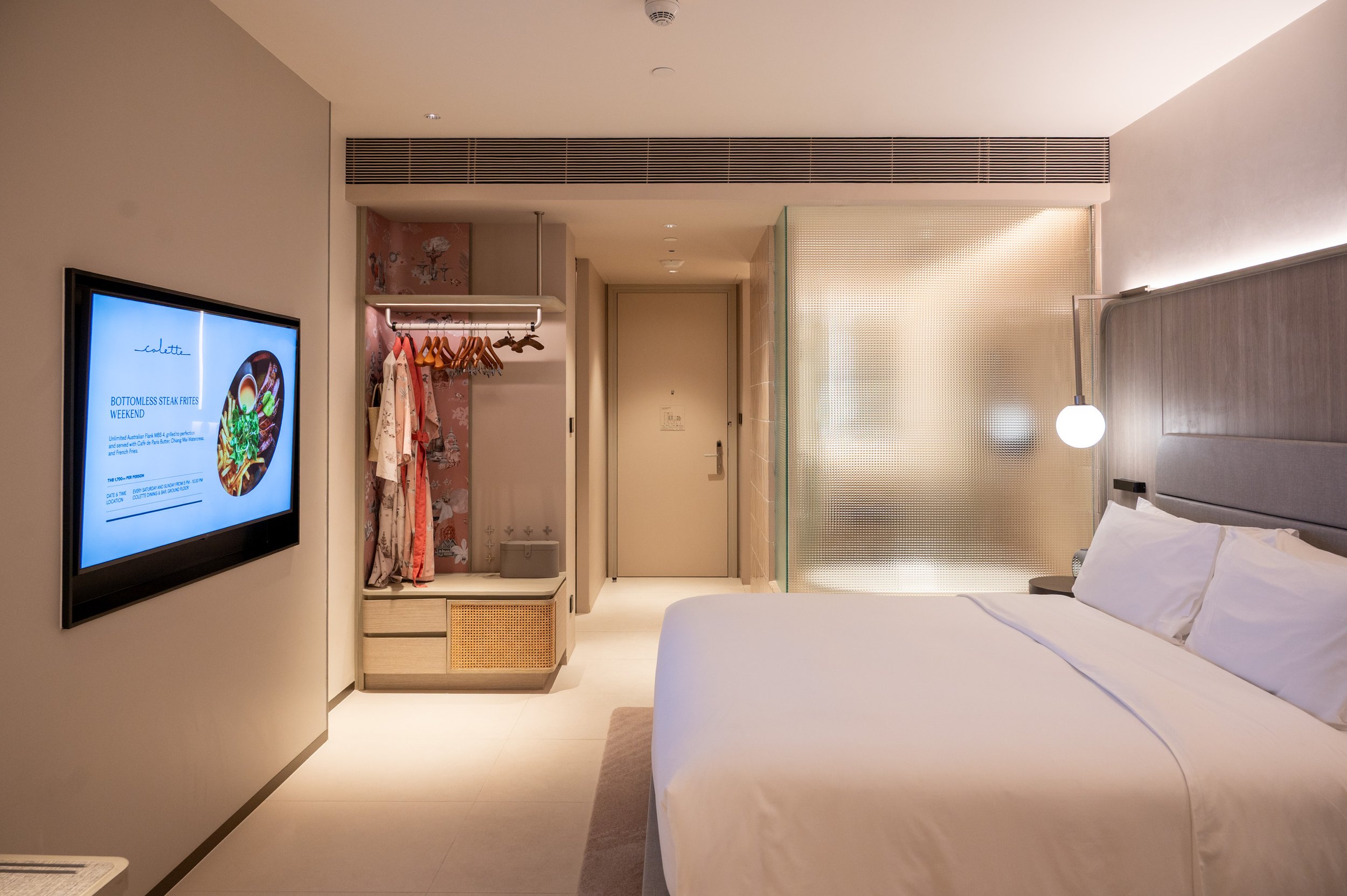
This commitment to infusing local character into everyday experiences extends into the privacy of the guest rooms, which are free from the sterile standards of mass-market hospitality. From the moment you wake up, the specialty coffee provided is roasted by the local roastery RISE Coffee. The bathrooms follow the same philosophy of high-end, locally sourced products, featuring skincare items from the Thai brand HARNN. The story of the place is no longer merely a decorative facade; it is experienced through direct contact with everyday objects and flavors.
Vilah, a weightless social laboratory
The central challenge for a so-called “lifestyle” establishment is to generate consistent foot traffic, independent of check-in times or peak hours at the restaurant. The nerve center of this ambition is located on the tenth floor, within a space called Vilah. Inspired by the shifting reflections of cat’s-eye stone, this hybrid space brings together a café, shared workspaces, and flexible areas designed for group activities.
Designed specifically to attract creative professionals and the city’s growing community of freelancers, Vilah hosts an eclectic program blending creative workshops, musical sessions, and informal gatherings. The goal is to literally draw the neighborhood’s energy into the tower’s walls. To this end, the location boasts undeniable appeal, situated in the immediate vicinity of the Phrom Phong and Asok skytrain stations, while bordering the imposing commercial triangle formed by the Emporium, EmQuartier, and EmSphere shopping centers.
To make exploring this vertical architecture more seamless and encourage movement within the building, the team devised a unique system: the KROMO passport. This approach transforms physical exploration into a playful journey, punctuated by stops where visitors collect stamps. The mechanism encourages guests to engage with the building’s diverse spaces and concepts, breaking the monotonous routine of simply traveling between the lobby and their suite.
The Challenge of Enduring Over Time
The establishment’s promise extends beyond simple hospitality to encompass well-being and physical vitality, which have become essential social markers. The building’s rooftop is thus transformed into a performance platform, hosting cold-water immersion sessions, urban running club meetups, and rooftop Pilates classes. Under the KROMO Curations brand, the hotel curates these artistic, culinary, and athletic offerings to build a loyal base of regulars—the only true guarantee of an authentic atmosphere.
Having passed the symbolic milestone of its first anniversary—marked by the announcement of new culinary projects featuring guest chefs and bartenders—the establishment is now entering its critical phase. While the opening and the first few months of operation demonstrate the concept’s ambition and aesthetic coherence, the challenge now shifts to the realm of endurance.
The model brought to Soi 29 exemplifies a global trend: the global hospitality industry’s desire to transform itself into true urban village squares. The viability of the experience offered by KROMO Bangkok will depend entirely on its ability to renew its cultural programming with the same high standards and to maintain an organic connection with the local scene. The challenge is to prevent the promise of a tailor-made immersion experience from eventually fading away, overwhelmed by the weight and inevitable mechanics of a massive twenty-eight-story tower.