Make Texture a preferred source on Google to support us
Add Texture to GoogleWith his eye glued to the watchmaker’s loupe, the collector isn’t looking for perfection. He’s on the hunt for flaws. Typography in a slightly faded red, a black dial turning brown from sun exposure, a bezel worn down by seawater or sand abrasion. In contemporary mass-produced watchmaking, these marks would immediately send the piece back to customer service for a standard replacement. On the vintage watch market, they increase its value tenfold, sometimes a hundredfold. Time no longer alters the object; it gives it a patina, makes it unique, and, ultimately, increases its monetary value. Acquiring a historic timepiece is no longer merely a matter of aesthetic taste or a nostalgic whim. The timepiece has become an asset class in its own right—a financial investment capable of outperforming traditional markets—provided one knows how to decipher a specialized lexicon of reference numbers, specific calibers, and case geometries.
The Dictatorship of Detail Among the Crowned
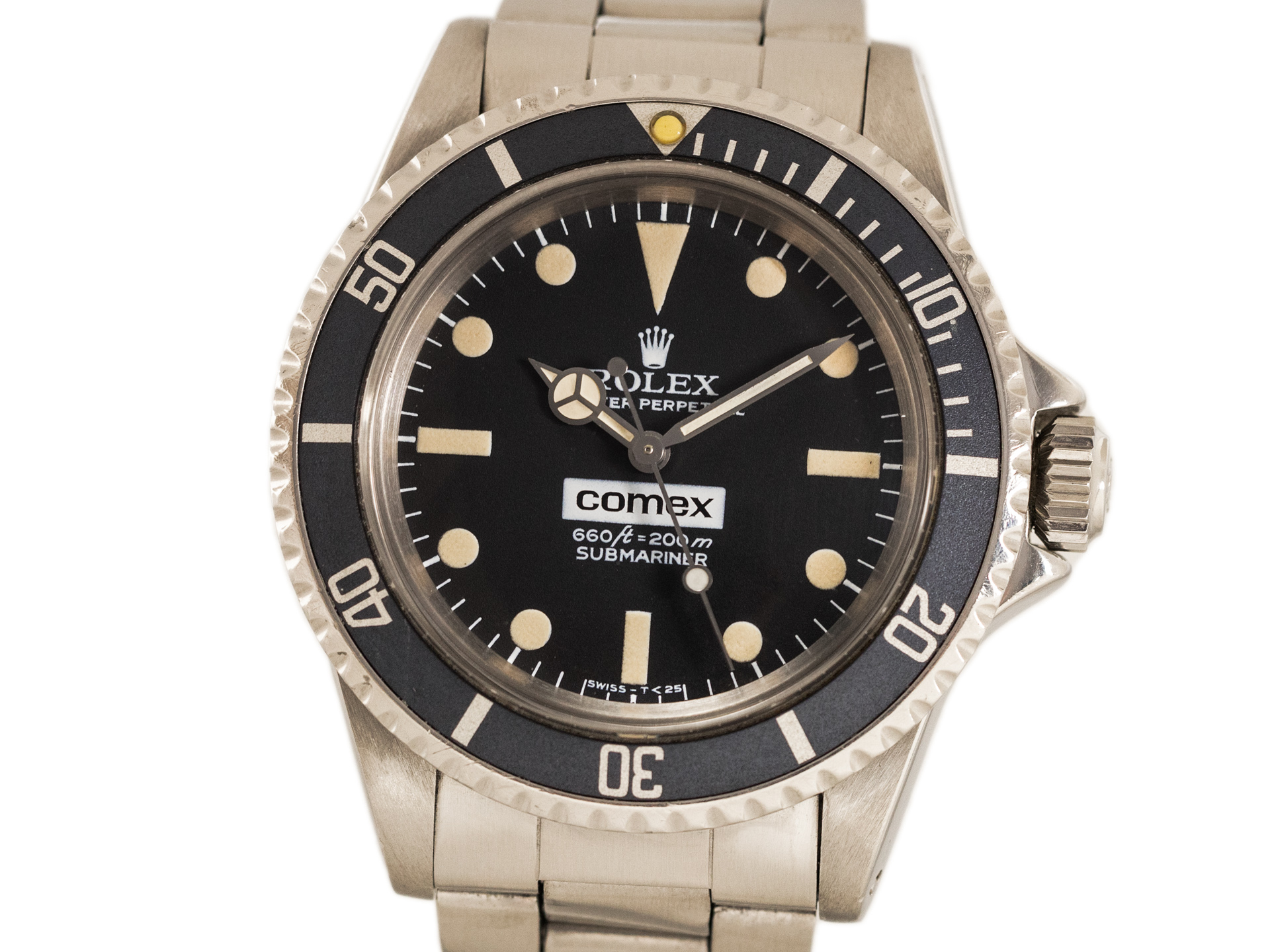
Speculative fever first took root in stainless steel. For decades, the chronographs and dive watches manufactured by Rolex were simply utilitarian instruments. They adorned the wrists of Comex divers, commercial airline pilots, and British military personnel. Today, a 1970s Reference 6263 with its screw-down pushers and black acrylic bezel fetches stratospheric prices at auction houses in Geneva or Hong Kong. The logic behind their valuation often defies the layman’s understanding: the addition of a single line of red text on the dial of a Submariner reference 1680 justifies a massive premium compared to the same model with white lettering.
What dictates the price is the absolute authenticity of each component, frozen in the era of its production. A replacement dial—even if it was installed by the manufacturer itself during a routine service in the 1990s—drastically reduces the piece’s investment potential. Bidders pay for historical immutability. They seek out “MilSubs” (military Submariners) whose welded lugs bear witness to their past use, or GMT-Masters reference 6542 whose fragile Bakelite bezel has miraculously survived impacts without cracking. Rarity lies in the vulnerability of the materials of yesteryear.
The Geometry of the 1970s
While utility watches account for the bulk of transactions, the top of the price pyramid has long been occupied by classic grand complications. But a seismic shift in the 1970s redrew the investment landscape. When Gérald Genta designed the Royal Oak for Audemars Piguet in 1972, followed by the Nautilus for Patek Philippe four years later, the industry cried heresy. Offering a steel timepiece at the price of a gold watch seemed commercially suicidal. Half a century later, the first series of these models form the foundation of any well-structured watch collection.
Collectors focus on the Royal Oak “Series A” (reference 5402), identifiable by the precise placement of the logo on the tapestry-patterned dial, or on the Nautilus (reference 3700) in its original “Jumbo” version. Their angular lines, integrated bracelets, and ultra-thin movements have set the standard for sporty-chic aesthetics. The challenge here lies in preserving the original form. The sharp octagonal or porthole-shaped angles are extremely susceptible to damage from repeated polishing. A case thinned by the lathe of an overzealous watchmaker immediately loses its financial appeal. The search focuses on “unpolished” examples—those whose bevels retain the aggressive brushed finish they had when they left the factory.
The Revival of Unique Shapes
For a long time, the market was driven by mechanical prowess or a sporting pedigree. The trend over the past five years shows a striking shift toward the purely aesthetic dimension. It is in this realm that Cartier has orchestrated a spectacular market turnaround. The Parisian house, sometimes looked down upon by purists of tourbillon movements, has seen its vintage creations skyrocket in auction houses.
Attention is focused on the extremely limited-edition pieces from the 1960s and 1970s, particularly those from the London branch, which was headed at the time by Jean-Jacques Cartier. The Crash, with its asymmetrical yellow gold case evoking a temporal distortion, broke the symbolic $1 million mark at auction. The market has come to realize that these pieces were often produced in only a handful of examples. A Tank Cintrée from the 1920s, with its ergonomic curve and elongated Roman numerals, or an extremely rare “Pebble” from across the Channel, prove that investors today value bold design just as much as the complexity of a chronograph. This natural scarcity ensures a level of demand that contemporary mechanical production is unable to match.

The Pivotal Decade of Neo-Vintage
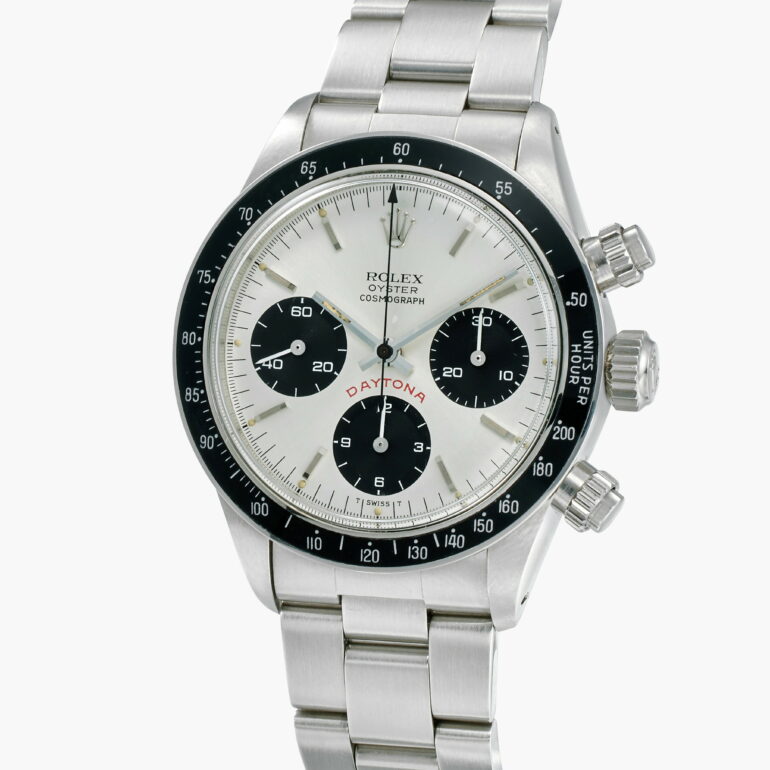
Acquiring a “Paul Newman” Daytona or an original Nautilus is now a matter of wealth management. Prospective buyers—those seeking a financial windfall over a ten-year horizon—are shifting their capital toward a gray area: neo-vintage. This period spans from the late 1980s to the dawn of the 2000s. It coincides with the renaissance of luxury mechanical watchmaking, immediately following the devastating Asian quartz crisis.
Dealers’ radar is focused on the very first creations by independent watchmakers who reinvented the craft. The resonance chronometers and subscription tourbillons by the young F.P. Journe—recognizable by their rhodium-plated brass movements (before the switch to rose gold)—are experiencing a steep upward trajectory. Across the Rhine, the first Lange 1 models—featuring solid casebacks and dials that differ subtly from current productions—are capturing the attention of connoisseurs. Among historic watchmakers, the perpetual calendar chronographs from the 1990s—whose diameters hover around 36 or 37 millimeters and are making a comeback—are still priced lower than their 1950s predecessors, while offering superior mechanical reliability. This is the playground for smart speculation.
Archives and Tritium
This sudden financialization of vintage watches is accompanied by a scientific demand for verification of the object. Trust no longer rests on the good condition of a dial, but on a body of tangible evidence. The concept of the “full set” dominates transactions: ideally, the watch must come with its original box (sometimes specific to a particular year, such as the famous cork box of the first Nautilus models), its warranty certificate punched or stamped with the date of purchase, and the original owner’s manual. If the metal tells the story of the object’s life, the paper certifies its origin.
Professionals use ultraviolet lamps, Geiger counters, and binocular microscopes to scrutinize every square millimeter. They verify that the luminescent material on the hour markers is indeed radium for the 1950s, or tritium for subsequent decades, ensuring that the glow has faded in accordance with the natural decay of the isotope. A modern service hand, glowing under a UV lamp, reveals a recent repair and lowers the estimate.
A vintage watch never truly belongs to its buyer; it merely passes through a wrist for a few years. When the crown is wound by hand in the early morning, the slight resistance of the mainspring serves as a reminder that this mechanism was being wound long before our time. The driving force behind this market lies not only in the hope of a profit upon resale. It lies in the daily handling of a physical object immune to planned obsolescence, whose value adjusts, behind closed doors, to the steady rhythm of its own oscillations.