Make Texture a preferred source on Google to support us
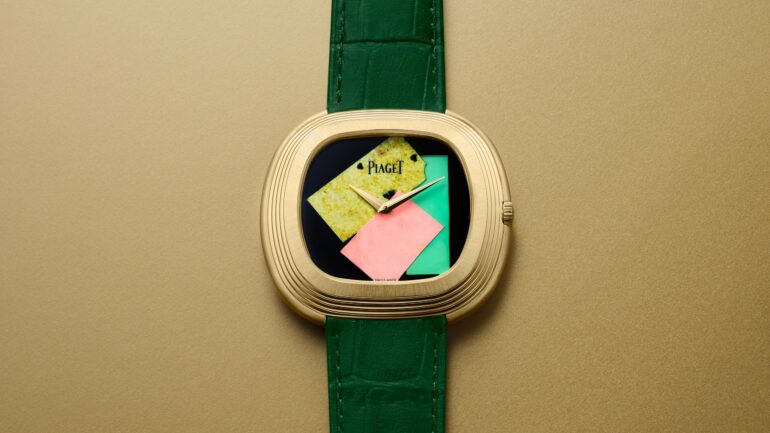
Add Texture to GoogleThere is a contradiction in camouflage that suits Andy Warhol perfectly: designed to conceal a presence, the pattern here draws all eyes to itself. Piaget transposes it onto a watch dial where mineral blues, yellow gold, and rose gold come together to form an almost painterly surface. Named Andy Warhol “Camouflage,” this 2026 edition does not seek to miniaturize a painting on a wrist. Instead, it reimagines its composition: color becomes texture, the portrait disappears, and the pattern emerges as a standalone fragment of the American painter’s universe.
A final self-portrait as a starting point
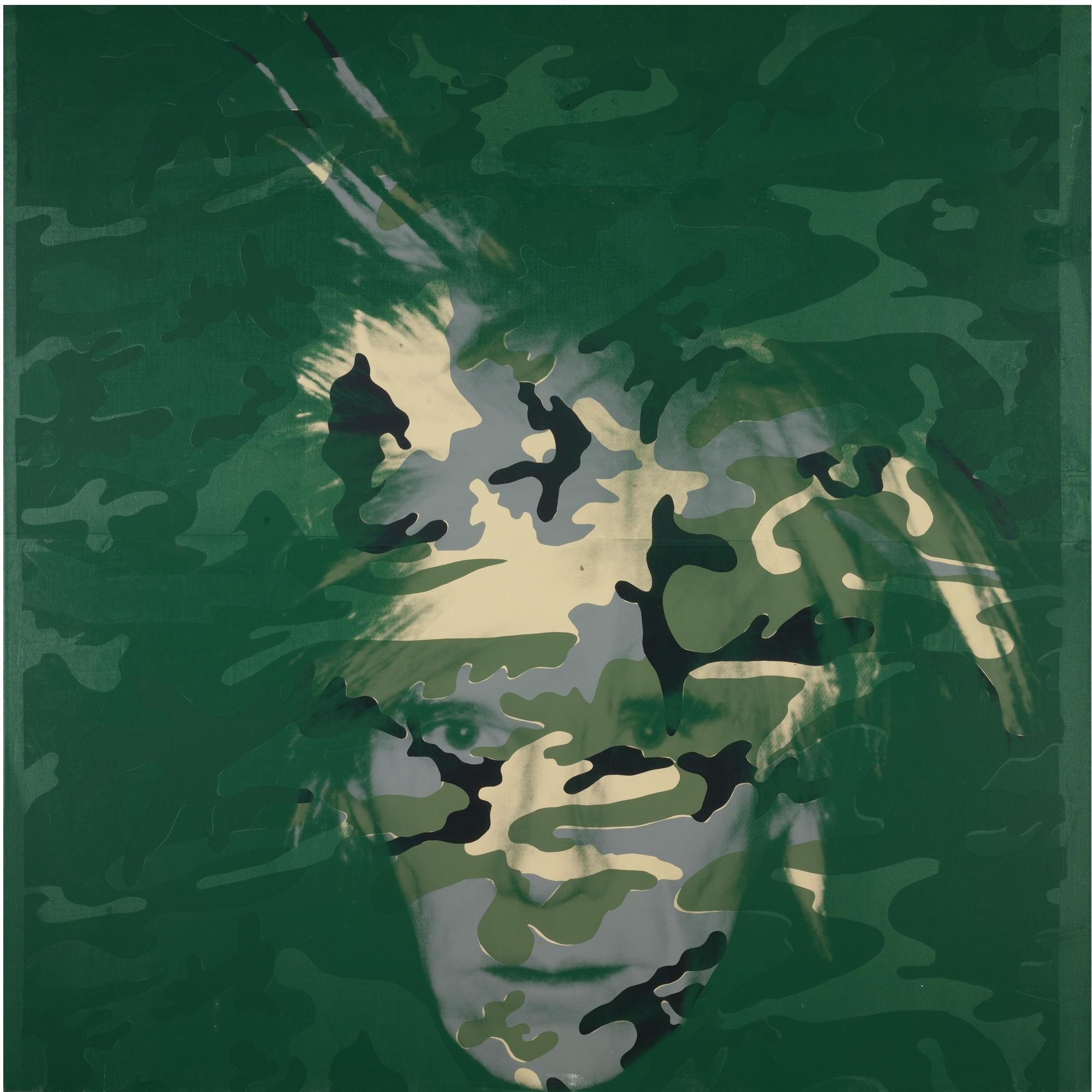
The watch draws its inspiration from *Self-Portrait in Camouflage*, created by Warhol in 1986, a few months before his death in 1987. The work belongs to the very end of his career and features an image of his face, isolated against a black background and then covered with camouflage patterns. Several versions were produced, each playing with different color variations.
Piaget has chosen one of these interpretations, dominated by blue and yellow. This choice avoids an overly literal representation. No image of Warhol’s face appears on the dial, and no printed effect attempts to mimic the painting. Instead, the Swiss brand captures the tension that structures the work: a reimagined military motif, flat areas of color that seem to clash, and the juxtaposition of a vibrant palette with a shadowed area. Camouflage, usually associated with concealment, becomes a bold visual language.
This is not Piaget’s first foray into this realm. In 2024, the manufacture formalized its partnership with The Andy Warhol Foundation for the Visual Arts and renamed one of its historic models—worn by the artist himself—the “Andy Warhol.” Each year will now see the release of a limited edition inspired by his works. Following the “Collage” version from 2025, “Camouflage” continues this dialogue by focusing less on the reproduction of an image and more on its visual energy.
When the Dial Becomes a Marquetry
The most compelling aspect of this edition lies in its manufacturing technique. Instead of applying colors to a metallic background, Piaget constructs its design using a marquetry of gemstones and gold. Each element is shaped and then fitted to the others to form a continuous whole, with the precision of a miniature assembly. The result is therefore not a matter of applied design but rather an architecture of fragments.
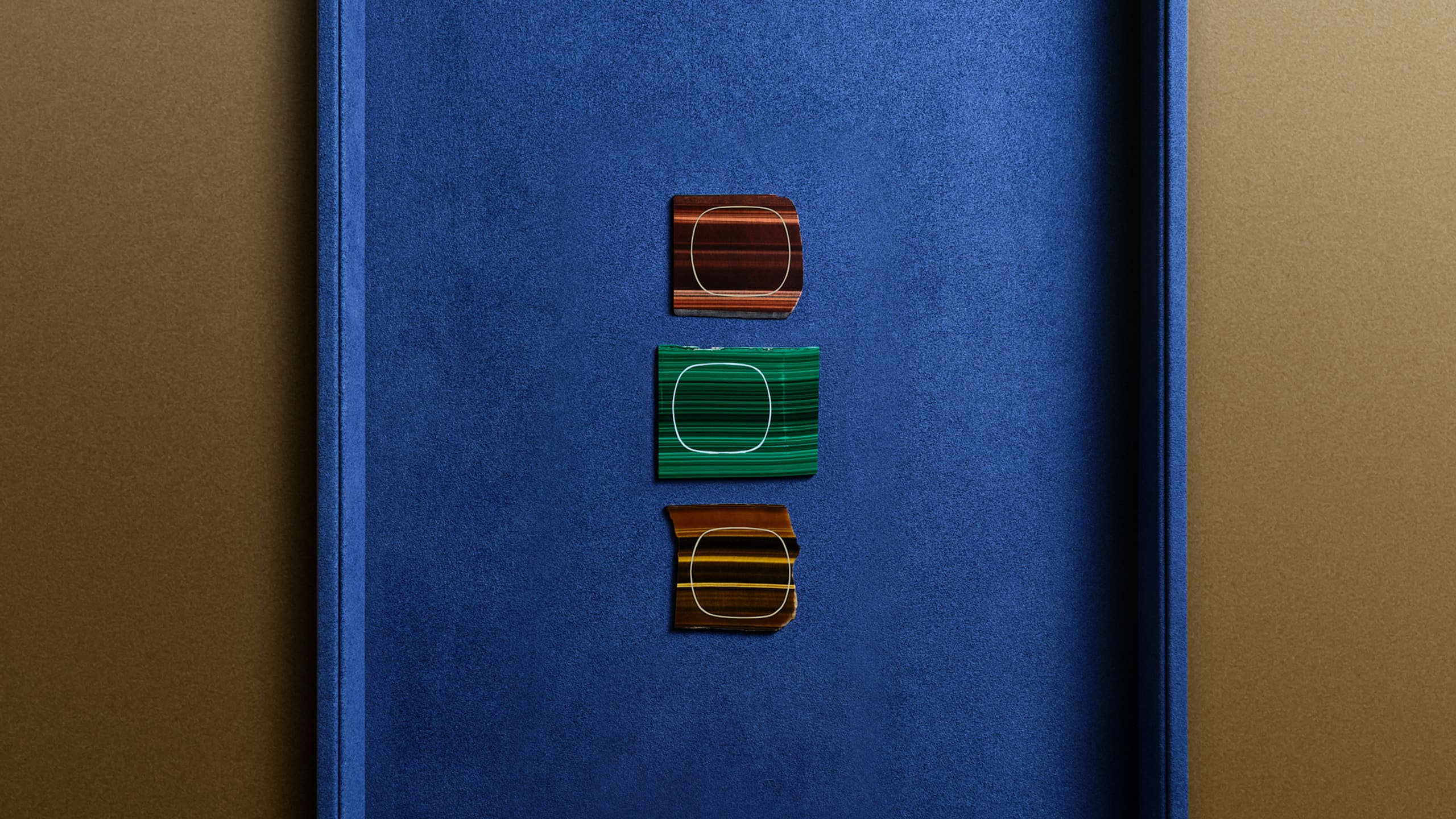
Sodalite provides the deepest blue. Turquoise occupies the lighter areas. The luminous sections then alternate between yellow gold and rose gold, the latter featuring a polished finish, while certain gold areas are given a satin finish. This diversity of textures gives the composition a density that painting could not reproduce identically in such a small format. Depending on the angle of the wrist, the stones absorb light while the metals reflect it.
This materiality is essential to the project. Warhol extensively explored repetition, variation, and the immediate impact of color. Piaget translates these principles using the vocabulary of watchmaking craftsmanship: the pattern remains irregular, the boundaries between shapes are never purely graphic, and contrasts are evident in both the reliefs and the hues. The deliberately understated Dauphine hands fulfill the watch’s primary function without competing with the dial. They traverse the design rather than commenting on it.
The watch thus establishes a fairly direct link between the two previous editions of the series: it brings together the taste for pattern already present at the start of the collaboration and the chromatic intensity explored in 2025. But its personality is more mineral in nature. The midnight blue of sodalite and the bolder blue of turquoise lend depth to a design that yellow gold might otherwise make seem too in-your-face. Rose gold, used sparingly, introduces a less expected warmth.
A large size without the bulk
The dial is set within a 45-mm-wide cushion-shaped case in white gold. On paper, this size seems generous, especially for a dress watch. Yet the model’s design tempers its presence. The lugs and crown are integrated into the overall volume, which prevents the impression of a diameter stretched by external appendages. The silhouette remains compact, with an almost monolithic construction that makes the case a frame rather than a mere container.
Its rim is accented with godrons—those rounded lines that run along the edge and lend the metal a subtle texture. In the context of “Camouflage,” this relief is far from incidental: it extends the interplay between smooth areas, brilliant highlights, and more matte materials. Piaget does not simply superimpose an artistic dial onto a neutral case; the case itself contributes to the tactile experience of the watch.
Its slim profile also contributes to the watch’s balance. Despite its 45-mm diameter, the timepiece is only 8.08 mm thick. This proportion is made possible by the in-house Caliber 501P1, an automatic movement measuring 3.63 mm. It beats at 28,800 vibrations per hour, or 4 Hz, and has a power reserve of 40 hours. The functions are limited to hours and minutes—a logical simplicity for a model whose appeal lies entirely in the power of the dial.
The solid case back protects the movement and bears Andy Warhol’s signature. This choice may come as a surprise in an era when high-end watchmaking readily favors transparent case backs. Here, however, it serves the purpose: the watch retains a degree of opacity. It does not reveal everything—not even its mechanism. The visible face captures the spectacle; the back bears the mark of the collaboration.
An edition conceived as a collector’s item
Piaget has limited production to 86 pieces, a number that directly references 1986, the year the artwork that inspired the project was created. Each watch is mounted on a navy blue alligator strap, whose depth complements the sodalite of the dial without introducing an additional color. The strap serves as a calm extension following the density of the case: it visually stabilizes an ensemble that might otherwise have veered into over-the-top excess.
Priced at 79,000 pounds sterling, the watch is deliberately positioned in the realm of artistic timepieces and collector’s editions. The price reflects the use of white gold, the marquetry work, and the very limited production run. It also reflects Warhol’s unique standing in the art market. In 2023, one of the original self-portraits from the *Self-Portrait in Camouflage* series fetched $18.1 million at a Sotheby’s auction. By that measure, the 86 watches in the collection would still amount to less than three times the asking price for that painting.
Of course, this comparison does not erase the gap between a unique work of art and a mass-produced object. Rather, it reveals the niche in which Piaget positions this collection: that of connoisseurs for whom watchmaking engages in a dialogue with art without claiming to replace it. The watch is neither a miniature reproduction nor a museum souvenir. It offers another way to own a fragment of Warhol’s imagination, through the craftsmanship unique to jewelry and fine watchmaking.
Details of the Andy Warhol collection are available on the Piaget website. For this “Camouflage” edition, everything ultimately comes down to a few millimeters: the brilliance of a vein of turquoise, the depth of sodalite blue, the edge of one gold piece fitted against another. A language of contrast faithful to a body of work that transformed Warhol’s own face into a canvas for metamorphosis.