Make Texture a preferred source on Google to support us
Add Texture to GoogleUnder the harsh lights of a Geneva auction house, the hammer falls amid a silence abruptly broken by applause. A seven-figure sum has just been paid for a watch that bears neither the Rolex crown nor the Calatrava cross of Patek Philippe. The timepiece, the product of a single man’s obsession working in a workshop in the Jura region, has just outshone the industry’s long-established giants. This scene, unthinkable at the turn of the millennium, now sets the pace for the watchmaking calendar. The fine watchmaking market is undergoing a silent yet drastic transformation. Discerning enthusiasts are gradually turning away from the hyper-industrialization of luxury, seeking salvation among independent creators. A handful of watchmakers, freed from the constraints of publicly traded corporations, are redefining the boundaries of exclusivity and setting new rules of the game.
The End of Industrial Compromise
The dominant model has shown its limitations. Major conglomerates have standardized the unattainable. When a historic manufacturer produces tens of thousands of pieces a year, maintaining the myth of rarity comes down to distribution strategy and the marketing of scarcity. Faced with artificial waiting lists and the opaque allocation policies of single-brand boutiques, a segment of collectors has finally grown weary. The alternative lies in small-scale operations whose annual production rarely exceeds a few hundred watches.
In these independent workshops, time is not measured in fiscal quarters. This is workshop-based watchmaking, where every movement bridge is hand-beveled, and where the black polishing of a single piece of steel can require a week of uninterrupted effort. The customer no longer buys a mere ceremonial timepiece: they are paying for the hours of labor put in by a meticulous artisan. This total transparency appeals to discerning buyers who can appreciate the finish of an escapement under a watchmaker’s loupe and who refuse to pay for the global advertising infrastructure of a multinational corporation.
The Pioneers and Institutional Validation
This rebellion did not happen overnight. It has its roots in the tenacity of a few mavericks who, as early as the 1990s, refused to pledge allegiance to the major conglomerates. The subscription model, revived at the time by F.P. Journe to finance his first tourbillons, proved that an alternative business model was viable. British watchmaker George Daniels had already paved the way by inventing the coaxial escapement single-handedly in his workshop on the Isle of Man, demonstrating that major mechanical innovation was not the monopoly of industrial laboratories.
Today, this independence has moved far beyond the stage of being a marginal curiosity to achieve resounding institutional recognition. One need only look at the recent list of winners at the Grand Prix d’Horlogerie de Genève (GPHG), the industry’s equivalent of the Oscars. Independent watchmakers regularly sweep the Aiguille d’Or, the top prize, beating out brands with research budgets a hundred times larger. This recognition by peers has definitively legitimized these artisans in the eyes of global buyers, transforming what was once perceived as a risky purchase into a connoisseur’s choice.
The Dual Path of Radicalism
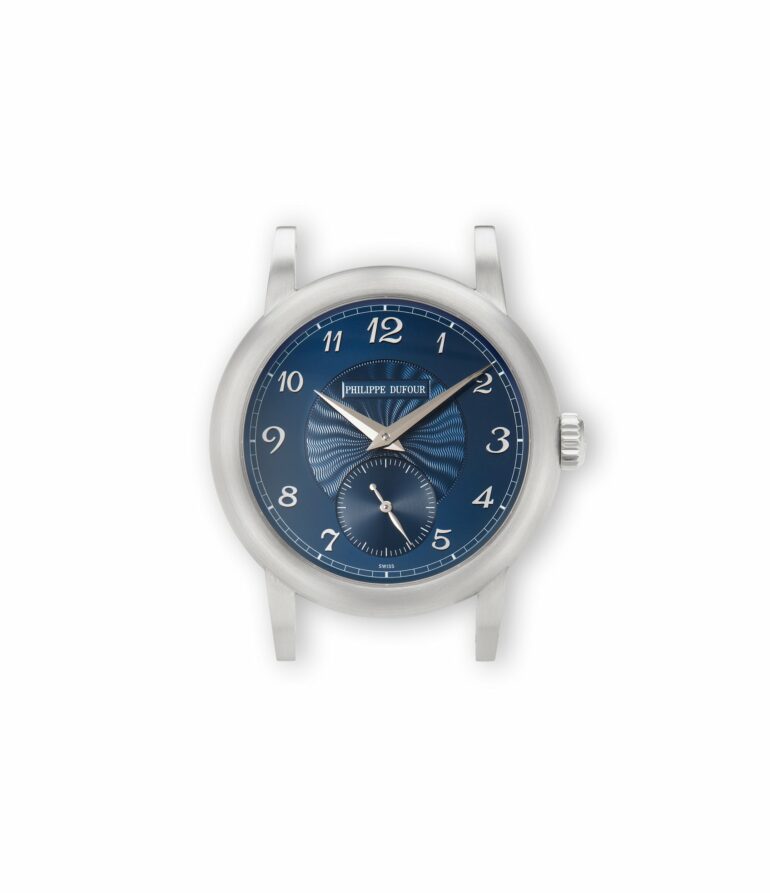
Aesthetically and mechanically, this independence manifests itself in bold choices that take two diametrically opposed forms. On one hand, purists act as guardians of a classical tradition that the industry has largely abandoned. Watchmakers such as Rexhep Rexhepi, founder of Akrivia, and Kari Voutilainen are reviving the chronometric standards of the golden age of the 1930s. Their movements, characterized by rigorous symmetry, feature broad Côtes de Genève and recessed bevels that even the most sophisticated CNC machining cannot yet reproduce faithfully.
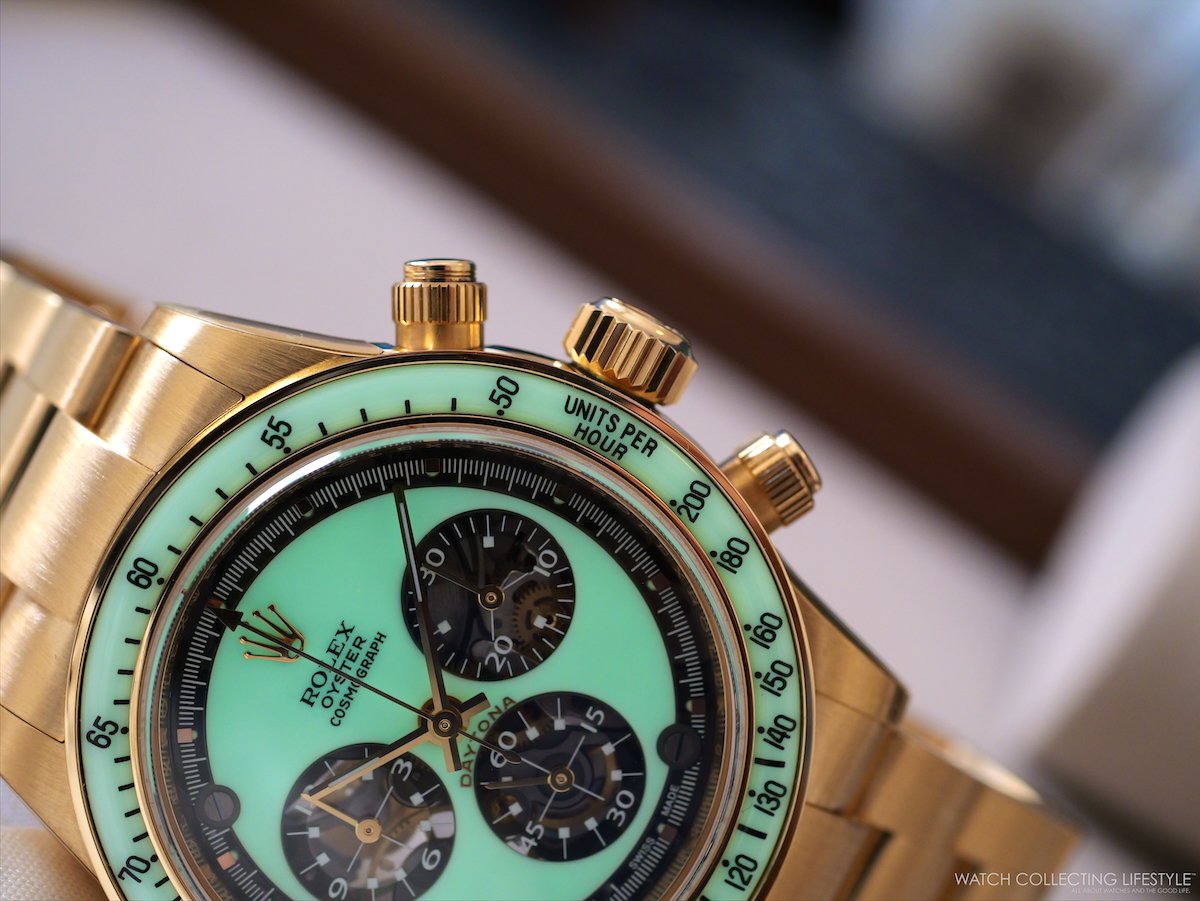
At the other end of the spectrum are the rule-breakers. Maximilian Büsser with MB&F’s timepieces, or the founding team at Urwerk, shatter the traditional concept of telling time. Rotating satellites, dazzling retrograde displays, and three-dimensional kinetic sculptures housed beneath intricate sapphire domes: their creations resemble wrist-mounted spacecraft more than classic city watches. This wide stylistic range rests on a single foundation: the absence of risk-averse executive committees. An independent watchmaker has no obligation to please the general public; all it takes is convincing fifty enthusiasts to secure a year’s revenue.

Disintermediation of the purchasing process
The buyer demographic itself has become younger, changing the approach to the transaction. The image of the prominent figure hoarding perpetual calendars in a Swiss bank vault is fading. The new patron of independent watchmaking possesses a deep understanding of digital culture, poring over technical journals and forming opinions on specialized forums, far removed from the scripted pitches of salespeople. For him, the ultimate luxury lies in direct access to the creator.
Purchasing a timepiece from H. Moser & Cie. or a discreet Geneva workshop comes with a strong personal connection. The client travels to the location, visits the manufacture, dines with the watchmaker, and sometimes discusses the choice of dial materials or the type of guilloché pattern. He witnesses the testing, understands the setbacks involved in developing a new bridge, and celebrates the birth of the final caliber. This elimination of intermediaries restores the true meaning of the concept of a bespoke order. The finished product embodies the story of a human exchange, a world away from the transactional coldness of multi-brand counters at international airports.
The Mechanical Glass Ceiling
This meteoric rise, however, is not without danger for the independent ecosystem. The secondary market, sensing the potential for rapid capital gains, has naturally turned its spotlight on these artisans, whose production is inherently limited. Speculation is creeping in. Watches priced at 50,000 Swiss francs when they leave the workshop are occasionally resold for double or triple that amount a few months later under the auctioneer’s hammer. This brutal financialization destabilizes artisans who have never viewed their creations as investment assets.
The dilemma of growth then becomes acutely apparent. Faced with exponential demand that far exceeds production capacity, should they ramp up production? This is the structural trap of independence. Hiring dozens of watchmakers in a rush, outsourcing components on a massive scale, automating the decoration process to save time: giving in to these industrial temptations would amount to destroying the very thing that makes the brand appealing. Most designers have made their choice. They are suspending new orders and freezing production, even if it means causing lasting frustration among their clientele. They consciously accept a glass ceiling, dictated not by the market, but by the integrity of their craft.
On a solid beechwood workbench, illuminated by the cool, steady light of late afternoon, a file glides gently over a raw nickel-silver plate. The artisan’s movements are slow, repeated a thousand times, with microscopic precision. Metal dust accumulates at the edge of the pin. While the globalized luxury industry models its profitability curves and streamlines its supply chain, this continuous movement of the hand encapsulates the sector’s unique character. The actual time spent on this tiny component dictates the absolute value of the final object. Independent watchmaking demonstrates by example that contemporary rarity is not decreed by an advertising campaign, but is measured by the uncompromising number of days a watchmaker is willing to devote to his craft.