
Make Texture a preferred source on Google to support us
Add Texture to GoogleCustoms Winter: When the Border Redraws the Horizon
Along the 45th parallel, where Quebec’s forests meet the plains of Vermont, the usual quiet of trade now seems charged with a new tension. It is neither an early snowstorm nor the simple clatter of logistics convoys, but the final act of a diplomatic drama unfolding at an increasingly erratic pace. The “trade saga” with Canada has just taken yet another twist—a jolt that, beyond the numbers, calls into question the very fluidity of our contemporary lifestyles. For observers of the worlds of art, design, and luxury, this development is not merely a matter of customs or shipments of raw materials; it is a challenge to the cultural permeability between two nations once thought inseparable.
For decades, crossing this imaginary line was almost a poetic formality—a seamless transition between two interpretations of North American modernity. Today, this “final maneuver”—to borrow the words of a never-ending soap opera—sounds like a brutal reminder of the reality of borders. In the hushed salons of Montreal or the design studios of Toronto, the concern is not only about the cost of steel or aluminum, but about the price of a form of creative freedom that thrived on an unhindered market. Far from being an isolated incident, this tension is part of an ongoing narrative of disruption that analysts are now scrutinizing with surgical precision.
An escalation with the makings of an economic thriller
What stands out in this latest episode is the suddenness of the move—an acceleration that breaks with the usual slowness of international negotiations. Canada, a historic partner and pillar of continental stability, finds itself thrust into the heart of confrontational rhetoric. This step is merely the logical next stage in a series of frictions that began several years ago—a spiral in which each decision seems to provoke an increasingly forceful response. The issue, though seemingly technical, strikes at the heart of the matter: economic sovereignty and the ability to exert influence on a global stage in the midst of a major realignment.
The facts, though cold, paint a relentless picture. Threats of tariffs, forced renegotiations, and shocking statements form the fabric of a narrative where predictability has been banished. For high-end luxury brands that depend on this vital lifeline, uncertainty is the worst of poisons. How can one plan a collection, or envision the export of exceptional furniture or a timepiece, when the rules of the game can be changed by a single press release? The trade saga thus becomes a kind of constant background noise, a dissonant melody that forces economic players to navigate by sight, reinventing their distribution channels every day.
The Canadian government, for its part, is trying to maintain a precarious balance between firmness and dialogue. Official press releases, often available on the Global Affairs Canada website, reflect this desire to preserve the gains of deep integration while preparing the country for increasingly severe external shocks. This is no longer just backroom bargaining; it is a battle for Canada’s image and standing on the global stage.
Luxury and Design Facing the Tariff Barrier
While the general public focuses on the price of energy or basic commodities, the high-end sector observes a different reality: that of the logistics of desire. Canada is a hotbed of talent in industrial design and interior architecture, with designers whose work is exported in large numbers to the United States and Europe. This latest development in the trade saga risks derailing a machine that has been running smoothly. Precious woods, crafted metals, high-quality leather—all the elements that make up the language of luxury—are seeing their journey hindered by barriers once thought to belong to the last century.
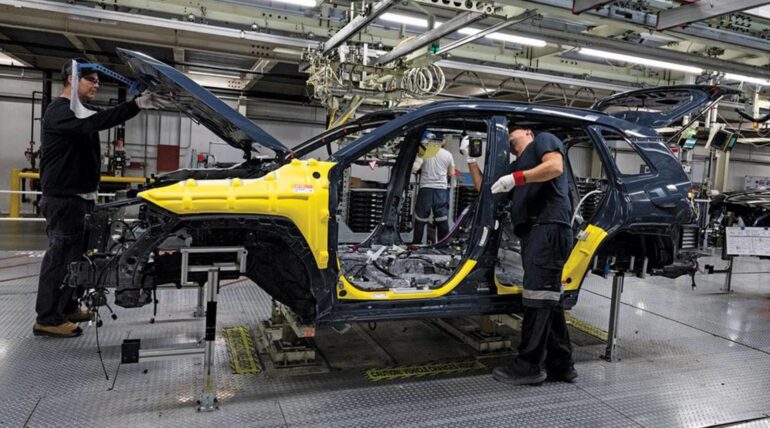
Take the world of luxury automobiles or pleasure yachts: components sometimes cross the border as many as ten times before final assembly. Every political “move” adds a layer of complexity, an additional cost that ultimately affects the very aesthetics of the object. Less budget for innovation, more for customs clearance. It’s a form of invisible impoverishment that threatens excellence. This saga doesn’t just impact our wallets; it also undermines the quality of what we produce and consume.
From this perspective, Canadian design—renowned for its purity and organic connection to nature—must demonstrate unprecedented resilience. Designers are no longer content to simply sketch shapes; they must now devise survival strategies. The border, once a bridge, is once again becoming a dividing line that we must learn to circumvent or tame through ingenuity.
The End of Boreal Carefreeness
Behind the headlines about tariff wars lies a deeper shift in our relationship with travel and discovery. For the aesthetically minded traveler, Canada was a land of accessible contrasts—a blend of untamed nature and urban sophistication without major administrative hurdles. This commercial instability, by osmosis, instills a sense of distance. When economic relations become strained, cultural perceptions are often the first to suffer.

The current saga reminds us that nothing can ever be taken for granted—not even closeness with a neighbor we thought would remain constant. Art exchanges, museum loans, artist residencies—all the connective tissue that enriches the cross-border relationship—are indirectly affected by this climate of mistrust. Canada is no longer just that quiet, large neighbor; it is becoming, despite itself, a player in a geopolitical drama where roles are constantly being reshuffled.
This situation also compels us to take a fresh look at the Canadian domestic market. Faced with export difficulties and imposed barriers, we are witnessing a resurgence of interest in high-end “local” art—a form of creative retreat that could, paradoxically, give rise to a new artistic scene that is even more distinctive. While foreign trade suffers, cultural identity often grows stronger in the face of adversity.
The Aesthetics of Disruption: What Future for the Northern Axis?
So, what can we expect from the next chapter of this “trade saga”? If history has taught us anything, it is that cycles of protectionism always eventually collide with the reality of interdependence. But in the meantime, the damage can be profound. This latest development is not the end of the story, but rather the beginning of a more complex chapter—undoubtedly a more mature one—in which Canada must redefine its appeal beyond mere geographic proximity.
For investors and collectors, the message is clear: the geography of value is shifting. We can no longer ignore the upheavals of politics when we are interested in the beauty of objects or the longevity of investments. The border has once again become a serious topic of conversation, a design element in its own right in the architecture of our global exchanges.
Ultimately, this trade tension acts as a litmus test. It highlights the fragility of our cultural and economic ecosystems in the face of unilateral decisions. Canada, through its response and its ability to maintain its course of excellence despite the turbulence, proves that a nation’s true value lies not only in its natural resources, but in its ability to remain a beacon of stability and good taste in a world that seems to have lost its bearings. The saga continues, but what matters most—this quest for meaning and form—remains the true challenge of tomorrow.