
Make Texture a preferred source on Google to support us
Add Texture to GoogleThe asphalt with hints of azure
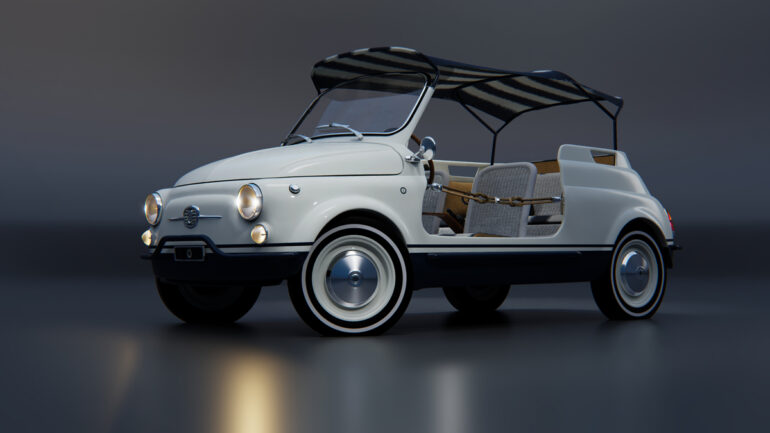
The memory of endless summers on the Italian Riviera never truly fades. It remains etched in a single image: that of a small, open-top car—without doors—speeding along coastal roads with a carefree spirit we thought was reserved for the last century. This vacation fantasy is now being given new life through a unique interpretation that shifts the focus of automotive design toward the maritime horizon. The Spiaggina, born from the collaboration between the creative hub Garage Italia and the Milan-based studio Hot Lab, does more than simply revisit a legend; it transposes the codes of recreational boating onto four wheels.
This is not merely a superficial customization, but a dialogue between two worlds that share a common pursuit of functional elegance. By entrusting the design of this version to naval architects, the approach changes radically. The focus is no longer on traditional bodywork, but on the deck, the hull, and materials capable of withstanding both salt and the test of time. The influence of classic motorboats—those Riva or Chris-Craft models that cut through the waters of Lake Como or Saint-Tropez in the 1960s—permeates every square centimeter of the vehicle.
Naval Architecture for the Road
The break from the production car is immediate. By removing the roof and opening up the sides, the designers have transformed the cabin into an observation deck. The central element of this metamorphosis is undoubtedly the extensive use of teak. This wood, inextricably linked to the decks of the most prestigious yachts, covers the rear section here, transforming the trunk into a veritable miniature beach. The woodwork is executed with surgical precision, respecting the grain and the black watertight seals typical of the nautical world. This choice is not merely aesthetic; it creates a different tactile relationship with the object. You no longer touch cold plastic or metal, but an organic material that lives and ages with its owner.
The teams at Hot Lab drew on their expertise from the open seas to refine the lines. The absence of central pillars and the windshield reduced to its simplest form reinforce this sense of total freedom. The very structure of the car has been redesigned to maintain the necessary rigidity while mimicking the fluidity of a hull. The ubiquitous chrome finishes evoke the fittings of luxury yachts, gleaming in the sun with an intensity that only fine watchmaking or traditional maritime craftsmanship still knows how to cultivate.
The philosophy of absolute customization
In the Garage Italia workshops, mass production has no place. Each Spiaggina is the result of a meticulous development process in which the customer participates in defining every last detail. This “restomod” approach—modernized restoration—preserves the soul of a classic car while infusing it with contemporary standards of comfort and technology. The interior replaces traditional bench seats with seating upholstered in UV- and moisture-resistant technical fabrics, often in shades of deep blue or off-white, reminiscent of crew uniforms or regatta sails.
This project illustrates a major trend in today’s luxury market: the pursuit of emotional resonance rather than pure performance. Here, top speed or the zero-to-100-kilometer-per-hour time matter little. What counts is the quality of the impression one leaves behind. The Spiaggina imposes a different sense of time—that of a leisurely drive, where the journey becomes an end in itself. It is a tool for social distinction as much as for personal pleasure, a machine for creating memories that seems to have been plucked from a Fellini film and projected into the present.
The Legacy of La Dolce Vita Reinvented
The origins of the “beach car” date back to the late 1950s, when Gianni Agnelli, then head of Fiat, commissioned a stripped-down version of the 500 for his trips between his villa and his yacht. The Ghia Jolly was born. Sixty years later, the spirit remains, but expectations have evolved. The collaboration between the nautical design studio and automotive customization specialists has taken sophistication to a new level. We’re no longer content with wicker seats (though the option remains a welcome nod to the past); we seek an overall coherence that bridges the garage and the dock.

The choice of colors plays a pivotal role in evoking this historical spirit. Pastel shades, bold two-tone combinations, and matte or satin finishes highlight the car’s contours without weighing it down. The Spiaggina thus becomes a canvas through which a certain Mediterranean art of living is expressed. It is a poetic response to the growing standardization of the global automotive fleet. In an urban landscape saturated with massive, aggressive SUVs, this little beach car stands out as a refreshing anomaly—a reminder that the automobile can also be a playful and lighthearted art form.
Beyond the design, it celebrates an entire culture of Italian craftsmanship. The upholsterers, painters, and woodworkers who worked on this project share a craft that is becoming increasingly rare. By bridging disciplines, Garage Italia and Hot Lab prove that the luxury of tomorrow lies in these bridges built between seemingly distant worlds. The Spiaggina is not just a car inspired by vintage motorboats; it is the meeting point between land and sea, a hybrid object designed for those who refuse to choose between asphalt and the surf.
The enduring appeal of such a concept lies in its ability to inspire desire beyond fleeting trends. Drawing on the timeless codes of classic yachting, this creation secures a place of honor in the most discerning collections. It embodies a form of resistance to uniformity, a rolling manifesto in favor of relaxed elegance that sacrifices nothing to technical rigor. A tour de force that transforms every journey into a micro-cruise, even kilometers from the nearest coast.