Make Texture a preferred source on Google to support us
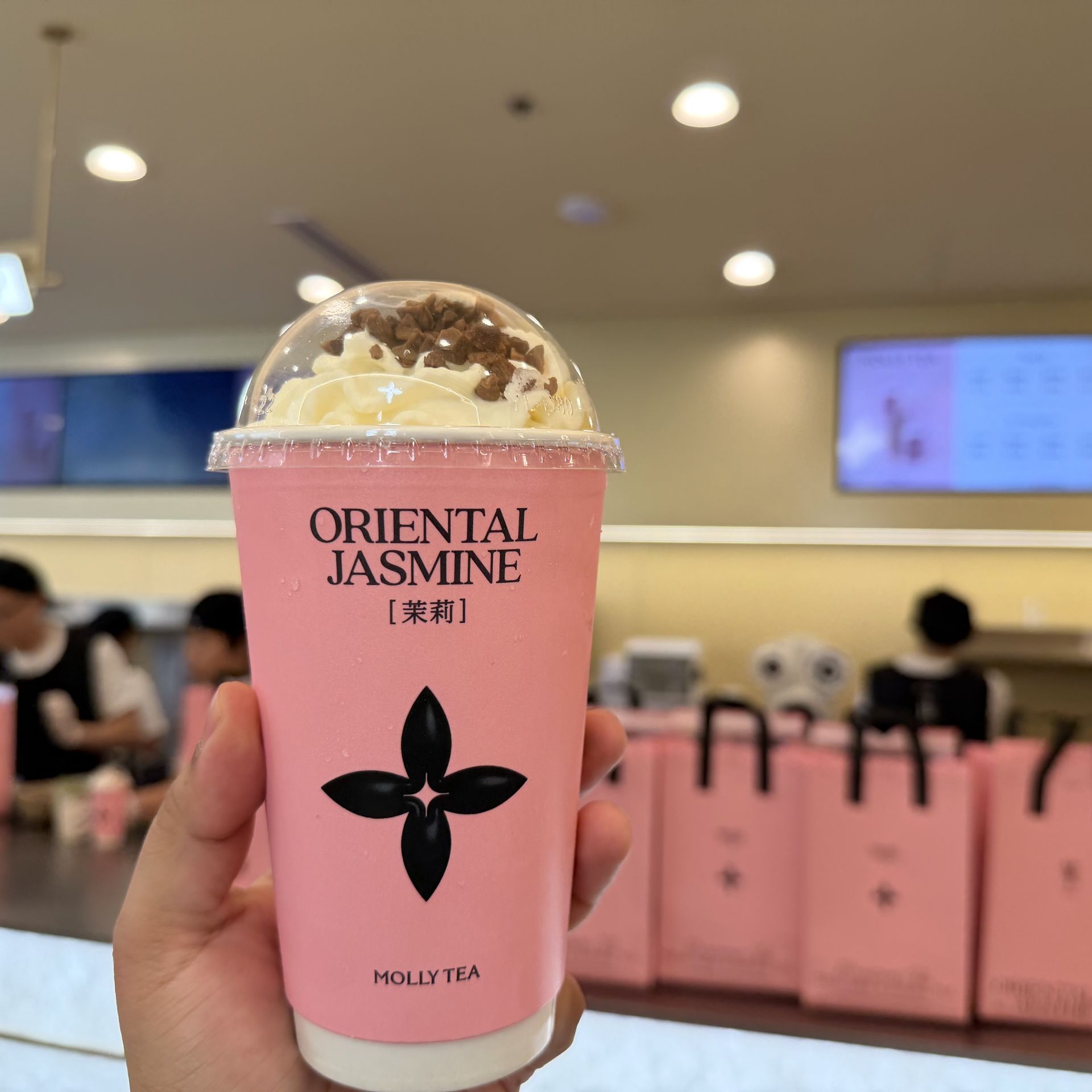
Add Texture to Google10.3 million yuan—a severe financial penalty and a clear order to change its visual identity. On paper, the first-instance ruling handed down by the Suzhou court against the Molly Tea chain checks all the boxes for a classic victory for Louis Vuitton. The local court ruled in favor of the Parisian fashion house, finding that the Chinese brand was using a floral emblem that bore too close a resemblance to the famous four-leaf clover monogram. The defendant company immediately announced its intention to appeal the decision. But in the complex arena of the contemporary Asian market, legal victories sometimes leave a bitter aftertaste. Far from closing the case, the court’s decision acted as a catalyst, transforming a mundane intellectual property dispute into a minefield of cultural resentment.
The Chinese public, closely scrutinizing every move made by Western luxury giants, seized upon the case with formidable acuity. Commentators and an active segment of consumers were quick to point out that the design in question had its roots in local ornamental traditions that predated the founding of the French luggage maker by many years. The commercial dispute thus morphed into a trial of intent: what legitimacy does a foreign brand have to appropriate—and then legally lock down—an aesthetic heritage perceived as shared? The clash of perceptions is total. On one side, a company fiercely defending a motif that defines its global desirability; on the other, a proud, hyper-connected clientele that refuses to see its symbolic repertoire privatized.
The Delicate Economic Equation of Fall 2026
This friction over a simple design comes at a precise moment when the slightest jolt could derail growth trends. The Chinese market, long considered an inexhaustible El Dorado for European conglomerates, now demands a much more subtle, cautious approach. The figures released by LVMH on October 12 illustrate this cooling trend. While the group posted 2% organic revenue growth for the first nine months of 2026, the third quarter tells a more nuanced story, particularly in Asia. The Fashion and Leather Goods division thus posted a 5% organic decline over this period.
Should this be seen as a direct consequence of the Molly Tea affair? The group’s CFO, Cécile Cabanis, demonstrated welcome analytical caution, acknowledging a likely negative effect from the controversy at the start of the quarter, while admitting that it was impossible to quantify the exact impact. Isolating the anger of tea drinkers within the overall performance of a sprawling division would amount to a statistical illusion. The decline in sales is part of a much broader trend: demand is slowing due to macroeconomic factors, customers are increasingly sensitive to narrative missteps, and local brands are offering increasingly uninhibited competition. Consumers no longer buy just an imported logo; they demand constant cultural consideration.
A New Architecture for the Global Narrative
It is precisely to master this ever-changing narrative that Louis Vuitton has just adjusted its organizational chart with surgical precision. As of November 1, 2026, Hector Muelas has assumed the role—tailor-made for him—of chief brand creative officer. Reporting directly to Damien Bertrand, this appointment reflects a strategic imperative: the product alone is no longer enough; the brand must secure the narrative surrounding it. According to details from an internal memo reported by the trade publication The Industry.Fashion, the new hire’s mandate covers global creative direction and campaign management. In other words, the goal is to align every touchpoint—from physical storefronts to social media algorithms—to ensure that the brand’s voice remains consistent, whether in Paris or Shanghai.

Hector Muelas’s profile was not chosen at random. Before joining the luggage maker, he had been working since 2023 on Tiffany & Co.’s global management team, where he was already responsible for creative and brand image matters. His previous stint at Rimowa, another gem in the LVMH portfolio, allowed him to develop a highly contemporary approach to luxury. At the aluminum luggage manufacturer, he helped transform a purely utilitarian object into a vehicle for storytelling and experiential engagement. It is precisely this alchemy that Louis Vuitton is seeking to intensify today: selling a world rather than a bag.
The physical experience amid governance rumors
The brand is, in fact, drawing on a wealth of creativity to bring this narrative to life. The recent immersive installations set up in Hong Kong and Shanghai reflect this desire to dramatize the heritage of travel, the brand’s historical DNA. These colossal installations aim to recreate a visceral and emotional connection with the Asian public. The challenge for the new chief brand creative officer will be to ensure that these displays of narrative prowess no longer clash with unexpected local sensitivities.
This reorganization of the creative team has inevitably fueled the rumor mill, with some impatient observers seeing it as the first sign of a more profound shake-up at the brand’s helm. Rumors regarding Pietro Beccari’s future have multiplied, leading to a misinterpretation of the situation. The facts contradict these speculations: having taken the helm at Louis Vuitton in February 2023, the executive even saw his scope of responsibility expand when he assumed leadership of the LVMH Fashion Group in January 2026. Hector Muelas’ arrival in no way signifies a managerial rebuke. It represents an indispensable tactical reinforcement for a company that must articulate a universal message in regions of the world where the public now demands a say in the symbols being sold to them.
The episode involving the four-leaf clover will likely remain a textbook case in luxury strategy manuals. It serves as a stark reminder that commercial law and popular acceptance operate on distinct wavelengths. A design printed on coated fabric may legally belong to a publicly traded company, but its integration into the collective imagination cannot be decreed by lawyers or courts. It is earned through a delicate balance of tone—one that the industry must now relearn to master.