Make Texture a preferred source on Google to support us
Add Texture to GoogleA New Grammar of Belonging
Two figures cross paths in the hushed space of an art gallery or on the streets of a capital city. One disappears beneath the bulk of a heavy overcoat with sloping shoulders; the other sports a red rectangle printed on the chest. The visual contrast is stark, yet the vocabulary belongs to the same dialect. A Fear of God coat and a Supreme hoodie do not offer the same approach to clothing, yet today they define the contours of a single, unified masculine landscape. Streetwear has long since transcended its original framework to become a complex system of symbols. A cut, the fabric of a jacket, or the design of a pattern is now enough to assert a cultural affiliation, a musical affinity, or a social status.
The California-Japan Axis: An Obsession with Youth Culture
The story often begins on the American West Coast. A simple hand-drawn signature on a California surfboard laid the foundation for this culture of belonging. By expanding its scope to include clothing, Stüssy defined a style centered on baggy pants and thick knitwear, creating a wardrobe fueled by international exchanges and music. But it was on the other side of the Pacific, on the streets of Tokyo during the 1990s, that these American influences were assimilated and radicalized.
The Ura-Harajuku neighborhood then became a testing ground for a generation of designers who approached counterculture with surgical precision. In 1994, Shinsuke Takizawa founded Neighborhood by filtering workwear and military surplus through the lens of motorcycle culture. Leather and worn denim convey a raw masculinity, transporting the wearer into a fantasy world far removed from the office. Around the same time, Jun Takahashi infused Undercover with the neuroses of the punk movement. A simple deconstructed piece or a graphic T-shirt takes on the intensity of an alternative album cover, instilling a subtle sense of unease in an outwardly classic outfit.
The most flamboyant visual approach in this Tokyo scene came from Nigo. With A Bathing Ape, launched in 1993, the camouflage pattern lost its original purpose: it was no longer about blending into the background, but about catching the eye. Saturated with bright colors and dotted with monkey heads, the print becomes a flashy armor, crowned by the famous sweatshirt whose hood—zipped all the way up—forms a shark’s mouth. Paired with BAPE STA sneakers, these pieces perfectly embody the hip-hop scene’s desire to make a statement at first glance.
The Street, the Construction Site, and the Barracks
While Japan reinvents Americana, utility wear finds new life in urban settings. The ruggedness of construction canvas or the practicality of a military pocket take on new meaning when worn by a skateboarder or a club regular. Edwin Faeh captured this shift in 1994 when he founded Carhartt WIP, adapting the foundations of American workwear for a European audience that reimagined these generous cuts to suit its own style.
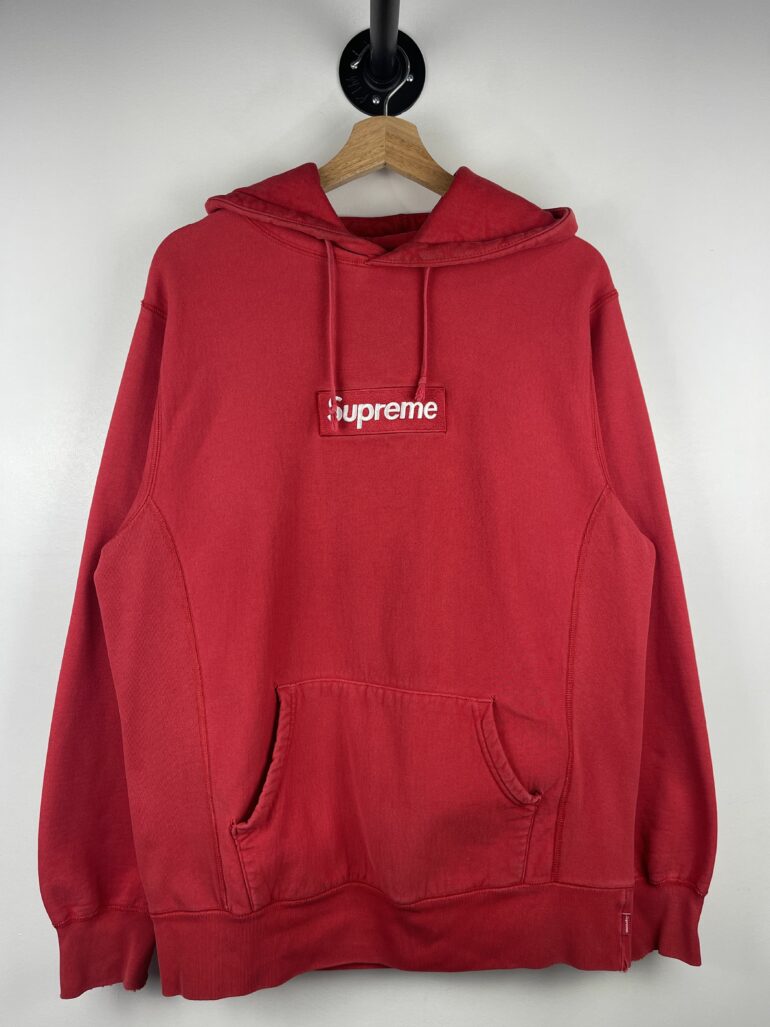
That same year, on Lafayette Street in New York, the opening of the Supreme store crystallized the taste of a skate community open to cinema, art, and photography. Wearing the brand’s rectangular logo amounts to endorsing this discerning curation, transforming the consumer into a collector of a niche culture. In London, Palace captures this dynamic with a distinct British flair. Technical jackets, soccer jerseys, and tracksuits are adorned with the Tri-Ferg logo designed by Fergus Purcell, all steeped in biting humor and self-deprecation that anchor the brand in the reality of its community.
While Palace plays on irony, the Japanese label WTAPS, led by Tetsu Nishiyama, elevates the uniform to the status of a religion. Wide-leg pants and oversized shirts, available in olive, navy, and jet black, eschew all whimsy in favor of utilitarian details. Collectors seek out the perfection of a garment’s drape or the placement of a patch pocket, finding satisfaction in the austerity of function.
The Intellectual Subtext and the Reinterpretation of History
Aesthetics alone are no longer enough to justify a garment’s existence; it must now carry semantic weight. Tremaine Emory illustrates this requirement with “Denim Tears.” By affixing cotton wreaths to his designs, he forces the wearer to confront the history of slavery in the United States. The historical motif thus circulates within popular culture, prompting reflection on the African diaspora right in the midst of a casual outfit. Clothing becomes a space where the desire for consumption and the responsibility to remember coexist.
On a more experimental note, Virgil Abloh had already realized as early as 2013, with the launch of Off-White, that a single printed word or a pair of quotation marks could radically alter the interpretation of a piece. By applying the logic of musical sampling to industrial design and luxury fashion, he imbued the hoodie with an immediate conceptual intent. For its part, Noah—the project by Brendon Babenzien and Estelle Bailey-Babenzien—uses the intersection of surf culture and classic elegance to directly challenge consumer habits and environmental issues.
Adults in Sweatsuits: The Rise of Casual Luxury
As its clientele ages, the wardrobe expands to offer a seamless transition into adulthood. Teddy Santis, with Aimé Leon Dore, breaks down the barrier that previously separated sportswear from more formal settings. Loafers, chunky knits, and structured-sleeve pieces blend naturally with joggers. This approach allows one to hold onto youthful influences while embracing traditional elegance.
Ronnie Fieg’s approach at Kith follows a parallel path. Starting from an obsession with sneakers, the brand has developed a complete universe ranging from intricate outerwear to home décor, transforming the store into a showcase for a global lifestyle. But it is Jerry Lorenzo, with Fear of God, who most directly challenges the conventions of luxury. He makes the silhouette the ultimate social marker. Without resorting to flashy logos, his collections redefine style through the interplay of volumes and layering borrowed from sportswear, applied to knitwear and coats. His Essentials line then makes these meticulous proportions accessible to all, offering a clear and coordinated version of this new aesthetic for everyday wear.

This blurring of the lines between casual and extravagant had already been explored as early as 2003 by Pharrell Williams and Nigo with Billionaire Boys Club and Icecream. By introducing pastel colors, astronaut designs, and childlike graphics on college jackets, they offered at the time an eccentric and vibrant alternative to the very rigid codes of the hip-hop world.
Digital Anxieties and New Forms of Radicalism
A new generation is now using clothing to give tangible form to the emotions of a generation raised on screens. Launched in 2015, Anti Social Social Club has turned digital anxiety into a rallying cry. The brand’s undulating name, created by Neek Lurk, and its melancholic phrases printed in large letters on the back allow wearers to publicly display a private sense of unease. In a much more aggressive vein, FTP (Fuck the Population), founded by Zac Clark in Los Angeles in 2010, embraces pure provocation. Clothing becomes a declaration of unapologetic hostility, where verbal violence replaces aesthetic refinement.
In contrast, Cactus Plant Flea Market gives its designs the look of a joyful DIY project. The bold typography and smiling faces created by Cynthia Lu lend these pieces a deliberate, artisanal imperfection. Hellstar, launched in 2020 by Sean Holland, saturates the visual space with flames and dense compositions, channeling the raw impact of concert tour merchandise.
A sense of belonging can also be expressed through physical action. In London, the Corteiz label—recognizable by its Alcatraz logo—organizes urban scavenger hunts to sell its cargo pants and tracksuits. The act of purchasing becomes a participatory performance, anchoring the brand in the immediate reality of London’s streets.
Metal and Canvas
To tie these disparate influences together, the precision of the accessories remains crucial. Human Made, another project by Nigo, delves into the history of vintage cuts to offer canvas pieces of rare refinement. The Japanese brand Kapital takes it a step further by subjecting its denim and bandanas to multiple washes and patches, adding skeleton motifs to add complexity to the texture.
But the definitive attitude is often forged by the addition of metal. Since 1988, the California-based Chrome Hearts workshops have been supplying the bold jewelry of this culture. Solid silver, Gothic crosses, and sharp typography channel the excess of rock and biker culture into this contemporary wardrobe. A thick chain or an intricately crafted pair of glasses suddenly gives an ordinary sweatshirt the weight and charisma of a leather jacket.
And at the foundation of all these looks, the choice of shoes seals the deal. The athletic heritage of Nike, adidas, and New Balance—or the urban roots of Vans and Converse—provide the final anchor. The interplay is constant: a sneaker provides context for wide-leg pants, while a structured coat alters the perception of a running shoe. It is in this ceaseless dialogue between canvas, cut, and leather that the true complexity of men’s fashion lies today.