Make Texture a preferred source on Google to support us
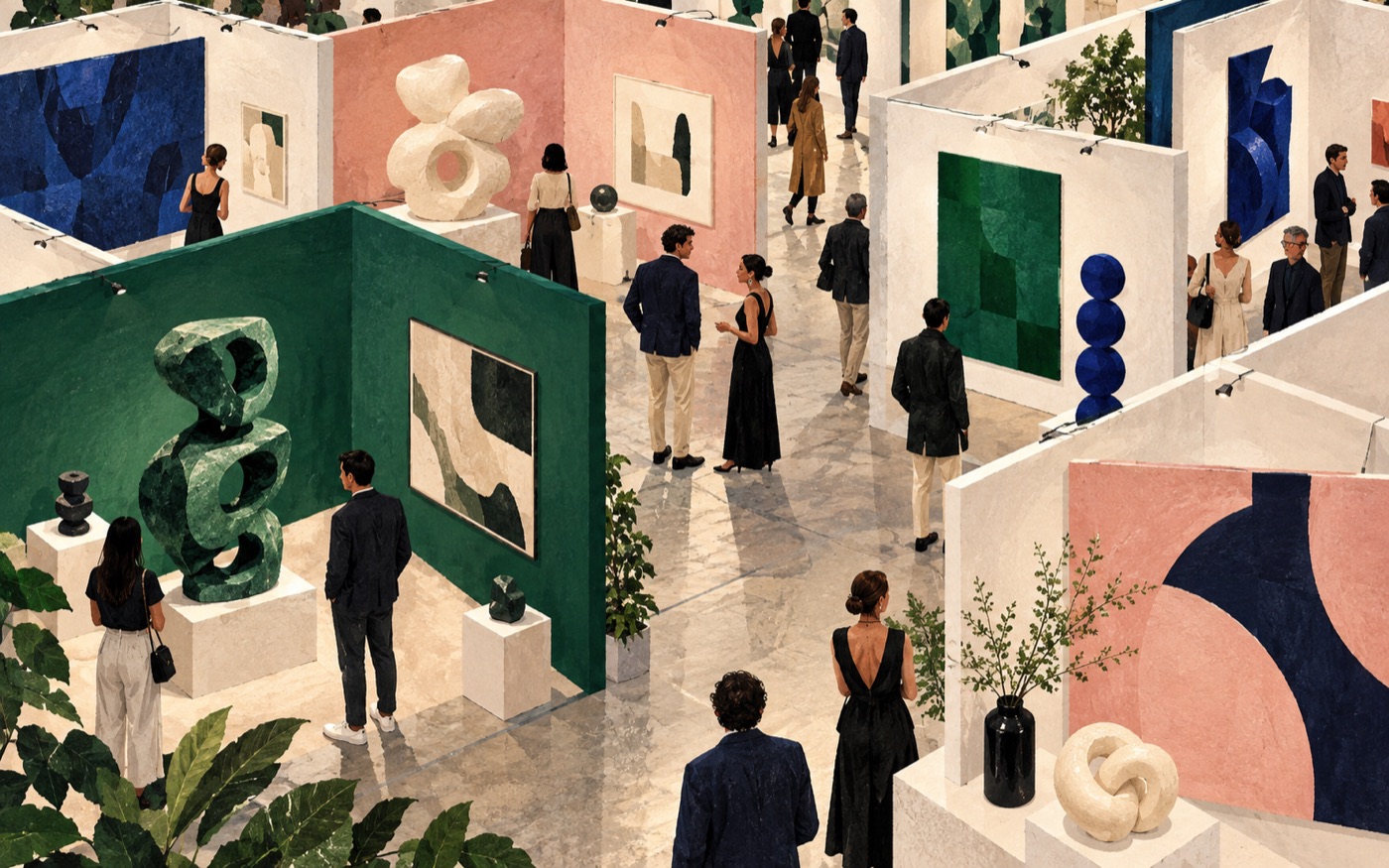
Add Texture to GoogleThe New York-based institution is undergoing a transformation. After a year of silence marked by the cancellation of its 2025 edition, the Art Dealers Association of America (ADAA) fair is returning to the forefront with a redefined identity. This return, scheduled for November 2026, is accompanied by a significant name change: “The Art Show,” the historic name since 1989, is being replaced by “ADAA Fair.” Under the leadership of Kinsey Robb, who was appointed executive director in 2024, the event aims to turn its “strategic hiatus” into a new fair model—one that is more intimate and firmly focused on curatorial excellence rather than purely quantitative expansion.
A Strategic and Institutional Repositioning
The fair’s absence in 2025 was not a simple withdrawal, but rather the association’s desire to rethink its format in light of structural changes in the art market. This repositioning reflects a commitment to embracing a “boutique” character. The selection of Kinsey Robb, who succeeds Maureen Bray, signals a commitment to fostering a vision where collegiality and the quality of the presentations take precedence over the race to attract the largest number of exhibitors. This year, 63 member galleries were selected following a rigorous peer review process. This figure represents a significant reduction compared to previous editions, which typically featured between 75 and 78 exhibitors.
This more concentrated and selective format brings together galleries from 23 cities across 12 U.S. states, ensuring geographic diversity within a deliberately limited setting. The idea is to prioritize intimate exchanges and in-depth artistic presentations, far removed from the visual overload of massive art fairs. To support this transition, the ADAA has appointed Intact Insurance as the lead partner for risk management and insurance for the 2026 edition.
The Whitney Museum as a New Philanthropic Horizon
One of the most radical changes in this edition lies in the organization’s shift toward philanthropy. After 36 years of a historic alliance with the Henry Street Settlement, a Lower East Side charity for which more than $38 million has been raised since 1989, the ADAA is ending this partnership. For 2026, the Whitney Museum of American Art will become the official beneficiary of the opening gala. Funds raised at this event will now be allocated to the museum’s educational and artistic programs.
Alongside this major institutional support, the association is refocusing its own internal charitable efforts on the ADAA Foundation. The ADAA Foundation continues to play a crucial role in the American art scene by funding curatorial research and supporting museums with modest budgets, which are often outside the major financial circuits of the art market.
Curatorial Programming: Between Retrospectives and Rediscoveries
The Park Avenue Armory will host high-caliber monographic and thematic exhibitions, often focused on preserving artistic heritage and rediscovering historical figures. Among the highlights of this edition, Roberts Projects will mark the centennial of Betye Saar with an exhibition featuring previously unseen drawings, early assemblages, and archival materials. In a similar vein, Anthony Meier will present the first solo retrospective in New York in nearly 60 years dedicated to Barbara Stauffacher Solomon.
Sculpture and installation will also take center stage. The Susan Inglett Gallery will revive “On Dangerous Ground,” a historic 1981 installation by Maren Hassinger, while the Hosfelt Gallery will explore Harry Bertoia’s sonic universe through his “Sonambient” sculptures. Drawings and works on paper will be highlighted at the Peter Blum Gallery, with a selection spanning seven decades of Alex Katz’s work, and at the Schoelkopf Gallery, which will focus on Pat Passlof’s work from the Robert Ellison collection. Finally, Jessica Silverman will present a solo show dedicated to Julie Buffalohead’s recent works.

Schedule and Immersion in the New York Scene
The ADAA Fair 2026 is part of a broader urban dynamic, coinciding with the launch of “Art Week NYC.” The event will take place November 12–16, 2026, at the Park Avenue Armory. The schedule features several highlights:
- The Preview Gala (by invitation or special ticket) will take place on Thursday, November 12, from 4:30 p.m. to 9:30 p.m.
- Friday, November 13 will feature a VIP preview from 10:00 a.m. to 12:00 p.m., followed by the public opening until 7:00 p.m.
- The weekend will feature extended hours: from 11:00 a.m. to 7:00 p.m. on Saturday, November 14, and from 11:00 a.m. to 6:00 p.m. on Sunday, November 15.
- The fair will close its doors on Monday, November 16, at 5:00 p.m.
Beyond the walls of the Armory, the ADAA Upper East Side Gallery Walk, scheduled for Saturday, November 14, from 12:00 PM to 5:00 PM, will allow the public to explore nearly 30 member galleries located in the neighborhood. This tour will be facilitated by a digital guide available via the Bloomberg Connects app. Admission to the fair remains free for children under 12 accompanied by an adult, and a discount on admission is offered to registered Gallery Walk participants.
Discussions and Knowledge Sharing: The Roundtables in the Veterans Room
The intellectual dimension of the fair will be embodied in a series of public discussions held in the prestigious Veterans Room at the Park Avenue Armory. On Saturday, November 14, a session titled “With Love: Art in the Service of Campus and Community” will bring together Barbara and Ted Alfond, moderated by Abigail Ross Goodman. On Sunday, November 15, Kinsey Robb will lead a roundtable discussion on collection management and philanthropy (“The Art of Stewardship”). Later that afternoon, Esther Adler of MoMA and Glenn Phillips of the Getty Research Institute will explore the construction of artists’ legacies and the relationships that shape art history. These discussions, accessible with a general admission ticket upon prior registration, underscore the ADAA Fair’s ambition to be not merely a venue for transactions, but a space for reflection on the sustainability of artistic creation.