Make Texture a preferred source on Google to support us
Add Texture to GoogleThe owner is changing, but the CEO is staying on. Agustín Dranovsky will continue to lead the Argentine operations of Compañía Tierras del Sud and Ganadera Cóndor following their acquisition by Adecoagro. His continued leadership sheds light on a transaction whose most spectacular figure—more than 900,000 hectares—could overshadow everything else. For Edizione, the industrial holding company chaired by Alessandro Benetton that is selling these two companies, the challenge is to redefine its scope. On the ground, however, the goal is to ensure a seamless transition. Two seemingly opposing moves, united in a single sale.
Continuity as a Prerequisite for the Transition
In a sale of this magnitude, the choice of buyer matters just as much as the decision to sell. The search conducted over several months by Edizione was guided by specific criteria: finding a buyer with local roots, capable of taking over all the assets and preserving jobs in the region. It was therefore not merely a matter of identifying a candidate interested in the land. The holding company was seeking a solution for both companies in their entirety.
This commitment to a comprehensive transfer is what makes Agustín Dranovsky’s continued involvement so logical. Until now responsible for all operations at both companies, the manager will continue to lead the business under the new shareholder. His role serves as the link between the two owners: ownership transfers from one to the other, while operational management remains in the hands of the same person.
However, it is important to distinguish between the objectives of the sale process and its future outcomes. Job continuity guided the selection of the buyer; management continuity has been announced. These factors describe how Edizione chose to structure its exit. They do not, on their own, constitute a detailed plan for the years ahead.
Beyond the hectares: operations to be taken over
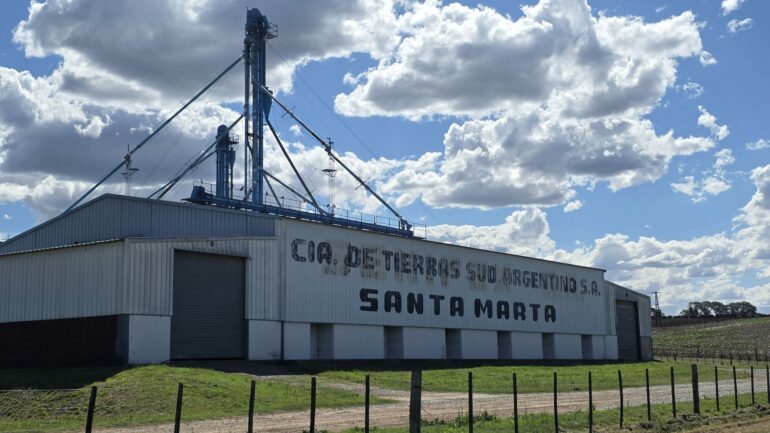
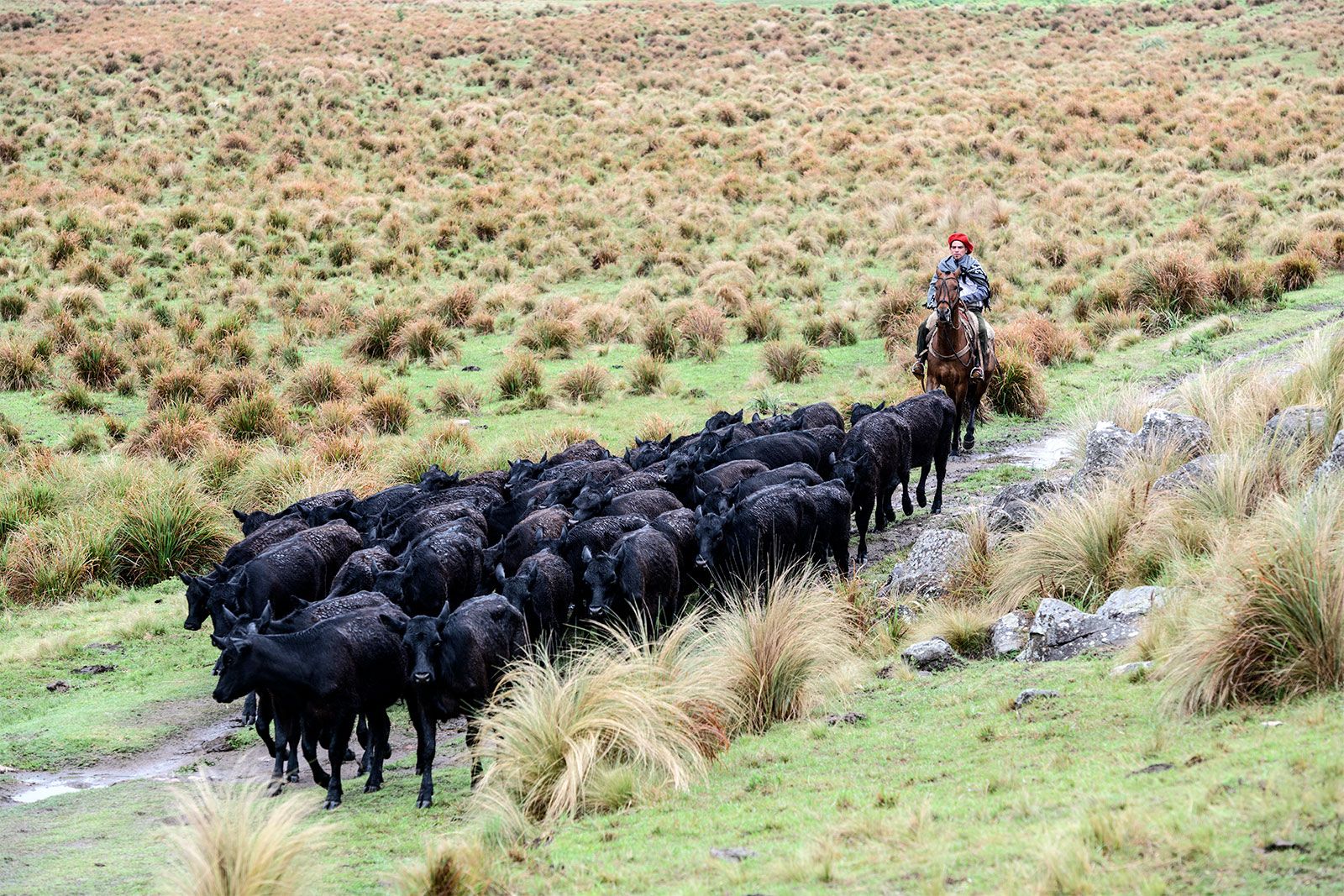
More than 900,000 hectares in Argentina: the size of the assets sold gives a sense of the scale of the transaction, but it does not fully capture its nature. Compañía Tierras del Sud and Ganadera Cóndor are primarily engaged in sheep and cattle ranching as well as wool production. Adecoagro is therefore acquiring agricultural businesses, not merely a land portfolio detached from its operations.
Wool provides a useful clarification here. The name Benetton might instinctively lead one to think of clothing; however, the transaction centers on raw materials and livestock farming. Its focus is industrial and asset-based. It concerns the role of these activities within Edizione’s investments, rather than a change in the fashion collection or a commercial decision in the fashion industry.
Reducing the sale to its number of hectares would thus cause us to lose sight of what needs to be passed on: active companies, with management and jobs that the seller wanted to see preserved. The land area reflects the scope of the deal. The scope of the acquisition, for its part, reveals its rationale: to transfer an economic entity to new ownership without dispersing it among multiple buyers.
Adecoagro: A Different Portfolio Approach
The arrival of Adecoagro gives this transfer its South American dimension. The group is presented as one of the region’s leading producers of foodstuffs and renewable energy. Its operations are based on 210,000 hectares under management and numerous industrial sites in Argentina, Brazil, and Uruguay. This profile aligns with the search for a buyer with a strong local presence.
The two land area figures should, however, be kept separate. The more than 900,000 hectares correspond to the Argentine portion sold by Edizione; the 210,000 hectares refer to the land under management as described in the buyer’s presentation. Adding them together to arrive at a new total area, or comparing them as if they represented exactly the same reality, would go beyond the available information.
For Adecoagro, the acquisition is part of its existing portfolio of agricultural and industrial activities. For Edizione, it marks a withdrawal from this sector. It is precisely this discrepancy that makes the transaction clear: the same asset may no longer align with one shareholder’s priorities while finding its place with another. However, nothing in the disclosed information provides details on the investments or transformations the new owner might consider.


Since 2022, Edizione has been selecting its areas of focus
In Treviso, this sale is part of a broader initiative. Sources within the holding company link it to the plan launched in 2022, when Alessandro Benetton took the lead in Edizione’s restructuring. The strategy involves streamlining the portfolio to focus on sectors deemed strategic. Infrastructure and alternative private markets are among the priority areas.
The sale of the Argentine assets is therefore part of a series of strategic decisions, rather than an isolated move. A precedent is cited: the transfer of real estate activities to the respective family offices. In both cases, the question is what constitutes the appropriate scope for the holding company. Which investments should fall under Edizione’s purview? Where is its involvement considered most relevant? The reorganization is gradually providing answers through both the assets retained and those divested.
This refocusing is not merely a matter of sectoral preference. The holding company states its intention to invest in industrial assets to which it believes it can make a unique contribution. Sustainable development and innovation play a key role in this ambition, as does a focus on young people. These are the strategic directions championed by Edizione—not outcomes that could be measured solely by the sale of its Argentine companies.
Exiting Without Causing Fragmentation
Edizione’s strategic choice is ultimately reflected less in the decision to sell than in the conditions set for the sale. The holding company is divesting itself of a vast agricultural portfolio but has sought a buyer capable of acquiring it in its entirety. It is reorienting its investments, while making local continuity one of its selection criteria. The seller’s refocusing therefore did not, under the intended plan, entail a dismantling of the sold operations.
This distinction is essential for understanding the transaction without attributing to it a significance it does not have. It provides no insight into the future of an entire industry sector, nor into the Benetton family’s broader intentions. It documents a portfolio decision by Edizione and the terms agreed upon for transferring two Argentine companies to Adecoagro.
The next phase will revolve around their day-to-day operations. To tackle this, the new shareholder will retain Agustín Dranovsky—who was already familiar with all of the companies’ operations—as CEO.