Make Texture a preferred source on Google to support us
Add Texture to GoogleTen years of hard work for eighty-five minutes of footage. In the world of contemporary animation, where digital fluidity often erases the trace of the human hand, Sun Xun’s debut feature film, *Magic Atlas* (《魔法星图》), stands out as a monumental anomaly. Born in 1980 in Fuxin and a graduate of the printmaking department at the China Academy of Art, Sun Xun spent an entire decade crafting a work in which every frame bears the marks of the medium. Here, cinema does more than simply tell a story; it is experienced as a physical accumulation of thousands of woodcuts, ink paintings, and pastels, digitized one by one to compose a dreamlike atlas on the fringes of metaphysics.
An archaeology of gesture and time
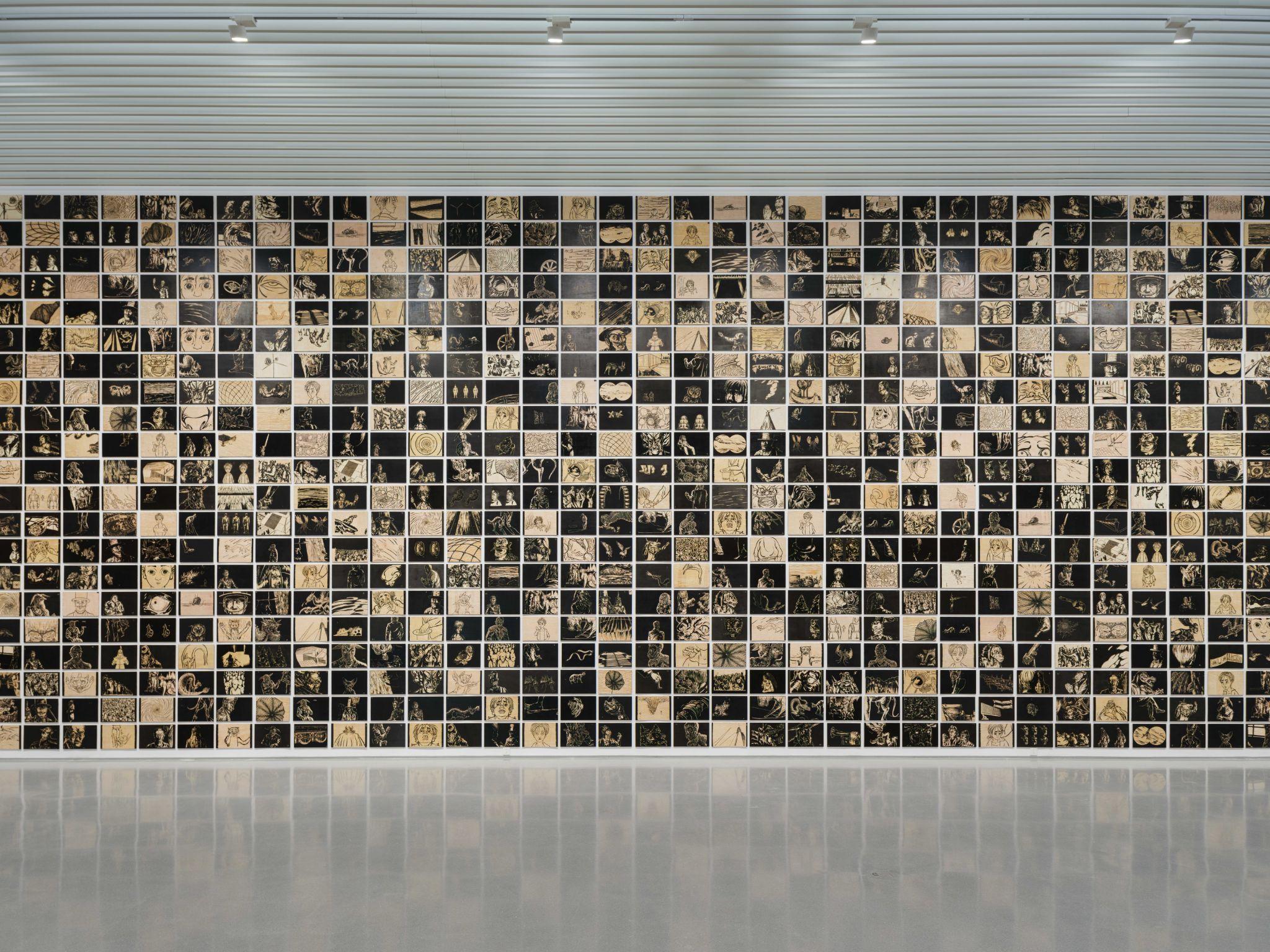
The Magic Atlas project began long before it reached the screens of international film festivals. For Sun Xun, founder of the π Animation studio in Beijing, this film represents the culmination of a career already rich with twenty-five short films. But the transition to feature-length required a radical shift in scale. For ten years, production took place in a sort of artisanal secrecy. With a core team of just five permanent collaborators, Sun Xun enlisted nearly five hundred art students over the course of the decade to create the monumental storyboards, tracings, and paintings that form the film’s visual fabric.
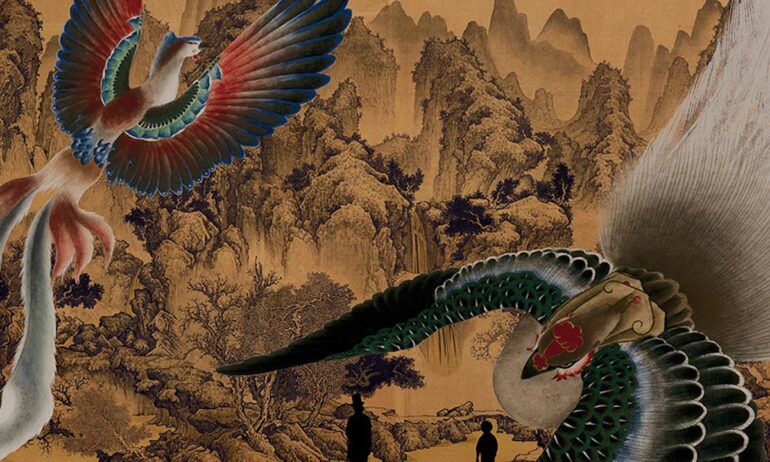
This approach, which could be described as maximalist, is based on an unprecedented stylistic hybridization. The central technique—woodcut animation—gives the images a mineral-like, almost brutal texture. This roughness is counterbalanced by the fluidity of the wash characteristic of Song Dynasty landscape painting, as well as by the chromatic subtlety of Persian miniatures. The result is a steampunk aesthetic in which the contrasts between contemporary oil painting and traditional Chinese drawing create a saturated visual space, faithful to the logic of dreams and symbolic associations rather than to a classical linear narrative.
Luocha: An Empire of Coal and Oblivion
The plot of *Magic Atlas* unfolds against the oppressive backdrop of Luocha, an authoritarian empire built on coal. In this world, history does not exist: collective memory is periodically purged during a festival called “Mimeng.” Flight and cartography are strictly forbidden there, keeping the population in total geographical and temporal ignorance. The precarious balance of this amnesiac state is thrown into turmoil when a wandering magician arrives aboard his airship, triggering the wrath of the authorities.
The story then follows the fate of Xiao Zhi, a young orphan who befriends the magician in prison. Before being led to the stake, the old man entrusts the child with the precious Magic Atlas. Thrown into the Lake of Prophecies, Xiao Zhi passes through a spacetime portal and discovers a mind-boggling truth: he shares the same soul as the magician. Through this odyssey, Sun Xun explores profound themes such as Buddhist reincarnation and Tungus shamanism, while offering a parable about the transformative power of art in the face of political oppression.

The Economics of Artistic Sacrifice
Carrying out such a project for ten years required considerable financial resilience. The project began thanks to the patronage of Judith Neilson, founder of the White Rabbit Gallery in Sydney, who injected one million U.S. dollars into the initial phase. However, faced with rising post-production costs and the sheer scale of the project, these funds proved insufficient. Sun Xun had to turn to crowdfunding and, in an ultimate act of devotion to his work, part with part of his own collection of paintings and sculptures to finance the film’s completion.
The total production budget remains undisclosed, as does the price of the original works used in the filming. For *Magic Atlas* is not just a feature film; it is a traveling exhibition of thousands of physical artworks. These engravings and paintings have been showcased at museum events, notably at the Times Museum in Guangdong starting in 2025, then at the ShanghART Gallery in Beijing and the Mangrove Gallery in Shenzhen in 2026, creating a direct bridge between the gallery space and the screening room.
International Recognition
Presented under the Singaporean pavilion at the 79th Locarno International Film Festival in August 2026, *Magic Atlas* immediately caught the attention of the most discerning film enthusiasts. Selected for competition at the Ottawa International Animation Festival (OIAF) and DOK Leipzig, the film made history at the 39th Tokyo International Film Festival. For the first time in the festival’s history, a feature-length animated film was included in the main competition, where it won the Special Jury Prize in November 2026.
Accompanied by a soundtrack composed by Chinese and Japanese musicians, *Magic Atlas* transcends genres. Blending folklore from Northeast China with a social critique of state-sanctioned amnesia, Sun Xun delivers a work that defies a single interpretation. The film concludes with a circular vision—that of a soul traveling through the ages—reminding us that while empires strive to erase maps and memories, art, by its very nature, remains an unalterable testament to the passage of time.