
Make Texture a preferred source on Google to support us
Add Texture to GoogleThe era of interior design focused exclusively on the smartphone lens seems to be finally coming to an end. After a decade of interiors saturated with heavily veined marble, gaudy glosses, and jarring contrasts designed to maximize immediate impact on a six-inch screen, the pendulum of interior design is swinging back in the opposite direction. Visual fatigue has taken its toll. The contemporary eye has grown weary of this ostentatious immediacy. Space is rediscovering a fundamental concept: a place is experienced on the scale of the body, over time, and not in the brief moment it takes to swipe through social media. This marks the return to favor of understated materiality—the kind that doesn’t reveal itself all at once, but asks to be experienced through touch and the changing light throughout the day.
The End of Decorative Excess
This is precisely the fine line on which surface specialist EDL is positioning itself. As the Singapore-based manufacturer of high-pressure laminates heads toward a symbolic milestone—its twenty-fifth anniversary, scheduled for 2027—it is embarking on a major strategic shift. In anticipation of this milestone, the company is launching its Collection 27. Far from a flashy display of technical prowess or an overabundance of spectacular patterns, this new offering serves as a manifesto for restraint in interior finishes.
The underlying premise takes a direct stand against disposable design. The brand embraces an aesthetic approach that borders on a form of architectural discipline: rejecting an intrusive visual signature in favor of a calm, almost silent presence. The new range brings together twelve decorative series designed to withstand the visual overload that characterizes our era. Surfaces no longer scream their identity. Instead, they rely on highly understated textures and extremely subtle reliefs. Here, the manufacturer champions an age-old idea that is often forgotten amid today’s real estate frenzy: simplicity has nothing to do with a lack of inspiration. On the contrary, it is a mark of superior design, requiring materials capable of stepping back to serve the geometry of a space without monopolizing attention.
Anatomy of a Serene Material
The catalog showcases its nuances through broad categories of perception, with meticulous attention to the subtlety of the finishes. The mineral range, for example, embodies a highly refined austerity. The Universal, Deva, Intonaco, and Clay collections take raw materials and reimagine them in a lighter, more refined way. Here we find granitos of great delicacy, sparingly scattered fragments of material, hybrid finishes that oscillate between natural stone and poured cement, and even imprints evoking the slow passage of a brush over freshly applied material.
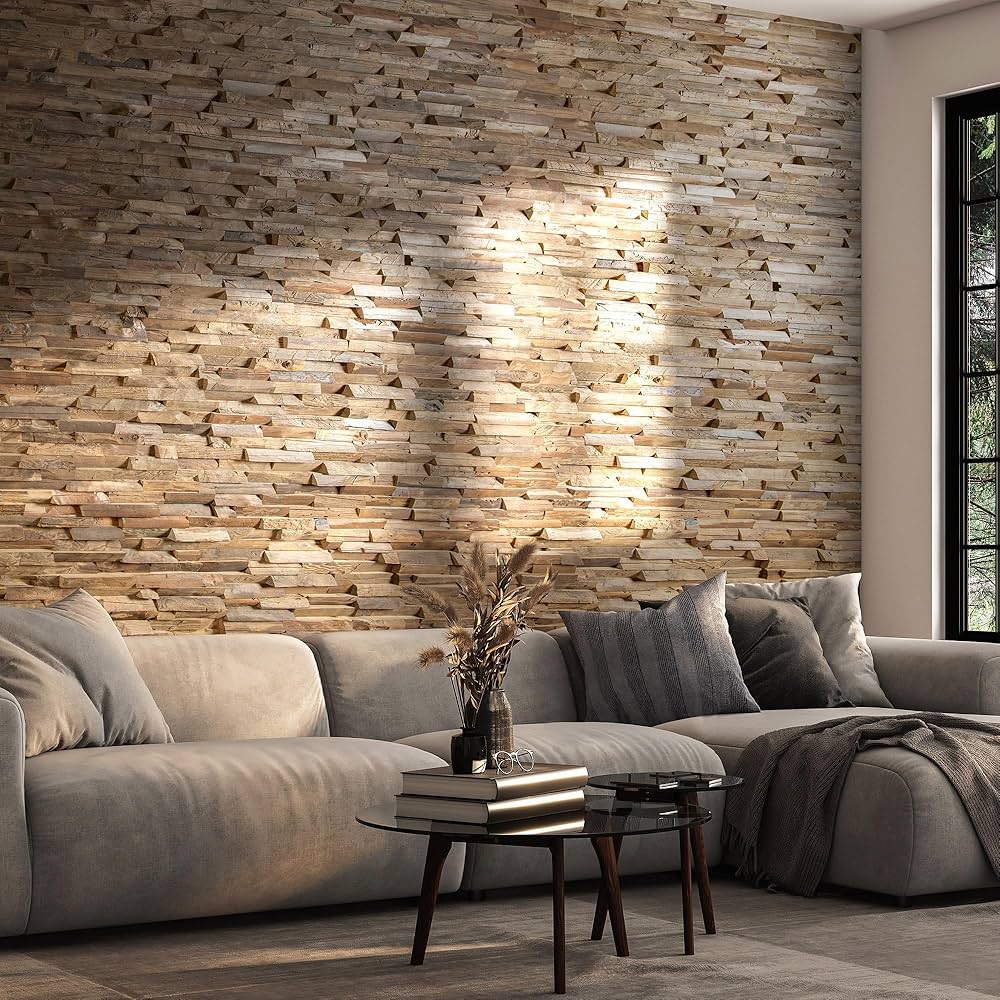
Wood finishes undergo a similar refinement. With the Tailor Oak and Selar Oak lines, the traditional grain patterns of oak shed their rustic or overly realistic qualities to achieve an almost minimalist expression. The approach is strictly graphic, eliminating the superfluous to retain only the natural rhythm of the fibers. The exploration of texture continues with designs that playfully blur the boundaries between different material families. The Hygge, Itaca, and Artemetal Matt series incorporate textures that evoke the softness and warmth of fabric, or break up the cold, harshness of brushed metal to give it an unexpected softness to the touch.
For designers seeking absolute simplicity, UniSurface delivers uniformly flat color surfaces with no perceptible variation in texture. At the other end of the spectrum, Luna Mirror ventures into the brilliance of polished metallic effects, but takes care to temper this intensity by incorporating a wavy pattern, specifically designed to diffuse ambient light rather than reflect it harshly.
Resolving an Aesthetic Dilemma
The appeal of this collection is not based solely on color choices. It is underpinned by a very specific technical solution that illustrates the company’s level of maturity. In the field of custom interior design and laminate furniture, a structural annoyance has plagued architects and cabinetmakers for decades: the black joint line. This dark border, which is always visible where the light surface of a panel meets its edge, immediately betrays the composite nature of the material, shatters the illusion of solidity, and often gives the edges of a piece of furniture a rough appearance.
This is where the Kiravaio series comes in. The manufacturer has introduced an innovation that may seem modest but has major aesthetic implications: a completely neutral, ecru-colored core. This modification to the panel’s internal structure drastically reduces the dark lines on light-colored finishes. The impact on the final look of the interiors is immediate. Whether the material is applied to the edges of kitchen cabinets, reception desks, or seamless wall coverings, the visual continuity is infinitely clearer.

The company isn’t trying to revolutionize materials science with a grandiose announcement. Instead, it’s focused on correcting a long-standing aesthetic flaw. In an Asian and international market saturated with mass-market style trends, this technical precision clearly distinguishes simple industrial suppliers from high-end design partners. It is this subtle improvement that radically transforms the perception of the finished project.
The Transformation of a Regional Player
This obsessive attention to detail is part of the company’s unique trajectory. Founded in Singapore in 2002 by Richard Lim, EDL carries a personal history within it, as its name is none other than an acronym formed from the initials of the founder’s three daughters: Daphne, Eleanor, and Desiree. Over the past two decades, the company has firmly established itself in Southeast Asia, building an extensive distribution network that spans Malaysia, Thailand, and Indonesia.
However, distribution logistics alone are no longer enough to define its current ambition. The brand is moving upmarket and refuses to be confined to the role of a mere manufacturer. It now claims a seat at the drawing board, seeking to collaborate from the very outset of projects with architectural firms, specifiers, interior designers, and discerning clients. It no longer sells square meters of decor; instead, it offers a comprehensive methodology that combines structural research with surface design.
To bring this exclusive positioning to life, the brand relies on a physical space of unprecedented scale, complementing its digital offerings. In Singapore, the brand has opened a monumental 54,000-square-foot regional gallery. In one of the world’s most densely developed real estate markets, this massive investment is not merely a showroom filled with stacked color swatches. The space serves as an architectural manifesto, allowing design professionals to understand how materials react on a real-world scale, under different lighting conditions, and in various spatial configurations.
The course set for the coming decade is based on one certainty: aesthetic obsolescence is the primary enemy of interior architecture. By rejecting the easy path of patterns that dazzle at the slightest glimmer of light to entice the untrained eye, the Singaporean specialist is charting a demanding course. The most successful interiors are those that age gracefully, whose surfaces develop a patina without ever straining the eye. It is a cautious, understated approach, yet one whose credibility extends far beyond the ephemeral.