
Make Texture a preferred source on Google to support us
Add Texture to GoogleLondon, fall 2026. The buzz of Frieze Week is no longer confined to the aisles of international art fairs; it has taken over the walls of galleries in Mayfair and Savile Row with remarkable intensity. A familiar specter—that of the bowler hat and meticulous absurdity—seems to haunt the British capital. Nearly sixty years after his death, René Magritte has never seemed more relevant. His method—based on destabilizing reality through framing and the juxtaposition of the ordinary with the impossible—informs the current program, creating an unexpected dialogue between the masterpieces of Belgian Surrealism and the most cutting-edge explorations in contemporary art.
Magritte’s Legacy Through the Lens of Gagosian
At 20 Grosvenor Hill, the Gagosian Gallery is hosting one of this season’s major events: “This Is Still Not a Pipe: The Afterlife of Magritte.” Organized in official collaboration with the Magritte Foundation, this free commercial exhibition unfolds as an exploration of the master’s legacy. The project is part of a dual commemorative timeline: it marks the 20th anniversary of the famous exhibition at LACMA in Los Angeles, while also celebrating the 90th anniversary of the International Surrealist Exhibition held in 1936 at the New Burlington Galleries in London.
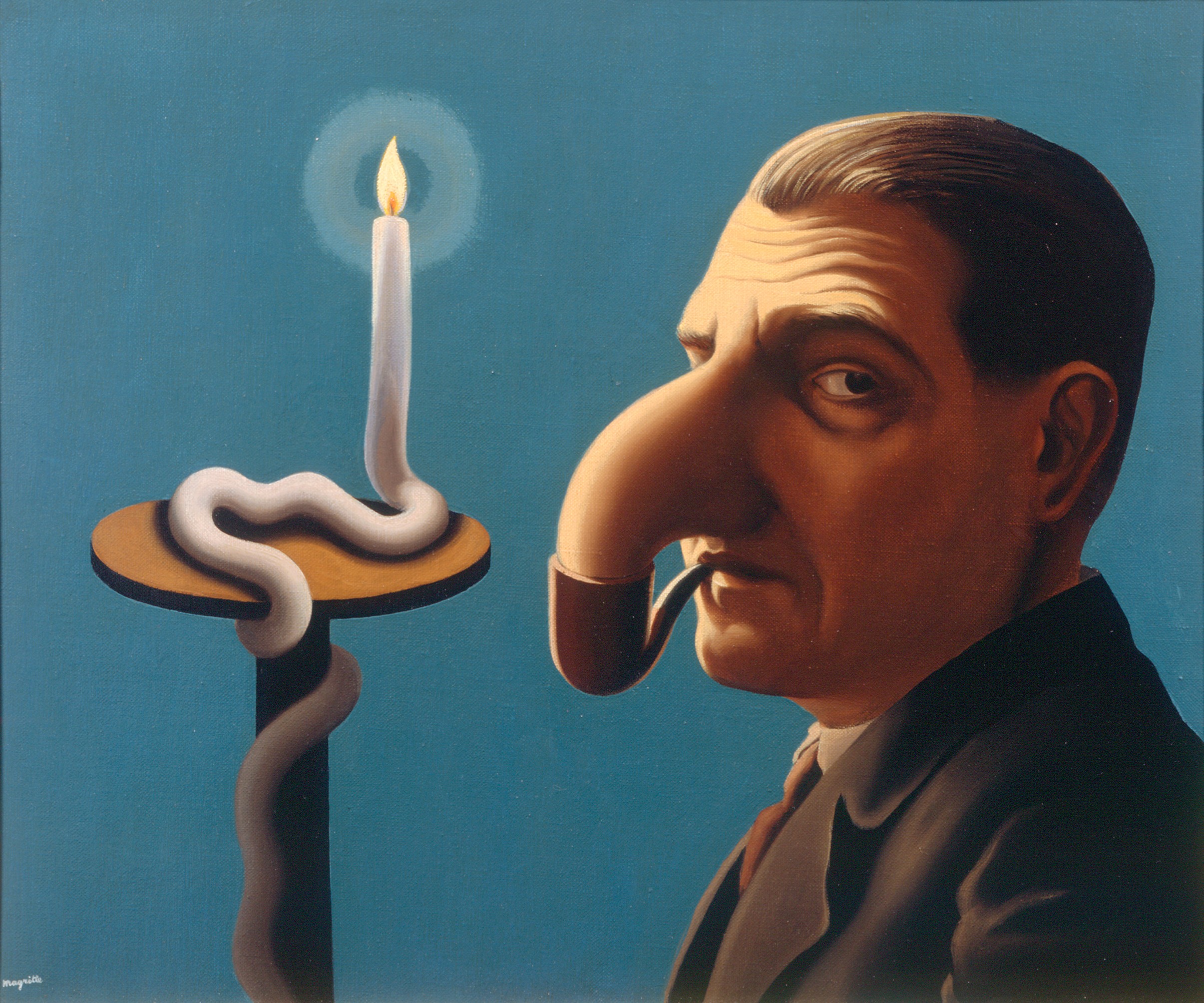
The collection assembled for the occasion demonstrates a level of ambition rarely seen in a private institution. Although estimates vary depending on the source—with some citing around fifty works and others counting as many as one hundred twenty—the exhibition succeeds in bringing together loans from prestigious museums and private collections. Among the works on display were major pieces such as *La Lampe philosophique* (1936), *La Malédiction* (1931), and a version of *L’Empire des lumières* dated 1961, from the Heidi Horten Collection. This turnout, estimated at approximately 10,000 visitors between the opening in late September and mid-October 2026, underscores the enduring appeal of this visual language of mystery.
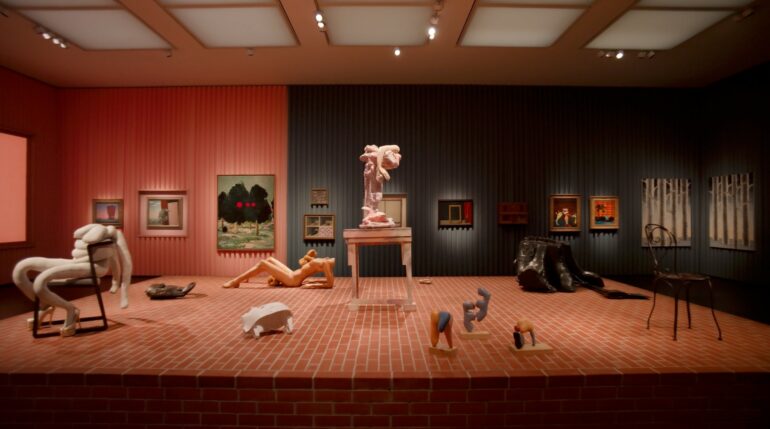
The interest here lies in the juxtaposition. Magritte’s paintings engage in a dialogue with the works of more than forty postwar and contemporary artists. Figures such as Jeff Koons, Ed Ruscha, and Yoko Ono are featured alongside more recent artists such as Issy Wood, Pol Taburet, and Isabelle Albuquerque. This exhibition highlights how Magrittean concepts—the subversion of the object, the play on scale, and the uncanny strangeness of everyday life—continue to influence the practices of Betye Saar, Glenn Ligon, and Jordan Wolfson.
Nicole Eisenman and Louis Fratino: Distorted Reality
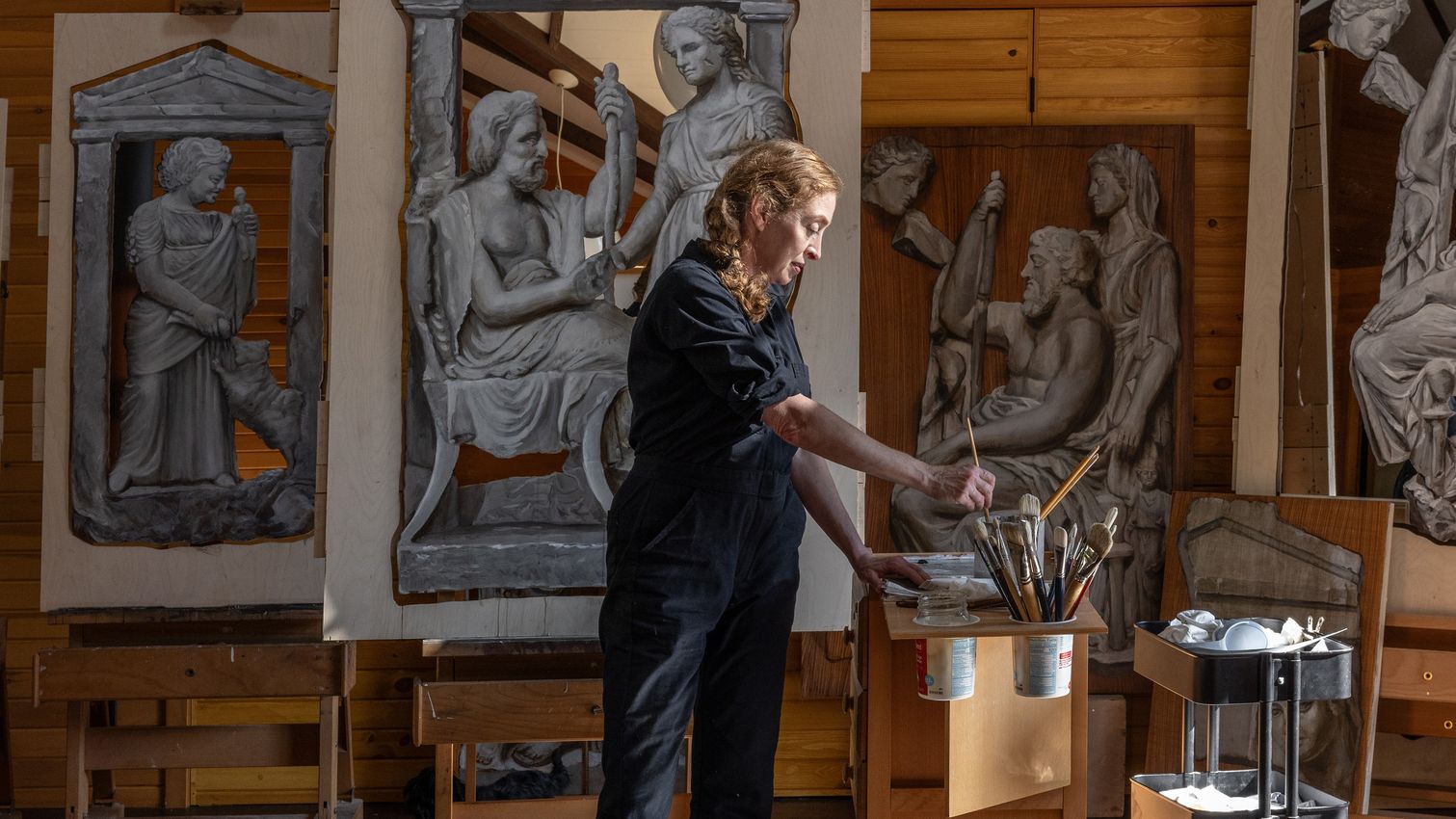
While Gagosian embraces a direct lineage, other London galleries reveal more subtle—yet equally powerful—echoes of the Belgian painter’s spirit. At Sadie Coles HQ, at 17 Savile Row, Nicole Eisenman presents ten new paintings that seem to draw from this same vein of geographical absurdity. Her monumental canvas *The Waiter* (2026)—imposing in its dimensions at over six meters wide—places a waiter with an air of everyday nonchalance in front of the millennia-old site of Stonehenge, beneath a cosmic celestial vault. This disparity in scale and context inevitably brings to mind Magritte’s juxtapositions.
The influence even extends to the master’s least conventional phases. In *Parking Lot of Violent Forces and Depressive Positions*, Eisenman seems to give a nod to Magritte’s “cow period” (1947–1948). This deliberately grotesque and dripping stylistic interlude, exemplified at the time by works such as *Le Contenu pictural*, finds a contemporary resonance here in the treatment of surfaces and the atmosphere of suburban desolation.
Just a few steps away, at David Zwirner on Grafton Street, the exhibition “Prose” marks the first London collaboration with Louis Fratino. In his painting *Summer in the City* (2026), the artist explores spatial ambiguities reminiscent of Magritte’s explorations of perspective and point of view, particularly those seen in *Le Lieu commun* (1964). These parallels, highlighted by critical analysis during Frieze Week, reveal a shared sensibility for deconstructing the gaze, even if they are not always explicitly acknowledged by the artists themselves.
A Titan of the Global Art Market
This omnipresence in galleries is powerfully reflected in the art market, where René Magritte has reached historic heights. The year 2024 marked a turning point with a record global auction turnover of $312.3 million for the artist. In November of that same year, a version of *L’Empire des lumières* (1954) sold for $121.2 million in New York, setting an all-time record for a Surrealist work across all eras.
London played an active role in this financial rise. In September 2026, the gouache *La Belle Promenade* (1965) sold for 16 million pounds sterling (approximately 19.2 million euros). This result represents a staggering 627% increase compared to its last appearance on the market in 2014. Whether driven by institutional interest or collector demand, Magritte’s influence on the current London art scene goes beyond a mere historical tribute to become an indicator of the vitality of Surrealism in the visual culture of this second quarter of the century.