
The New Luxury of the Everyday: When Design Takes Over the Konbini
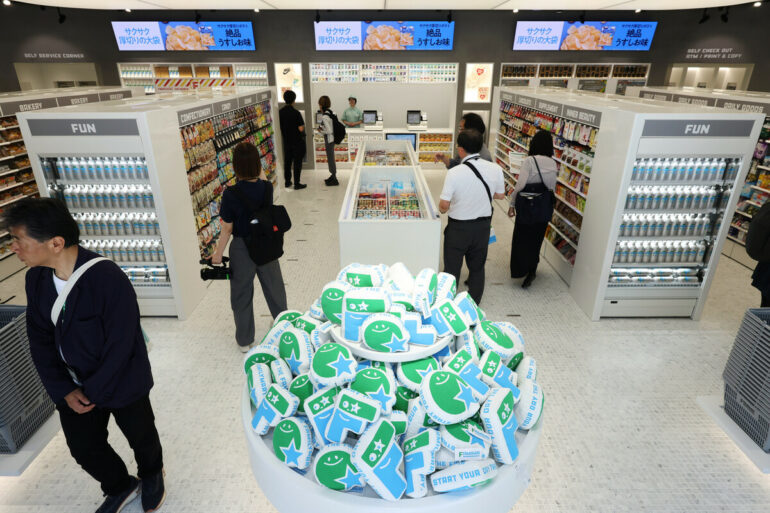
Last Friday in Tokyo, the buzz wasn’t centered around a Fashion Week runway show or the opening of a contemporary art gallery. Against all expectations, crowds began gathering at dawn outside a neighborhood convenience store. A two-hour wait, strict sales quotas, and a level of excitement usually reserved for limited-edition sneaker releases: the launch of Famima Park Azabudai marks a turning point in Japanese retail culture. This flagship store, designed to celebrate FamilyMart’s 45th anniversary, is not merely a cosmetic update. It is a complete reinvention of the convenience store, where the raw functionality of everyday life meets the demands of cutting-edge design.
The visual impact begins right from the outside. While the logo retains its historic colors—blue and green—it has undergone a radical graphic overhaul. Overlooking the Azabudai Hills complex, the store stands out with its lush, green rooftop garden—a veritable little forest suspended in the heart of the metropolis. A delightful detail for residents of the surrounding skyscrapers: a massive “F” takes shape amid this rooftop forest—a distinctive symbol invisible from the sidewalk, visible only to those who look down on the city from above. Inside, the atmosphere marks a sharp departure from the clinical lighting typical of the group’s 16,400 other stores, offering a spatial experience more akin to a designer boutique than an emergency pantry.
A Creative Trio at the Forefront of Everyday Life
To bring this transformation to fruition, FamilyMart brought together three leading figures from Tokyo’s creative scene. At the helm is Nigo, the mastermind behind A Bathing Ape and the current creative director of Human Made. His role as creative lead is evident in every corner: from cushions to tote bags, stickers to T-shirts, Nigo has applied his talent to transform mundane objects into collector’s items. Under his guidance, even a box of tissues becomes an object of desire. This ability to elevate the ordinary reaches its peak with the staff uniforms. Gone is the standardized, soulless nylon; employees now wear a striped outfit made of sturdy cotton, whose cut and texture are so appealing that customers themselves ask to buy them.
The store’s design was entrusted to Masamichi Katayama, whose studio, Wonderwall, has been shaping the world’s most striking commercial interiors for two decades. His mission was complex: to preserve the konbini’s DNA—its speed, convenience, and accessibility—while infusing it with an element of pleasure and sensory richness. Katayama conceived the “Famima Stand,” a takeout window where customers can quickly pick up the store’s signature items, such as the famous Fami-Chiki fried chicken, before settling down on the outdoor benches. The idea is to transform the act of a quick purchase into a social moment, an anchor in neighborhood life.
The Textile Revolution: From Basics to Denim
The third pillar of this collaboration is Hiromichi Ochiai. The fashion designer, known for his innovative approach to fashion, is the architect behind Convenience Wear. Launched in 2021, this line of basic clothing has shaken up the Japanese market by selling more than 30 million pairs of socks in three years. In Azabudai, this concept is moving upmarket. The store offers limited-edition exclusives, fitting rooms, and even personal stylists. The success has been phenomenal: denim pieces, particularly jackets and jeans, sold out almost instantly after the opening.
Ochiai’s concept is based on a clear three-pronged approach: quality materials, quality craftsmanship, and quality design. The store’s aesthetic features a spectacular wall of socks and T-shirts displayed in their iconic clear packaging. This choice of color and layout proves that a fashion brand can thrive right between an ATM and a sandwich counter—provided it meets the highest aesthetic standards. To embody this new era, actor Tadanobu Asano was chosen as the brand ambassador, firmly establishing the brand within the mainstream cultural sphere.

The Konbini as a Democratic Pillar of Society
Beyond being a stylistic exercise, this project raises fundamental questions about the evolution of retail in Japan. With approximately 56,000 stores spread across the archipelago, the konbini is undoubtedly the country’s most democratic institution. It is a place that transcends barriers of age, gender, or wealth. Tatsuo Odani, CEO and President of FamilyMart, sees this evolution as a strategic necessity. For him, the format must transform to ensure its sustainable growth and become a global brand that cannot be imitated. It is no longer just about providing convenience, but about offering an experience found nowhere else.
This drive to refine the convenience store’s appeal and uniqueness aims to encourage people to make a detour—to travel specifically to visit a place they would once have frequented out of sheer habit. Famima Park Azabudai, however, retains all essential services: ATMs are there, as are delivery services and microwaves for heating up meals. The project succeeds in preserving the rationality of the model while exploring what Katayama calls a “sense of richness.” It is the acceptance of Japanese efficiency combined with a pursuit of beauty in the tiniest details of daily life.
A Laboratory for the Future of Neighborhood Retail
While Famima Park Azabudai remains a one-of-a-kind concept for now, the lessons learned from this experiment are intended to be applied across the entire network. The company has already confirmed that certain elements developed here will be rolled out in standard stores nationwide. Nigo and his team have succeeded in transforming the konbini into a vehicle for Japanese culture and lifestyle, capable of appealing to both locals and international visitors seeking contemporary authenticity.
This hybrid approach—blending ultimate convenience with the understated luxury of design—may foreshadow the future of retail: a space where functionality no longer comes at the expense of elegance. Details on the brand’s new products and initiatives are available on the official website at family.co.jp. While we await the potential proliferation of these glass-and-greenery-filled spaces, the line at Azabudai shows no sign of dwindling, confirming that the public is ready to rediscover what they thought they already knew by heart.