
Make Texture a preferred source on Google to support us
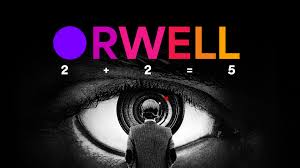
Add Texture to GoogleFilmmaker Raoul Peck, Haiti’s former Minister of Culture, makes his big comeback this weekend with a new documentary: *Orwell: 2+2=5*. The result of a decade of work, this feature-length film immerses viewers in the final years of George Orwell’s life, a time when the British writer was racing against the clock to complete his masterpiece, 1984.
Narrated by actor Damian Lewis, Orwell’s writings resonate with a startling modernity, demonstrating the prophetic nature of his thinking. Following in the footsteps of his previous BAFTA-winning documentary, I Am Not Your Negro, the director interweaves newsreel footage with contemporary images. His goal: to prove that the author’s fears regarding manipulation and coercion have never been more relevant. While examining the global rise of authoritarianism, the film focuses particularly on the United States, drawing a striking parallel between Donald Trump’s public rhetoric and the dystopian world of 1984.
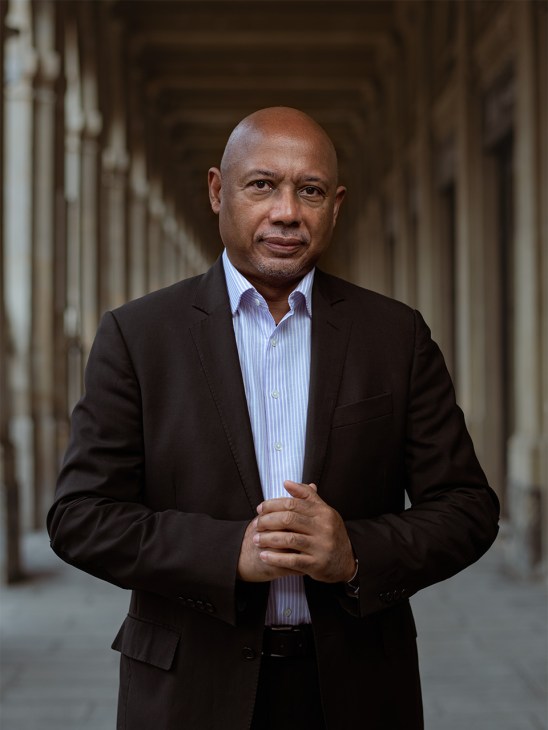
More than a simple critique, Raoul Peck’s work is intended as a genuine call to action. It reminds us that the power of resistance does not belong to the elites, but to an engaged and organized populace. In this interview, the director discusses his research methods, the influence of his government tenure in Haiti on his cinematic vision, and the unbreakable link between artistic creation and democracy.
Why is George Orwell the ideal lens through which to tell this story?
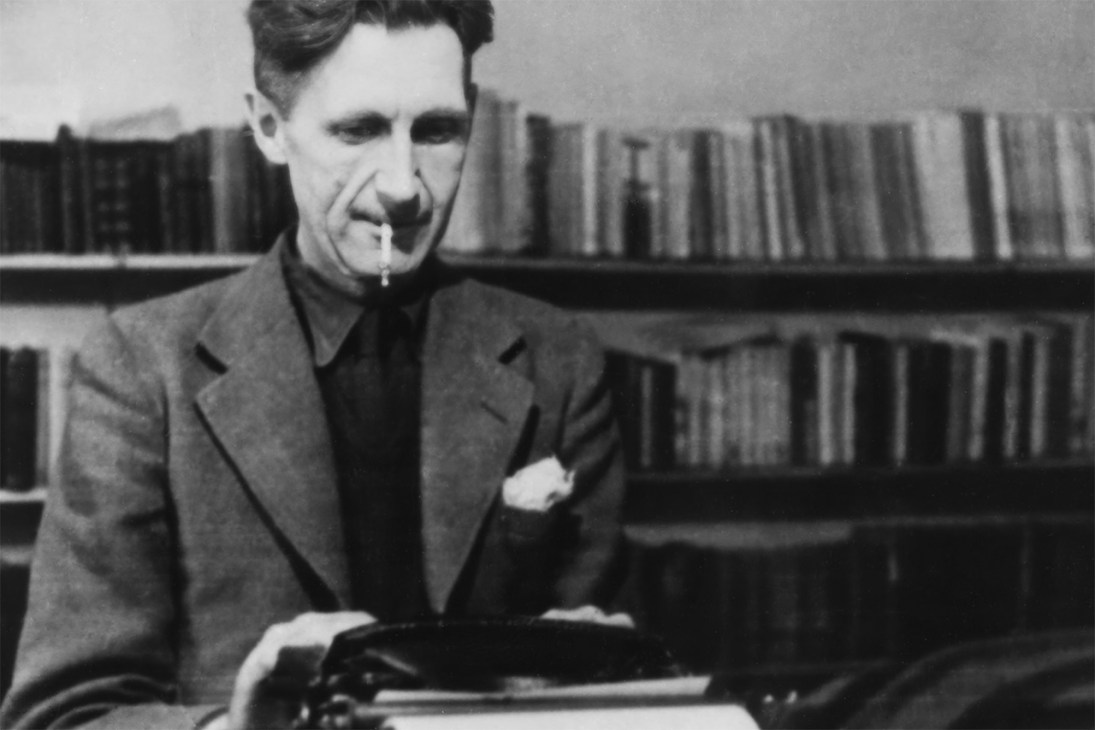
Orwell provided us with all the keys to understanding the upheavals of our world. His warnings drew on his own lived experience; he felt firsthand the degradation we are witnessing today. He was able to dissect the mechanisms by which a power or an authoritarian regime manages to subjugate us. This analysis was valid in the 1940s and 1950s, and it is just as valid today.
How did you manage to capture the intimate essence of the man behind the writer?
By immersing myself in his work. To grasp what drives an author, you have to trace his journey, see where he lived, and understand his actions. That is exactly the approach I took. Orwell fully embraced his past, whether it was his role as a police officer in the service of the British Empire or his involvement in the Spanish Civil War. He risked his own life by going to fight physically to defend justice and a new democratic ideal. Although he was a staunch socialist, he shunned all dogmatism. His absolute priority remained his freedom of thought: he never hesitated to question his own political camp or his convictions if he felt they were on the wrong track.

How has your own background—particularly as Minister of Culture in Haiti—shaped this project?
I had the privilege of being involved in politics for two years. I was called upon not to act as a critical observer, but to take concrete action in an extremely complex national context. The central challenge was clear: how to truly restore democracy? How could we ensure that the former authoritarian regime didn’t resurface? I didn’t hesitate to put filmmaking on hold, because my approach to this medium has always been guided by a desire for action: to transform what I perceive as unjust in our society.
You show that the news media play a major role in maintaining authoritarian structures. Does cinema have the power to reverse this trend?
The seventh art is an exceptional vehicle for reaching the public and confronting them with realities they generally avoid in their daily lives. The press, for its part, has undergone a profound deterioration. Newspapers, magazines, television networks, and radio stations have been bought up by billionaires, and this concentration has an undeniable impact on the news.
One idea runs through your film: if any hope remains, it rests on the moral compass of citizens. Do you share this conviction?
True transformations never arise from within political institutions. Through the struggles I have taken part in or witnessed—whether in Haiti, the Congo, France, or Germany—I have observed that it is always civil society that ultimately rises up and says, “Enough is enough!” The recent events in Minneapolis are a perfect example: it was the people themselves who declared that a line had been crossed. The history of humanity ultimately boils down to a relentless struggle against systems that have become deaf to the will of the people. And that is precisely the essence of democracy: it remains our most formidable tool for fighting back.
“Orwell: 2+2=5” is currently in theaters.