
Make Texture a preferred source on Google to support us
Add Texture to Google20 Golden Rules for Successful Business Lunches
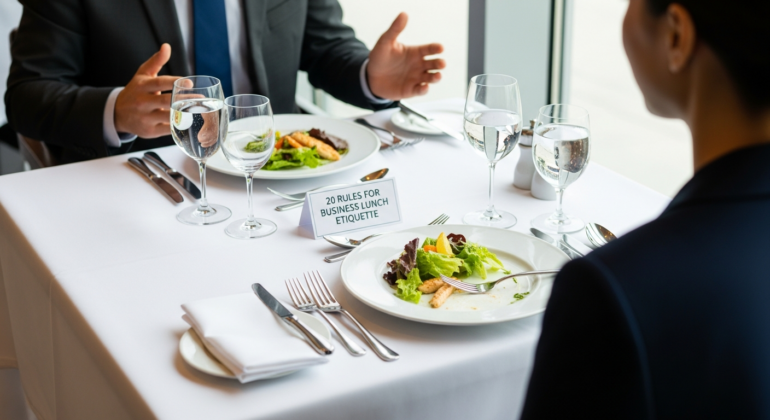
A business lunch can be a wonderful thing. Over a few courses, you can find common ground, show your appreciation, and resolve a relationship that seemed complicated when it was limited to virtual interactions. However, after years of video calls and remote work, the practice is becoming increasingly daunting. So here’s a survival guide to reconnecting with this tradition without making a faux pas.
1. Choose your restaurant strategically
You’ll generally have an hour to an hour and a half: so the choice of restaurant is crucial. Extended tasting menus with food-and-wine pairings are already tedious under normal circumstances; at lunchtime, they feel like a full-blown gastronomic hostage situation. And for heaven’s sake, steer clear of “dishes to share” concepts.
2. Choose a place that’s easy to get to
The restaurant should be easy to find. Your guests shouldn’t need the skills of a great explorer like Sir Ranulph Fiennes to track down “that little gem you’ve heard about.” If you want to nurture this professional relationship, meet them halfway geographically and respect their schedule.
3. Don’t be afraid of simplicity
Don’t be afraid to aim modestly. It won’t work for every situation, but simplicity often has its merits. A traditional fish and chips joint or a nice neighborhood brasserie? Why not.
4. Ban screens
Golden rule: no computers or phones on the table. You’re in a restaurant, not the tech section of an Apple Store.
5. Limit phone emergencies
An absolute emergency at the office? You’re allowed to slip away once to make a call, even if you inevitably lose your table’s attention in the process. Twice? People will think you’re leading a double life or simply lack basic manners.
6. Be mindful of your table neighbors
Observe the people around you. Avoid venturing into confidential territory or discussing sensitive financial data if half the room works in the same industry as you. Also, if your project’s key figures don’t fit on a napkin, don’t try to dissect the cells of a complex spreadsheet while carving your guinea fowl.
7. Punctuality is non-negotiable
Arrive on time. Sorry to sound uncompromising, but it doesn’t matter if your partner had a near-disaster this morning: the clock is ticking for everyone.
8. Master the protocol for being late
When it comes to being late, the rules are strict. Ten minutes is forgivable (ask the maître d’ for a newspaper or pull out the backup novel you always keep in your pocket, but avoid frantically scrolling on your smartphone). Twenty minutes late on their end? It’s on them to pick up the tab. Thirty minutes? Order your meal solo and enjoy some quality reading time.
9. Be an engaging conversationalist
Be a good conversationalist. The best business lunches take place with cultured conversation partners who can share interesting stories. To be clear: no, they don’t want to see photos of your kids.
10. Learn to be quiet and listen
Shut up. Listen. It’s a skill that’s far too rare, but you’d be wise to master it as soon as possible.
11. Don’t judge cultural habits
If you’re American (or of a puritanical nature), don’t look horrified when a European guest orders a glass of wine at lunchtime. No moralizing remarks from you are required.
12. Come with a hearty appetite
If you’re injecting semaglutide into your thigh and have the appetite of a bird right now, why did you even bother coming? The moment you ask the server if you can get a half-portion of arugula salad, the convivial atmosphere of the meal is ruined.
13. Forget about showing off your virtue
“I won’t be having any bread myself, but go ahead, don’t hold back.” " For heaven’s sake, spare us this kind of virtue signaling when ordering. Instead, show that you’re the kind of person who can ensure everyone gets their share in an arrangement, even if it’s just access to the bread basket.

14. Be courteous to the staff
Conduct yourself with grace, and that includes the restaurant staff. At the end of an excellent lunch this week, my guest whispered to the server: “Your service was exceptional. It was truly one of the highlights of this meal.” ” It’s these small interactions that confirm why we enjoy working with someone.
15. Choose the right menu format
How many courses should you order? The traditional starter-main course combination is the unspoken norm in this setting. Ordering just a main course is also acceptable, though it might suggest you’re in a hurry to leave. Desserts? They’re tolerated, but your business meeting might start to feel like a Sunday lunch at Grandma’s house.
16. Be strategic with coffee
How should you handle the end of the meal? Ordering espressos at the same time as the check helps give everyone a quick boost while staying on schedule. On the other hand, asking for “a pot of your best green tea” is the best way to raise the anxiety levels of your counterparts who are on a tight schedule.
17. Know who should pay the bill
Splitting the bill during a business lunch is rarely a wise move. If you’re the one who chose the restaurant and set the pace of the meal, simply pull out your card. On the other hand, if your guest has ventured into the priciest sections of the wine list or ordered a steak the size of a Labrador, let them pay.
18. Save the doggy bag for personal meals
Forget the takeout box. You may hate waste, but unless you work for an anti-hunger NGO, leaving with a container of gratin dauphinois that’s slowly turning to stone won’t make you look eco-conscious—it’ll make you look cheap.
19. Say thank you if you’re invited
Did they pick up the tab? Just remember to say thank you.
20. Say thank you even if you paid
Did you treat them? Thank them for their time and for their excellent company. Well, only if that was actually the case.
To read more columns by Andrew Tuck, click here.