
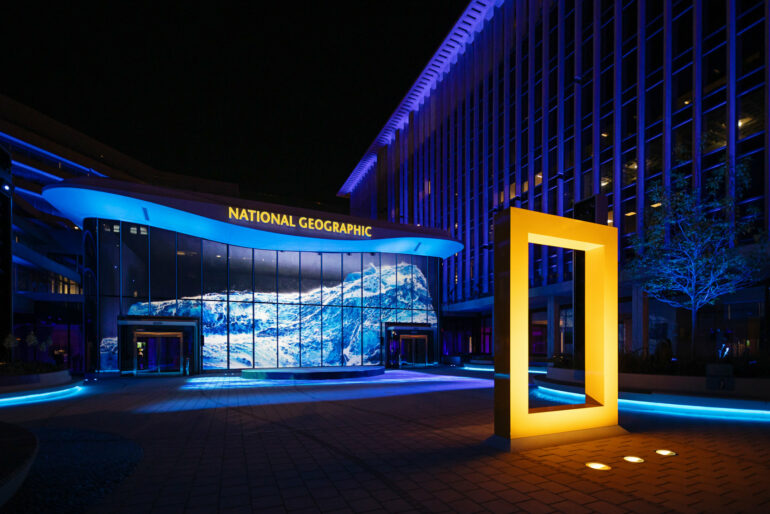
After four years of architectural transformation, the new National Geographic Museum of Exploration in Washington, D.C., brings together historical archives, technological marvels, and the art of storytelling in a unique way, with the ultimate goal of rekindling the spirit of adventure.
In Washington, Wonder Elevated to an Art Form
National Geographic recently unveiled its brand-new Museum of Exploration in Washington, D.C. This space was designed to serve as a magnificent showcase for its original mission: to tell the story of the world through keen observation. This grand opening comes after four long years of construction and brings to life a 9,000-square-meter (100,000-square-foot) venue located at 1600 M Street NW, which will open its doors to the public on June 26, 2026. According to the National Geographic Society, this large-scale project has required an investment of more than $300 million, largely supported by donations and sophisticated fundraising campaigns.
The ambition is clear, almost self-evident: to make this museum a place where curiosity transcends the concept to become a true philosophy. The exhibition journey features immersive displays of great sophistication, iconic photographs, and artifacts chronicling more than a century of exploration. The Washington, D.C.-based institution thus positions itself as a timeless and innovative attraction, placing this venue at the crossroads between a traditional museum, an intellectual hub, and a venue for living experiences.
An exhibition design at the intersection of heritage and immersion
Far from merely displaying a collection of artifacts side by side, this new museum space seeks above all to recreate the intimate experience of discovery. Art lovers and the curious will discover an immersive theater, galleries dedicated to the brand’s most famous visual works, as well as artifacts from the expeditions of 15,000 explorers. Among these treasures are sometimes objects of touching humility—such as shoes worn out by travel—yet imbued with a rare narrative depth, as explorer Bertie Gregory points out.
The museum aims to profoundly transform the visitor’s perspective, without ever resorting to the easy path of spectacle. Herein lies its boldest promise, but also its most subtle challenge. In our image-saturated age, it is no longer enough simply to display; it is imperative to convey meaning. In short, it is about teaching the art of storytelling. By skillfully combining historical artifacts, poignant testimonies, and state-of-the-art interactive exhibits, the museum seems to have found the right formula.
The institution also emphasizes that the building’s architecture was designed to offer impeccable accessibility, with customized services for people with disabilities. Practical details regarding transportation and summer hours have already been planned to enhance the experience. Admission to this immersive journey will start at $29.99 for adults, with dynamic pricing to be specified before the official opening.

James Cameron: When Exploration Becomes Storytelling
To mark the launch of this magnificent project, National Geographic invited James Cameron. The renowned filmmaker and explorer toured the museum during a highly publicized visit, walking the brand’s signature yellow carpet to deliver a passionate speech on the transmission of knowledge. As he told ABC7, exploration only truly comes alive when it becomes a story. He also shared the unbridled fascination and wonder that have driven him since childhood.
The presence of such a figure is no coincidence. It serves as a reminder that, for decades, National Geographic has masterfully balanced visual aesthetics, scientific rigor, and narrative power. The museum carries on this prestigious legacy while modernizing it, offering an increasingly immersive and contemporary experience. The major challenge will lie not only in the monumentality of the space, but in its ability to retain its aura and relevance long after the excitement of its novelty has faded.
A Cultural and Architectural Manifesto
The National Geographic Society envisions this museum as the most spectacular expansion of its campus to date. A true vehicle for knowledge, it is designed to inspire a new generation of explorers, while reaffirming strong commitments to sustainability and inclusivity. While its vision is firmly focused on the future, it is rooted in an invaluable heritage: that of an institution that has forged its legacy by documenting the pulse of the world, from its fringes to its very heart.
More than a sanctuary frozen in time, the Museum of Exploration stands as a striking declaration of intent. It elegantly reminds us that exploration is not limited to the world’s farthest reaches or breathtaking feats. It often springs from a simple, captivating image, an object weathered by time, or a skillfully posed question. And sometimes, it begins in the aisles of a museum that still holds the power to inspire us to set sail.